


Seven years is not a long time for a new car maker in a market like ours, but over the last seven years we have seen Kia make some very interesting moves. Be it with SUVs like the Seltos, Sonet and Syros, MPVs like the Carnival and Carens and even its EVs like the EV6 and EV9, Carens Clavis EV and most recently, the Syros EV, Kia has always tried to distinguish itself with its products. And Kia has just launched the Sorento that sits above the Seltos, and is also its first ever hybrid offering in the Indian market. But the Sorento’s own track record is a very interesting one for the matter. The nameplate has been around for a quarter of a century, is sold in more than 130 countries, and Kia claims to have sold close to 5 million units till date across four generations, which makes it a true global product.
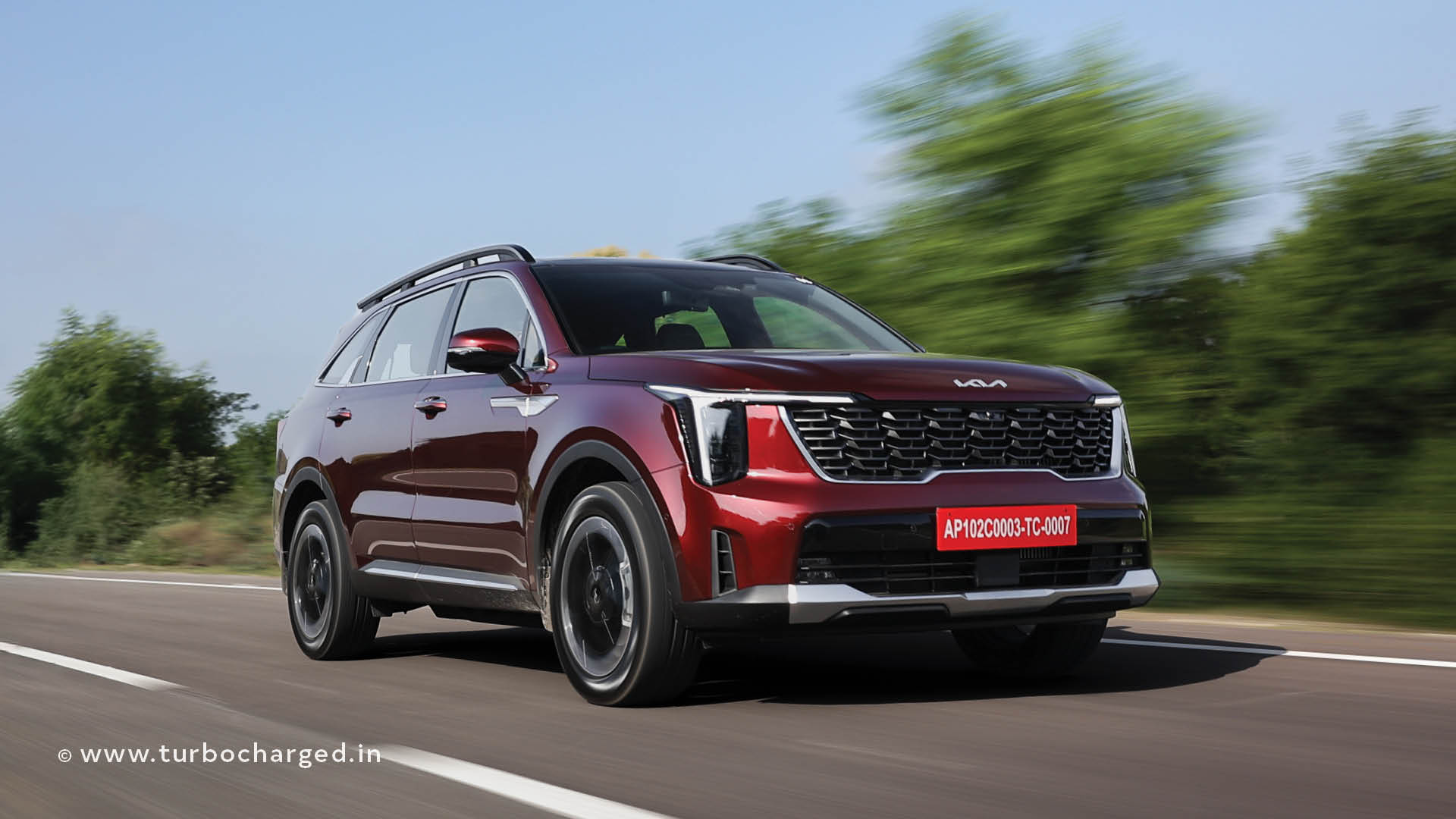
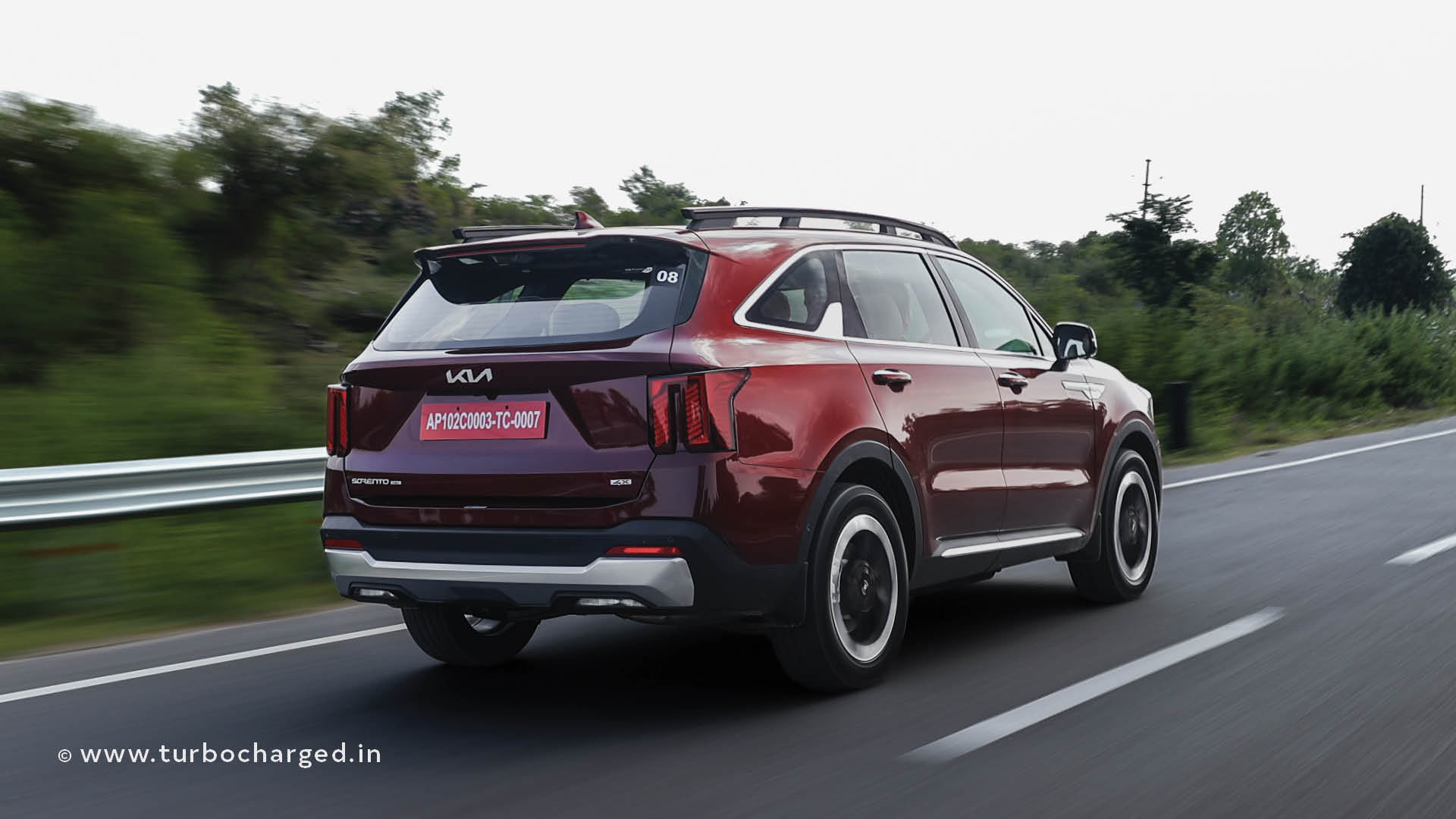
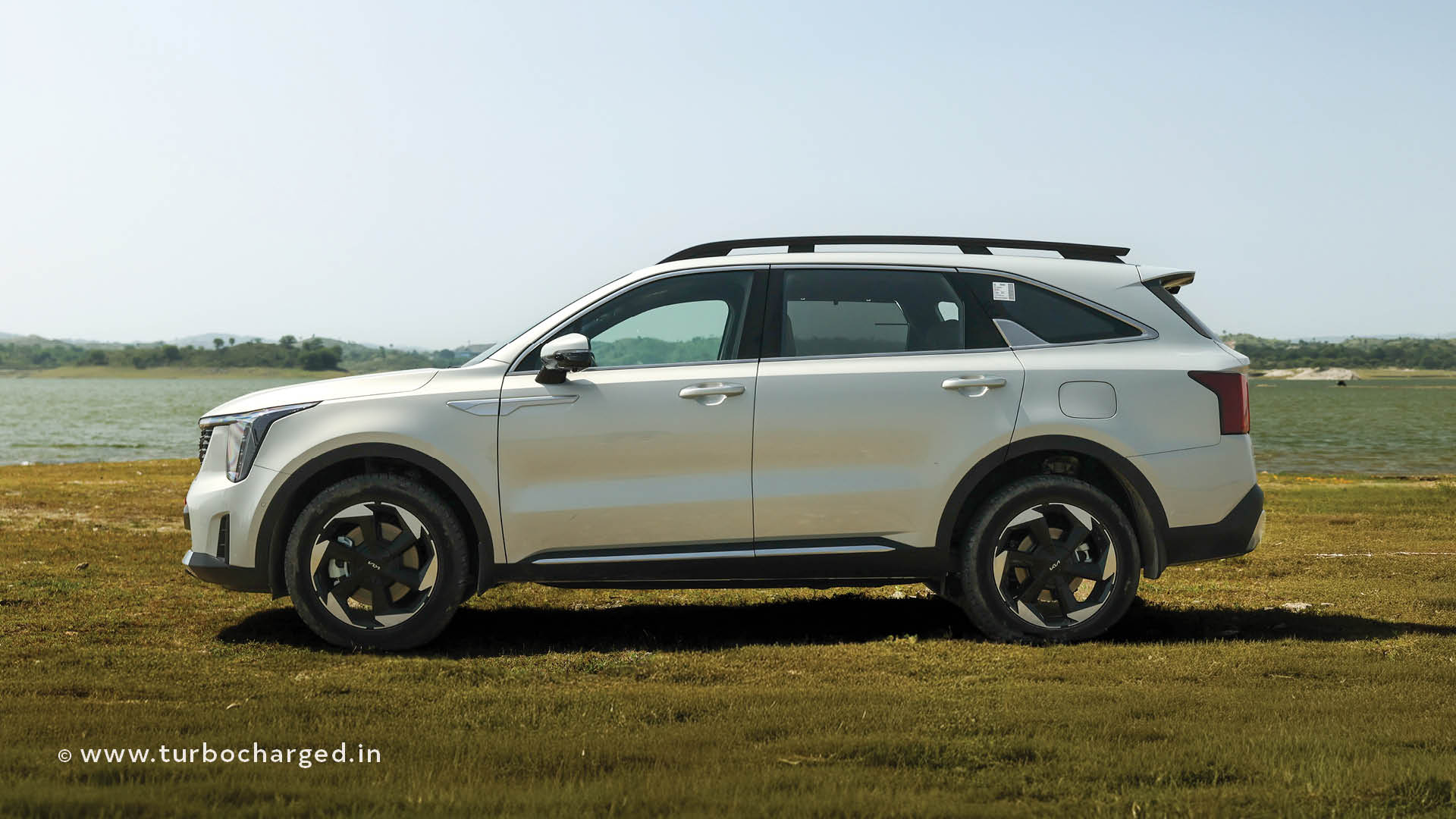
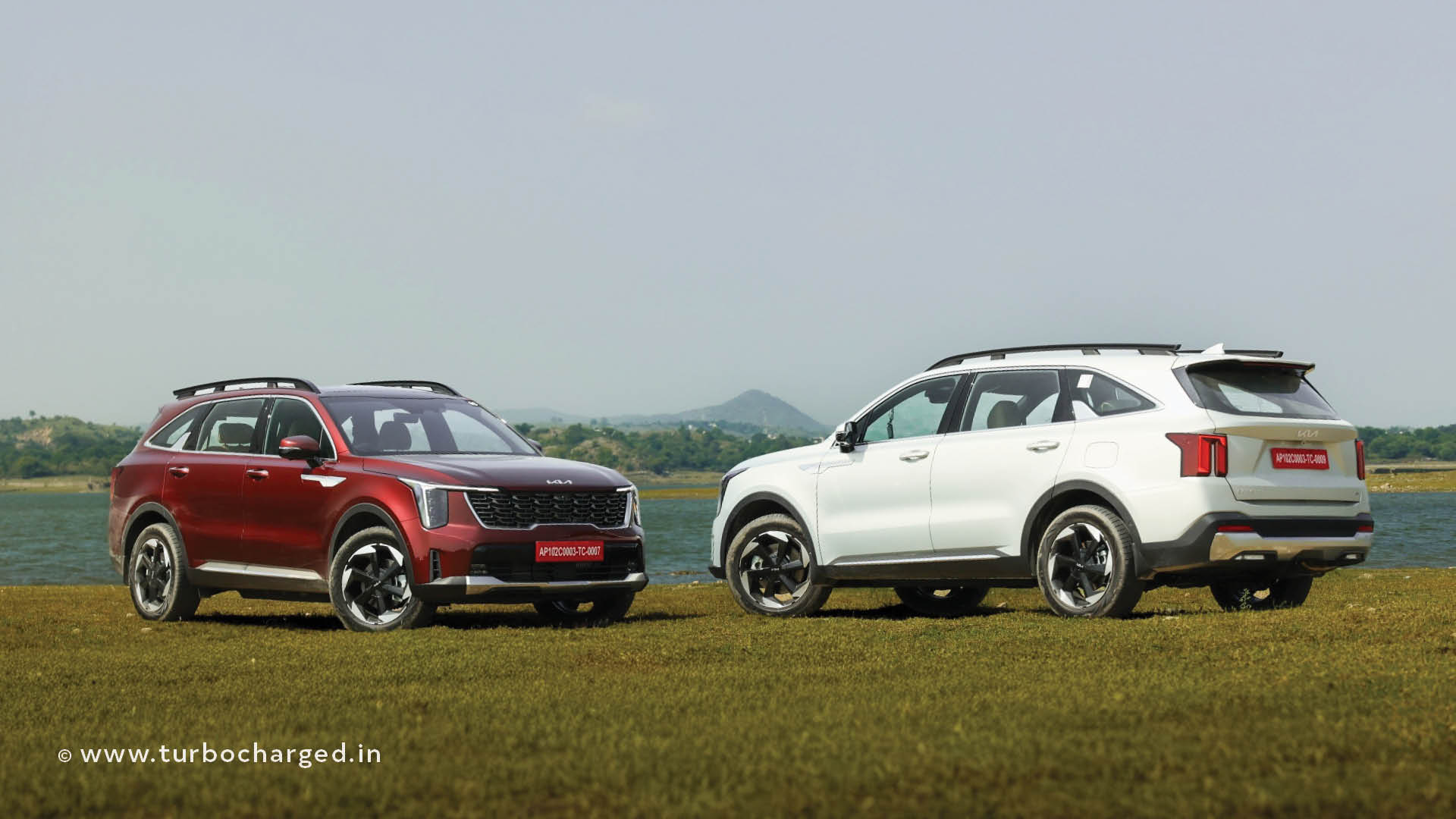
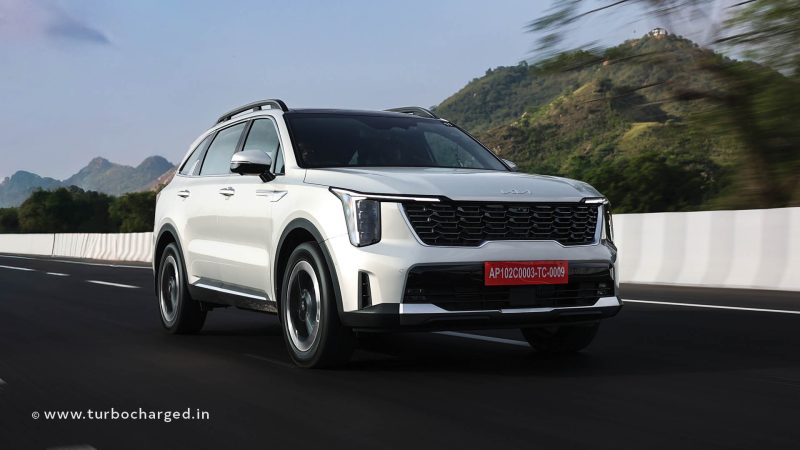
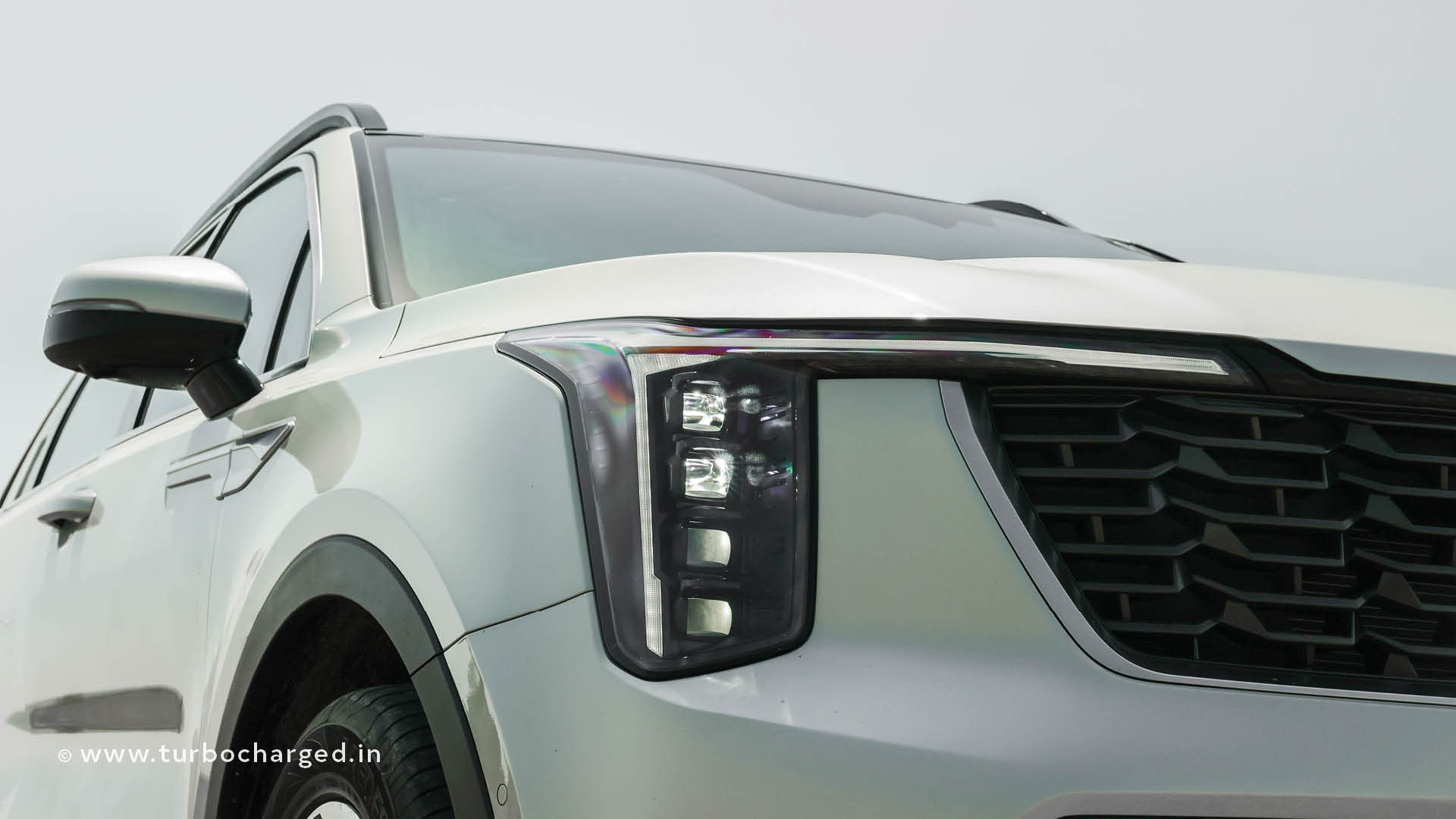
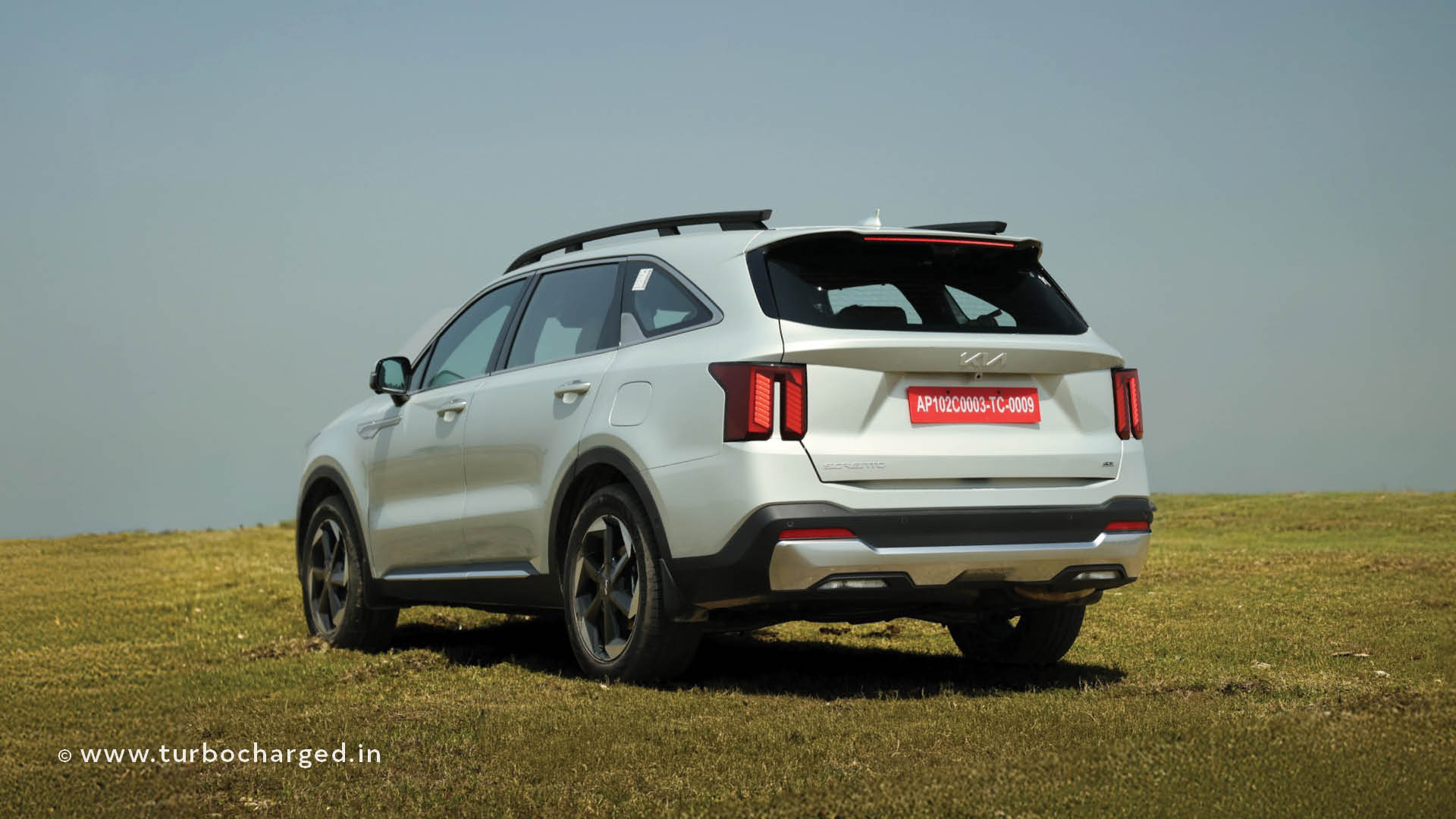
But before we get to the interesting bit, which is the way it drives, I just have to talk about the way the Sorento looks. It is identifiable as a Kia instantly, thanks to that trademark Tiger nose grille, besides which the face also looks rather similar to that of the current Carnival. I also like the headlamps, as they integrate as many as four projectors, stacked vertically, along with sharp looking DRLs. The Sorento is also very well-proportioned as an SUV and pretty large in size, as its wheelbase is just over 2.8 metres and overall length is just over 4.8 metres.
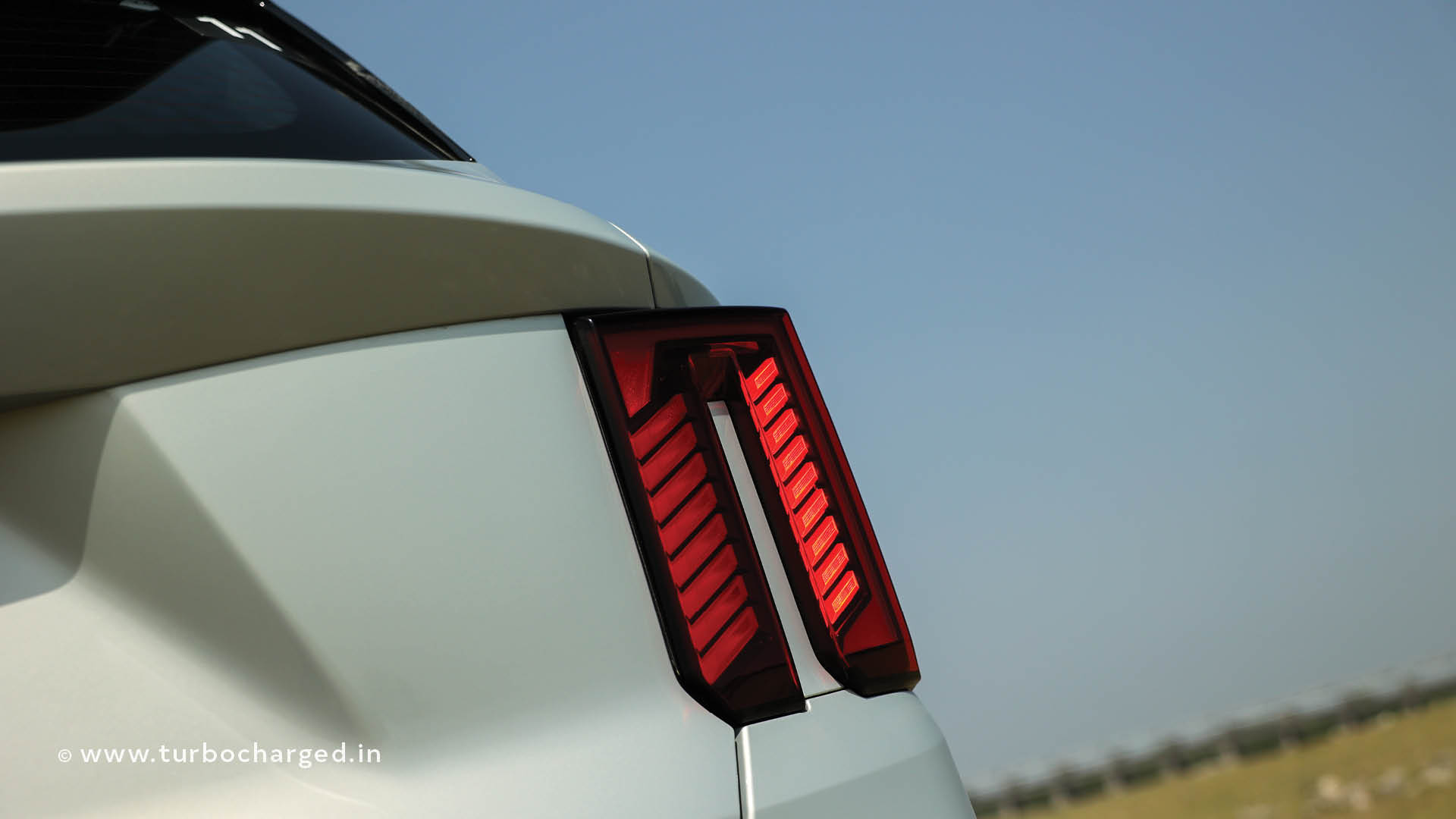
A chrome strip running along the window line, and chrome embellishments below the ORVMs should help in ensuring the Sorento will appeal to Indian buyers. A bigger highlight to me though are its sporty-looking, 19-inch alloy wheels and the slim black cladding above them. The shark fin antenna and roof-mounted spoiler (which also hides the rear wiper) add a dash of sportiness to the derriere, and I also like how the Sorento bucks current trends by not having its tail lamps connected by an LED strip. Overall, the Sorento is a very good looking SUV even if a little old school, and it boasts excellent road presence too.
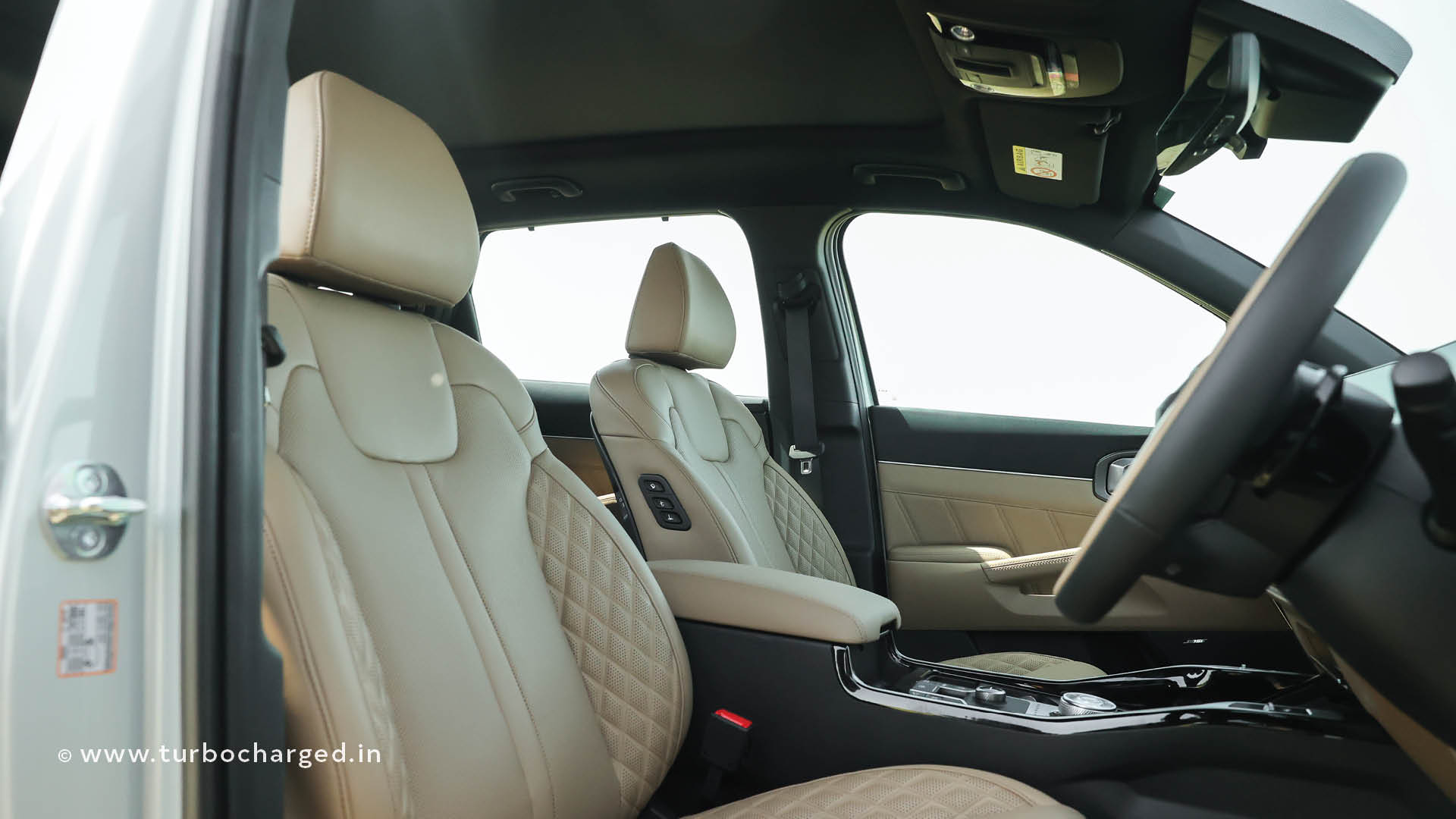
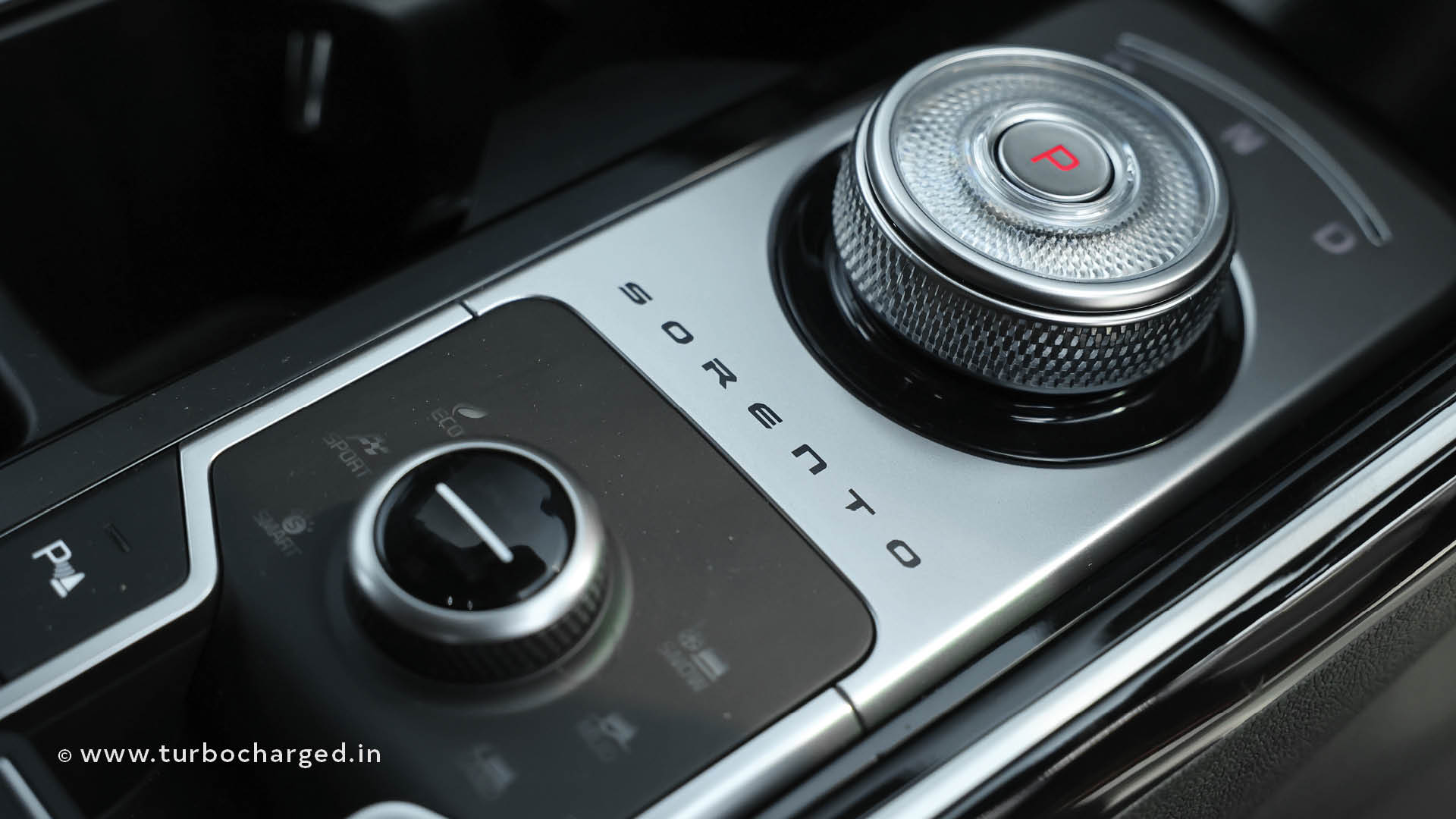
The cabin looks very good and feels very rich too, thanks to the choice of materials including high quality hard plastics, soft touch plastic panels, leather and brushed metal finishes. The centre console looks a little busy, but is very well-laid out, and it uses the same crystal-like drive selector rotor as the Carnival that looks classy, followed by a smaller rotor for selecting drive and terrain modes, two cup holders and a bunch of physical buttons. In fact the cabin looks very thoughtfully laid out overall and in terms of feel, the Sorento’s cabin feels up there with rivals like the Volkswagen Tayron, Skoda Kodiaq and Jeep Meridian. I also like the Sorento’s four-spoke steering wheel better than Kia’s two-spoke unit currently seen in the new Seltos and Syros.
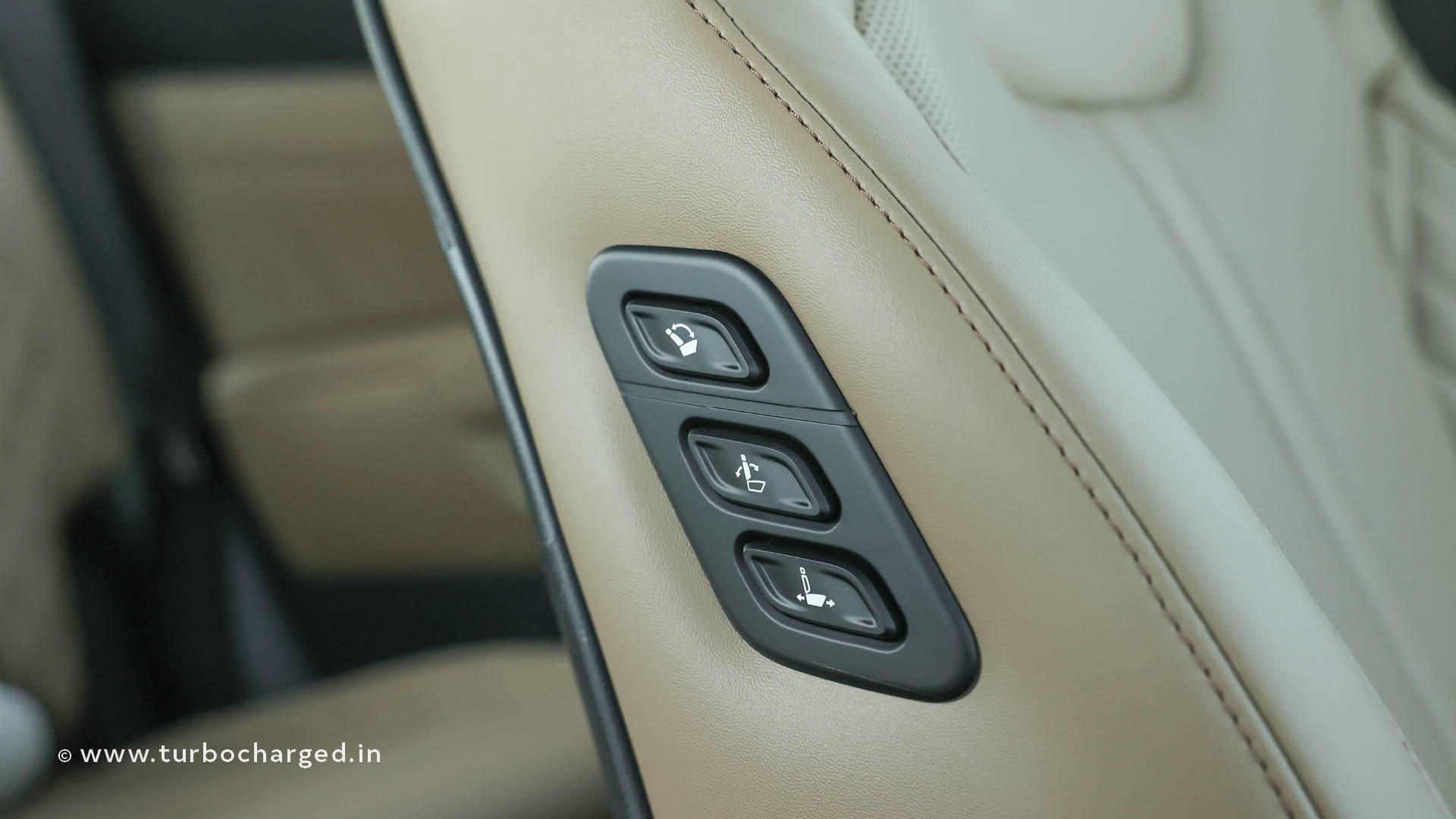
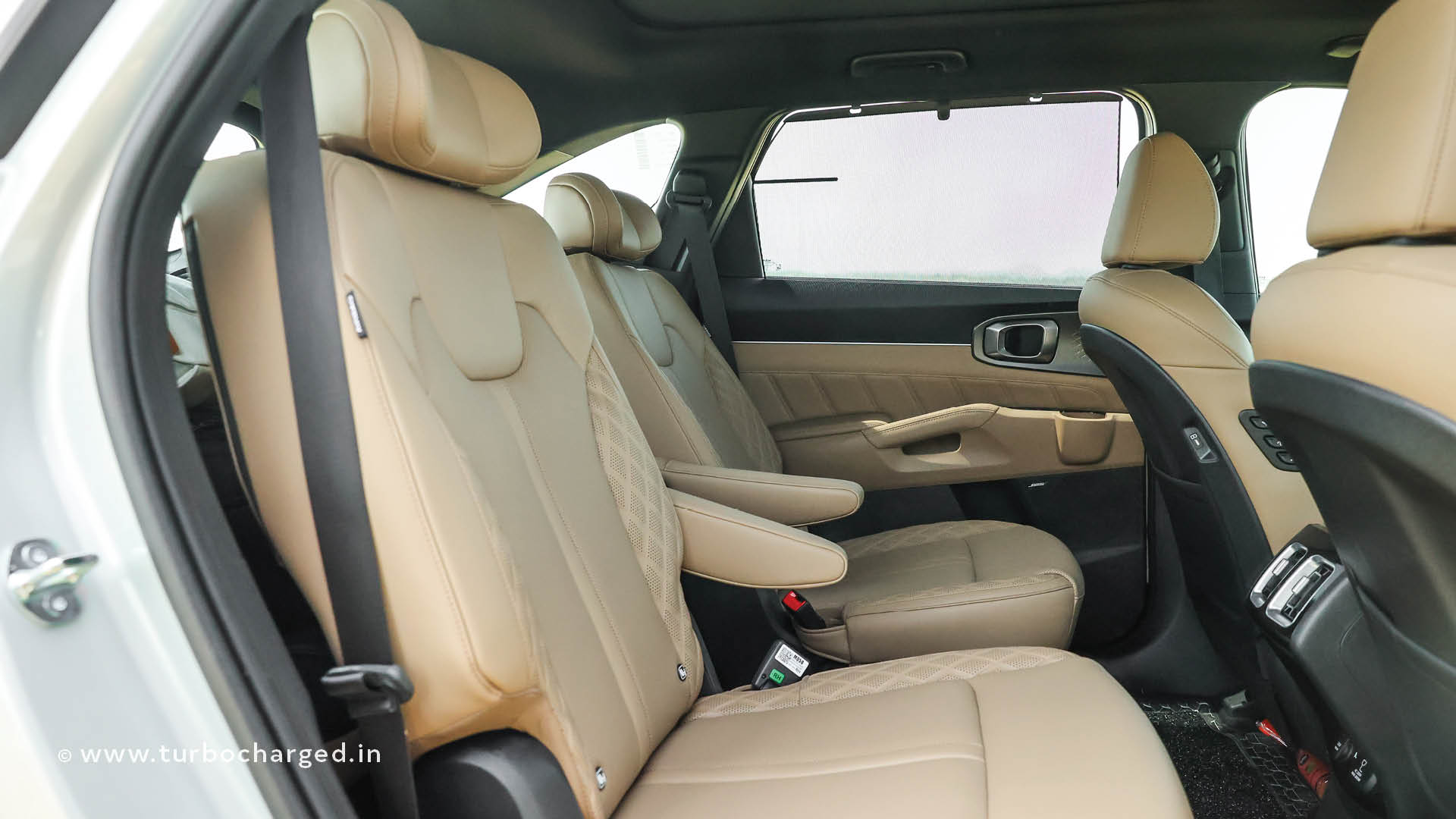
You can have the Sorento as a 7-seat SUV too, but we only drove the 6-seat version which gets a set of captain seats in the second row. The seats are quite the place to be in as they are ventilated, the leather upholstery feels plush, the seat squab is wide, the seat back can be reclined and legroom and knee room are excellent. The third row is not very spacious but thankfully, Kia has ensured third row occupants get AC vents with dedicated blower control and Type-C USB ports. Second row occupants also get cup holders that are positioned conveniently on the door itself, along with a feature that’s becoming increasingly common in SUVs, which is the Boss mode that lets you move and adjust the front passenger seat electrically. There’s a 220V socket and a 12V socket as well besides fast charging Type-C USB ports in the second row, ensuring your devices never run out of charge!
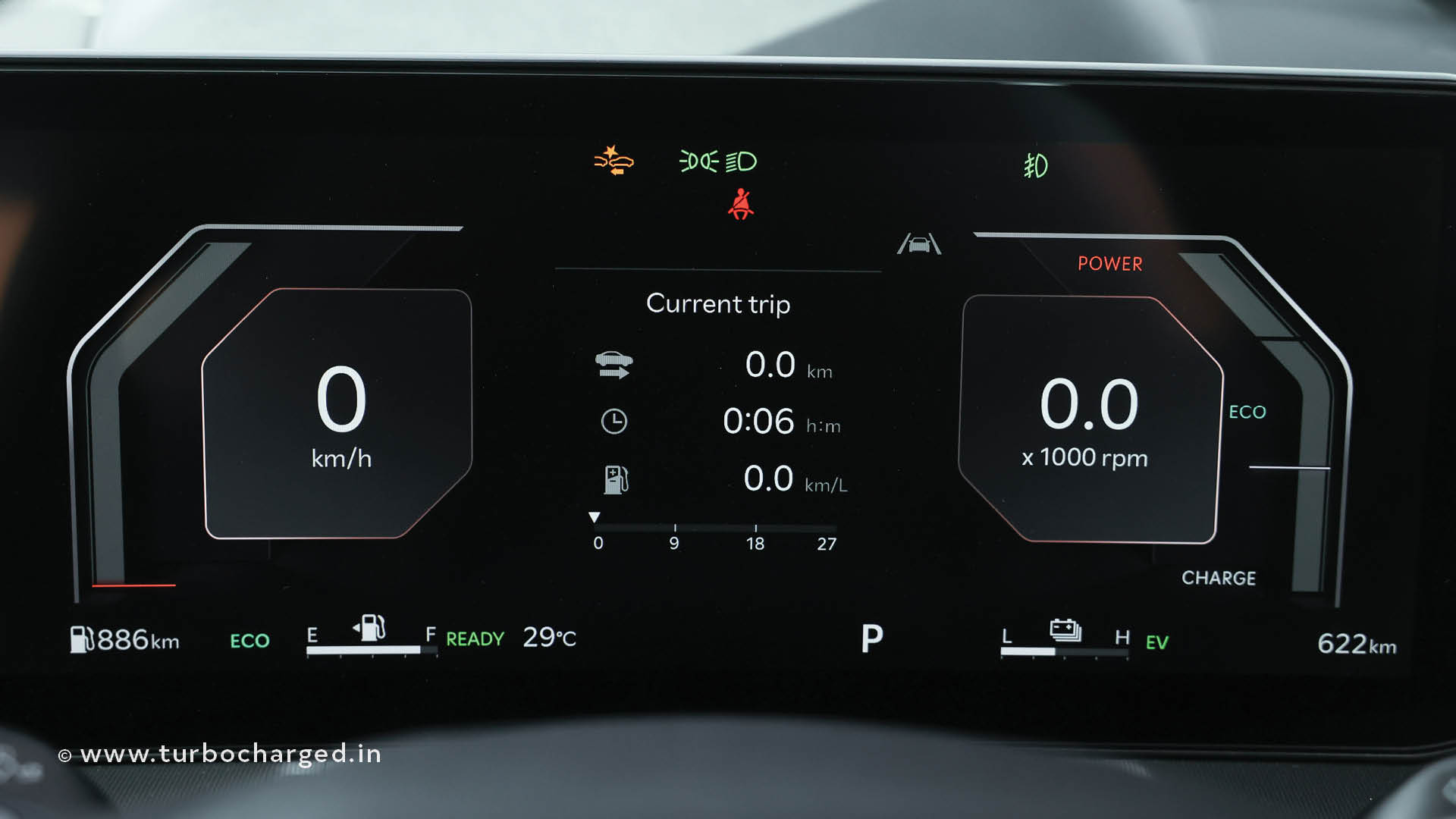
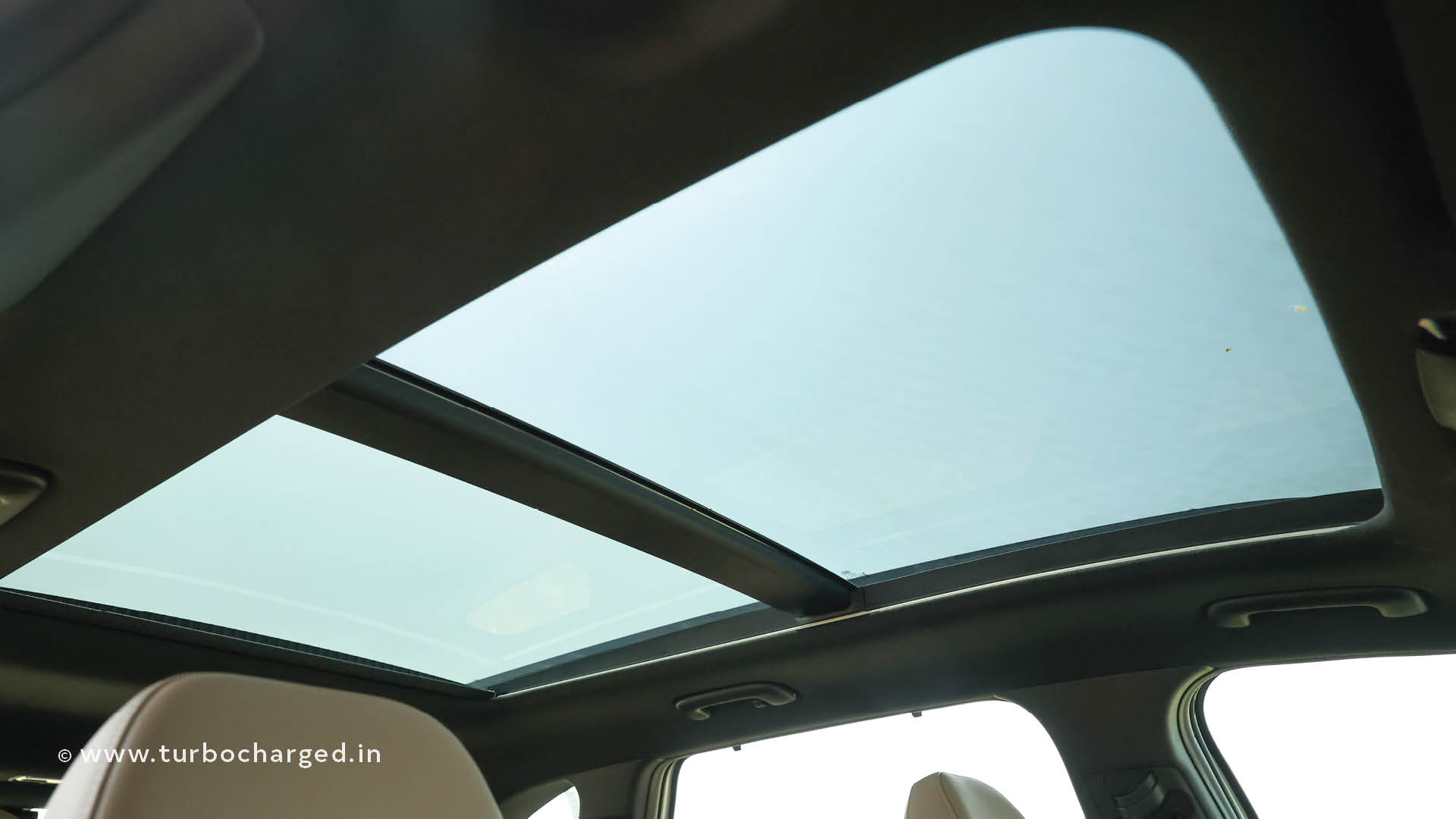
The list of features is the usual Kia affair too for the matter, as the car maker has added everything it could. There’s a digital inside rear view mirror to begin with, which uses a camera the rear to relay visuals onto the screen/mirror, which can also turn into a conventional mirror at the flick of a switch, just like we have seen in Range Rovers. You also get two 12.3-inch screens – one for the infotainment and one driver display – and both look crisp and bright. There’s a head-up display and a 12-speaker Bose audio system as well, which I liked a lot for its acoustics, besides dual-zone climate control, sun shades in the second row. The driver’s seat also gets an ‘Ergo mode’ that simulates a massage function and should help on long drives. On the safety front, you get 10 airbags, Level 2+ ADAS, front and rear dashcams, 360-degree view, remote parking assist to move the SUV forward or backwards using the key fob, TPMS and more.
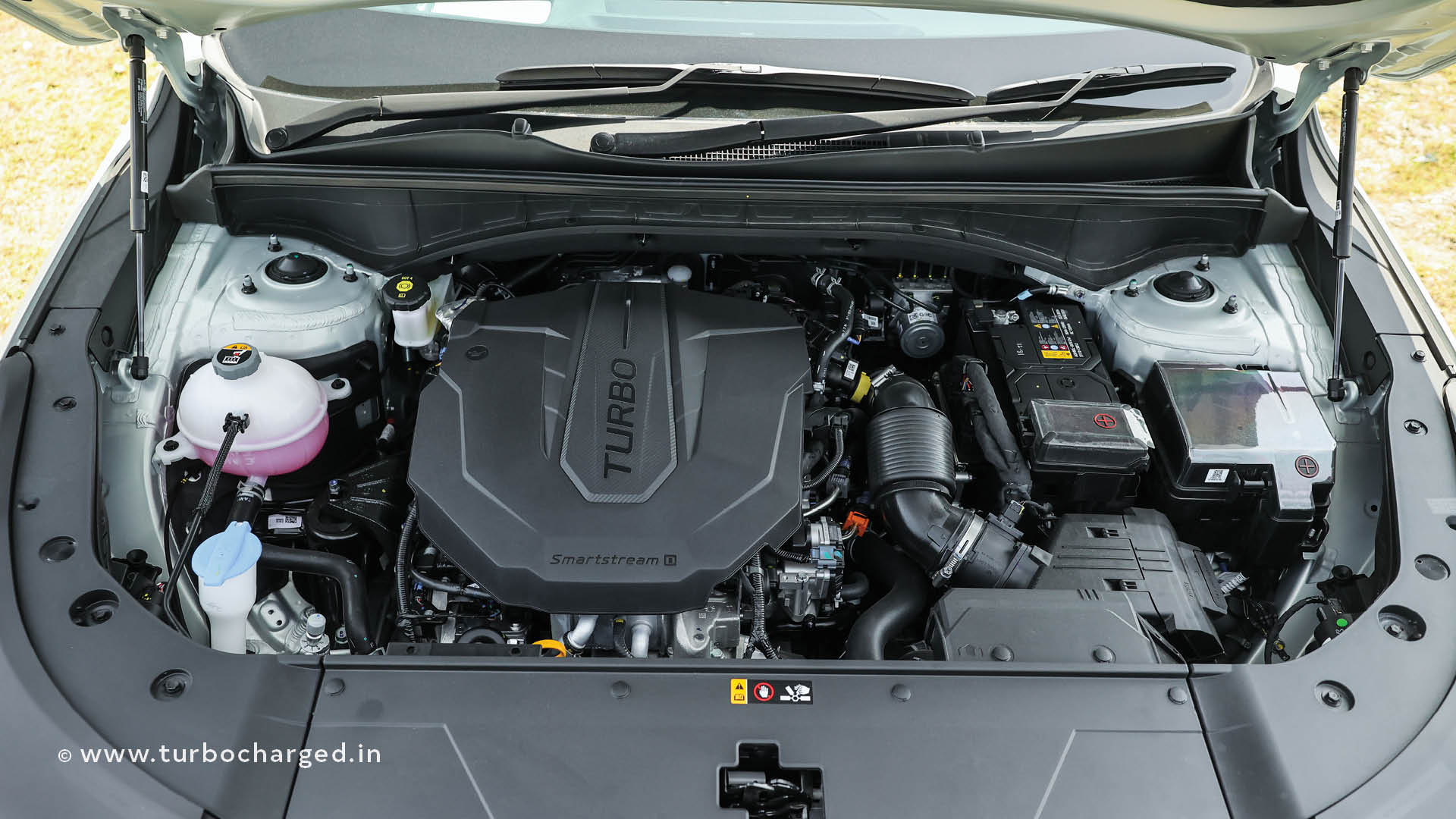
The diesel engine powering the Sorento is a 2.2-litre, four-cylinder engine that offers 193PS and 442Nm and comes mated to an 8-speed DCT that helps it put its power down quickly. So acceleration is quick, and of course, the all-wheel drive system helps as well. That said, the engine has been tuned for putting its power down in an unhurried manner, and while the DCT is quick to respond, the transmission feels more relaxed in nature than expected for a dual-clutch transmission. This should help in having the Sorento appeal to the chauffeur-driven lot of executive SUV buyers, but at the same time, those who like to drive themselves might just be left wanting for some more aggression. Overall, the Sorento diesel feels very smooth and relaxed, and should impress immensely on long drives too, besides which the excellent NVH levels ensure you barely hear the diesel clatter inside the cabin and add to its appeal.
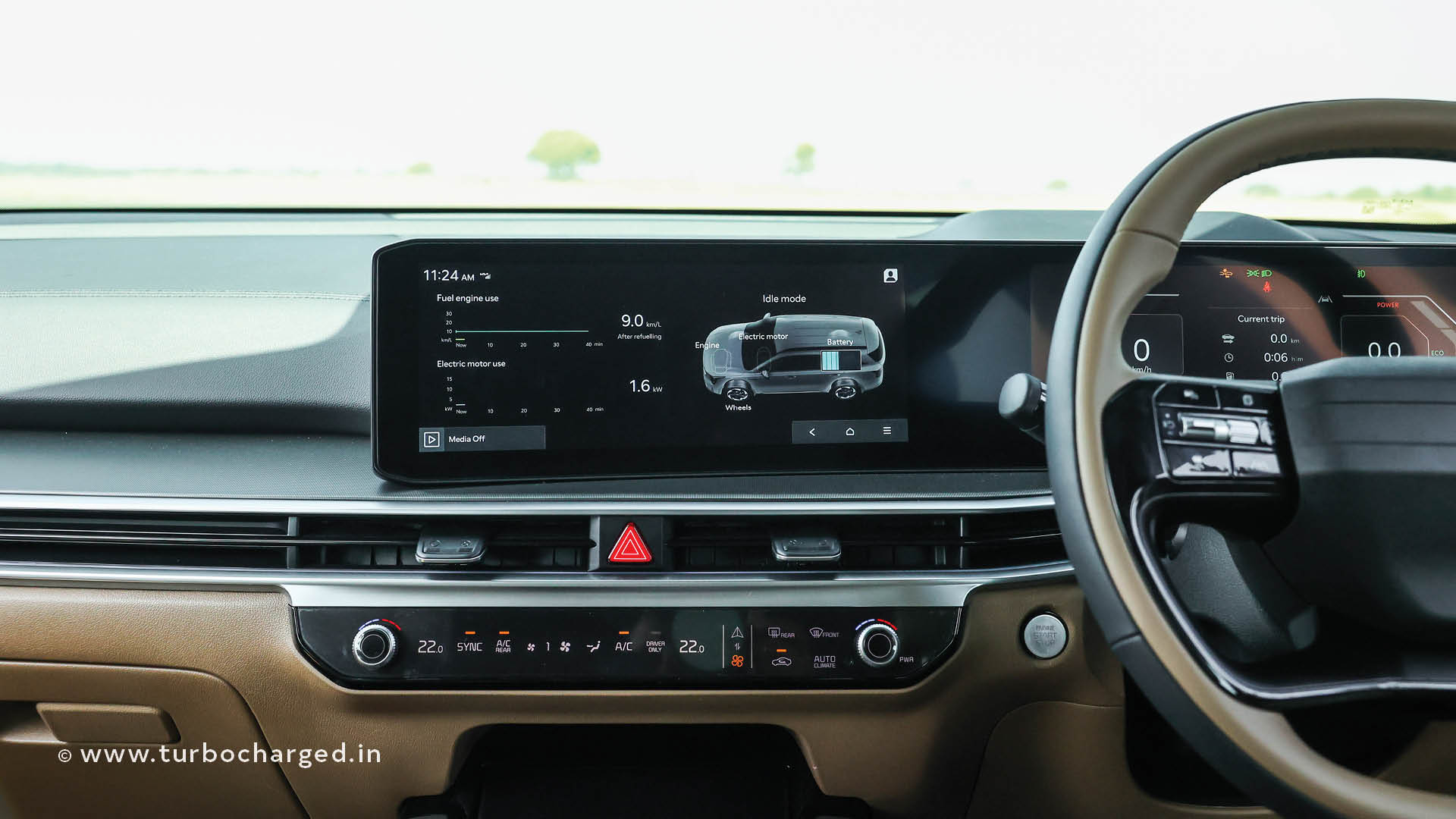
But the strong hybrid is the powertrain that should helping in making the Sorento the talk of the town. Because it clubs a 1.6-litre, four-cylinder, turbocharged petrol engine with an electric motor, and you can also have the hybrid with an all-wheel drive system, which is a combination that no other manufacturer is offering in India currently. The petrol engine offers 180PS and 265Nm, while the electric motor offers an additional 65PS and 264Nm, ensuring performance is brisk, be it from standstill, or on the go. It’s also interesting to note that the Sorento hybrid uses a 6-speed torque converter automatic, which is not something we have experienced on any hybrid in India previously. You also get paddle shifters that let you change gears conventionally in Sport mode, but in Eco or Smart mode, they switch roles to let you adjust regenerative braking levels. The petrol engine also feels smooth and refined, and NVH levels are low, which adds to the hybrid’s likeable manners. One of the biggest highlights to me though is the fact that this the first strong hybrid in its segment, which gives the Sorento a distinct edge, especially, since it can do well over 1,000km on a tankful, unlike any other SUV in its class.
Words Abhay Verma
Photography Saidatta Naik, Tanmay Vartak