


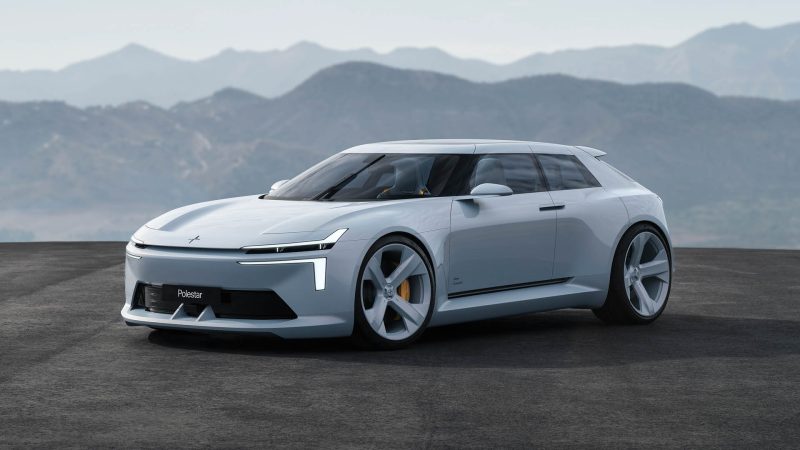
The Polestar Formula 2023 concept car has officially been revealed. Its design elements are expected to be seen in future Polestar models; it is meant to be a physical manifestation of the brand’s Formula 2030 business strategy.
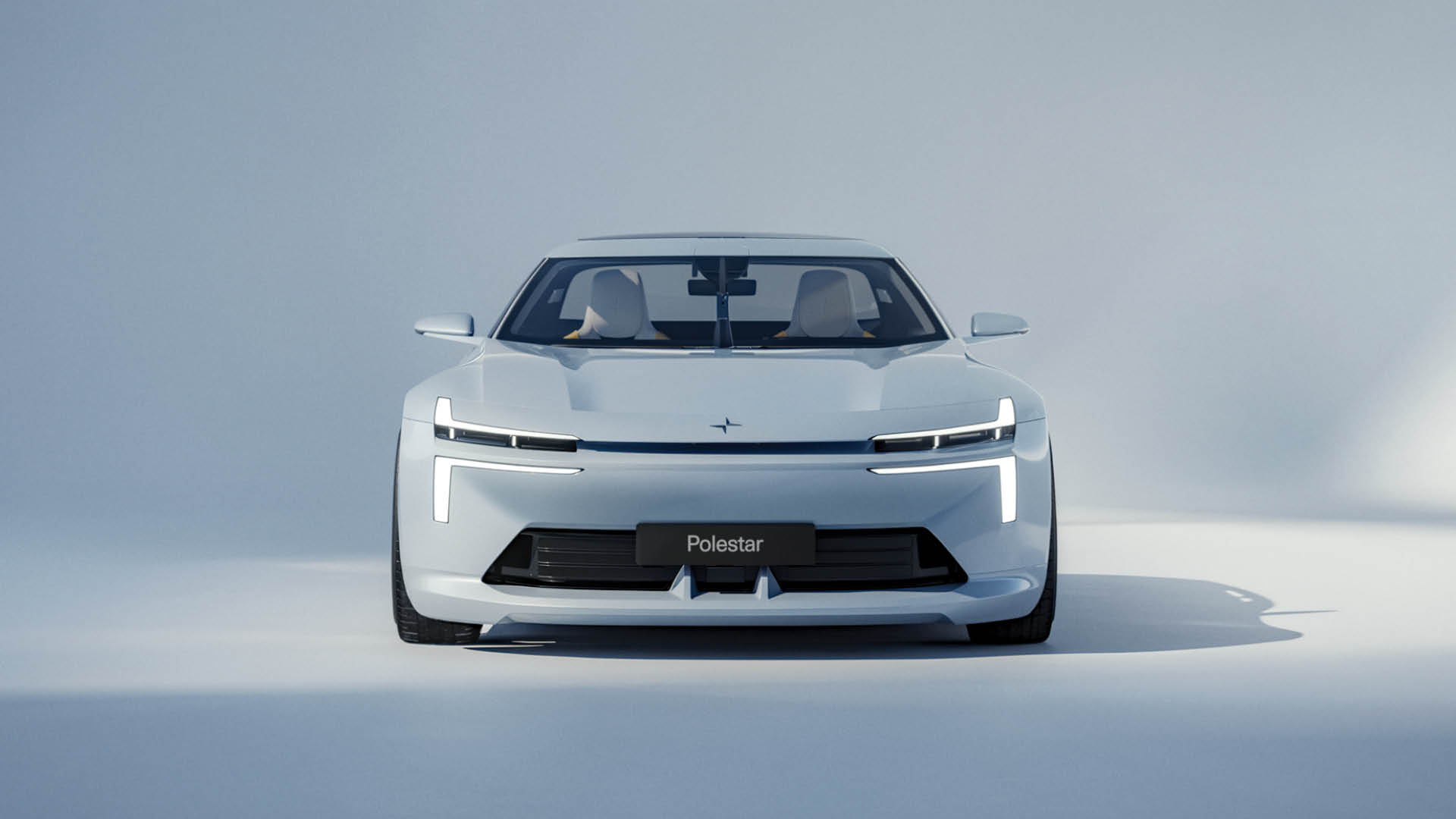
The Formula 2030 concept has been designed in the form of a four-door electric shooting-brake with opposing doors. Up front, the Polestar Formula 2030 has Polestar’s signature split headlamps, connected by an opening that guides air across the bonnet. Lower down, there is an air dam with an integrated splitter.
Moving to the sides, the Formula 2030 comes with 22-inch four-spoke wheels and golden yellow Brembo callipers, a long bonnet, a cab-rearward stance, short overhangs, and coke-bottle hips. The rear features slim LED tail-lamps and a sloped rear windscreen that flows right down from the panoramic glass roof and is under the spoiler. The rear also includes a diffuser down low.
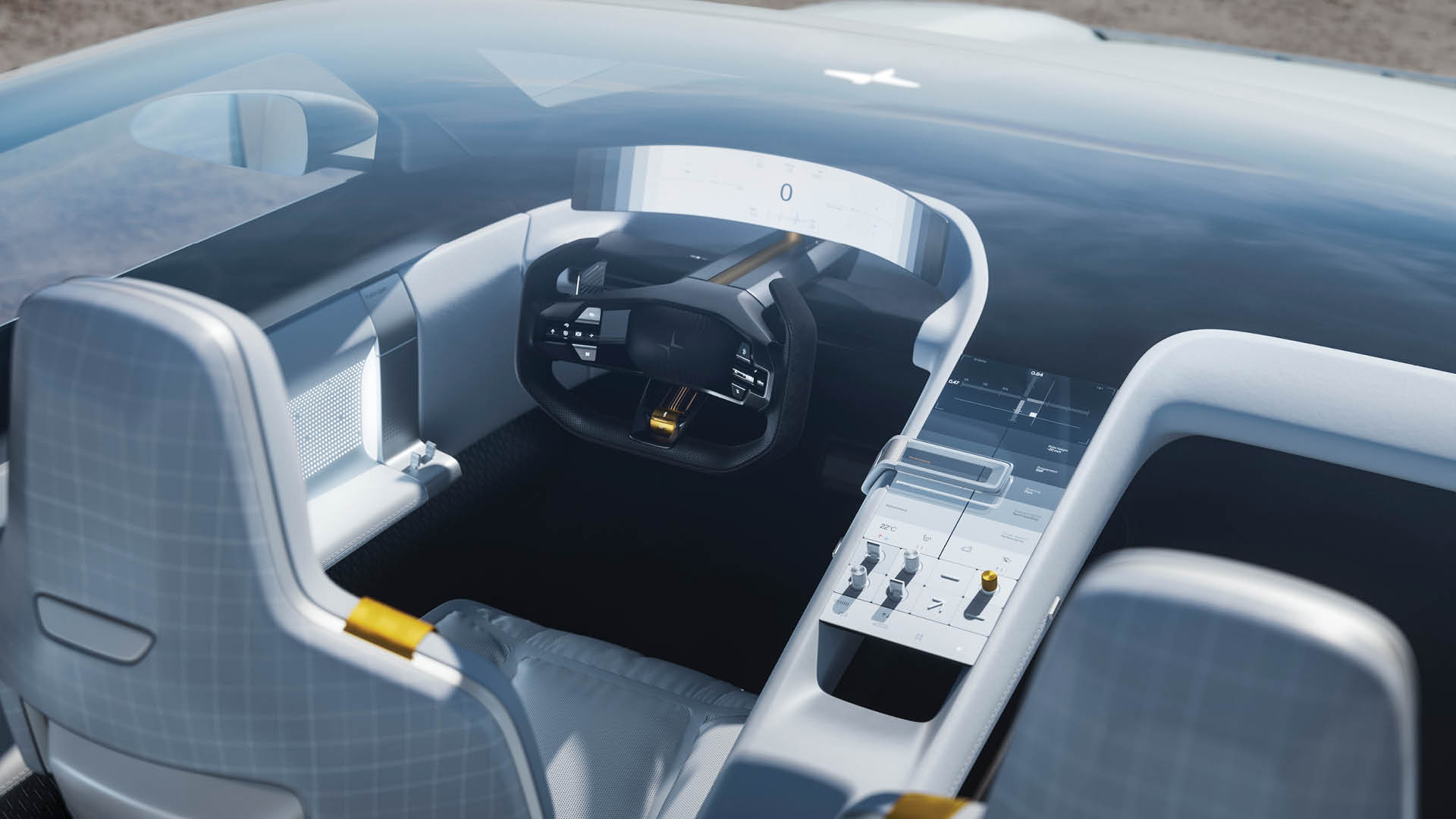
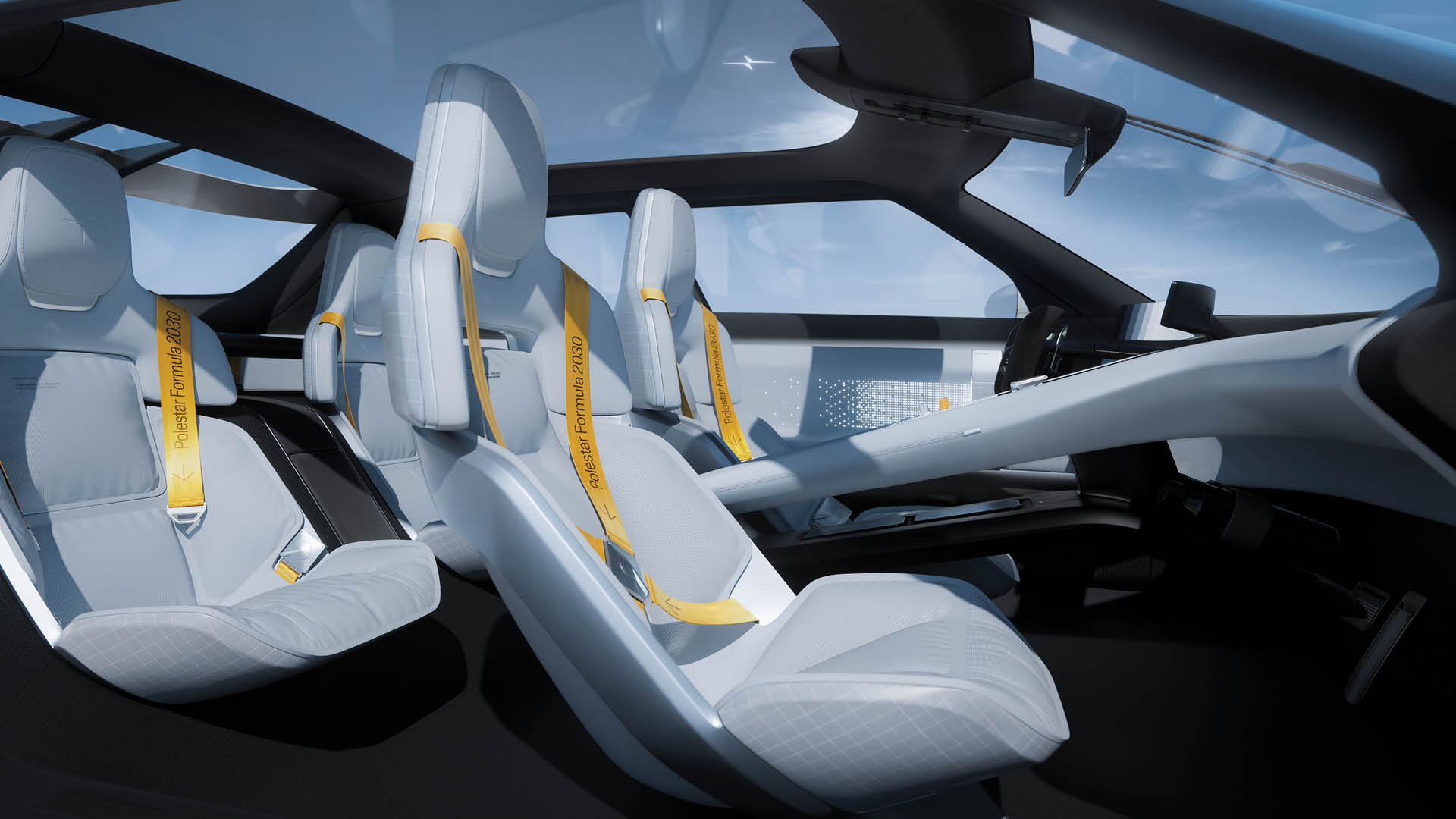
Coming to the interior, the Formula 2030 comes with a dashboard layout that is focused on the driver. It has a high center tunnel that extends all the way to the middle of the rear seats, a 12.2-inch infotainment system, a set of physical controls on the dashboard, and a yoke-style three-spoke steering wheel along with a 20-inch curved display for the driver. Google Gemini is integrated into the Formula 2030.
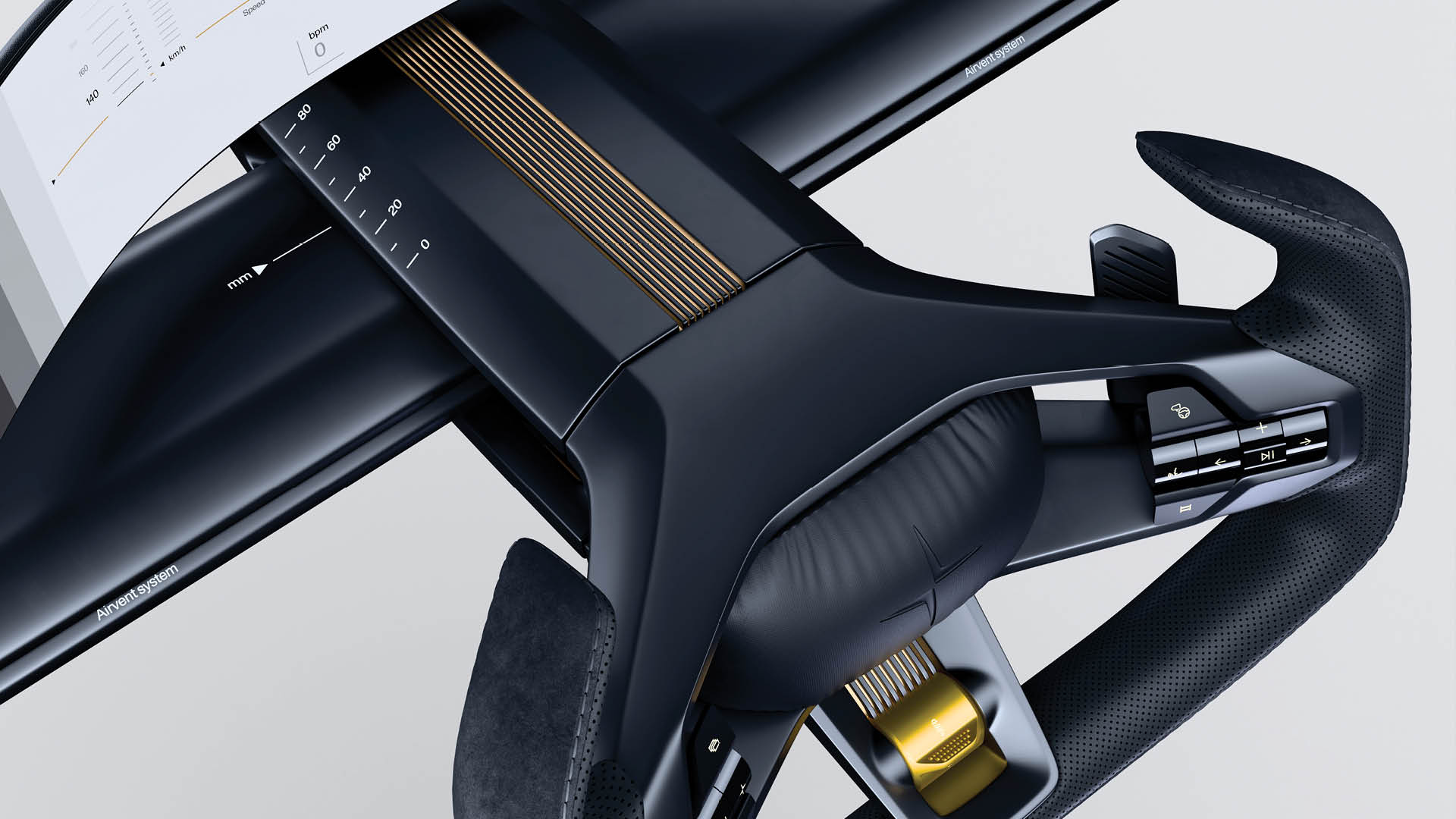
The Formula 2030 can seat four passengers, and each seat comes equipped with air-inflatable bolsters and cushions that automatically shape themselves for the occupant. The interior colour scheme consists of white and black, along with golden yellow finishes for the seat belts, the bottom spoke of the steering wheel, a knob on the center tunnel, and the luggage straps in the boot.
Polestar hasn’t revealed details on the powertrain and performance numbers, but has revealed that the Formula 2030 will have three drive modes, namely Autonomous, Normal, and Performance, and the modes can be selected by sliding the drive mode selector on the center console. In Autonomous mode, the seat and steering wheel move away from each other. Whereas in Performance mode, the driver’s display and the steering wheel are pulled closer to the driver’s seat.
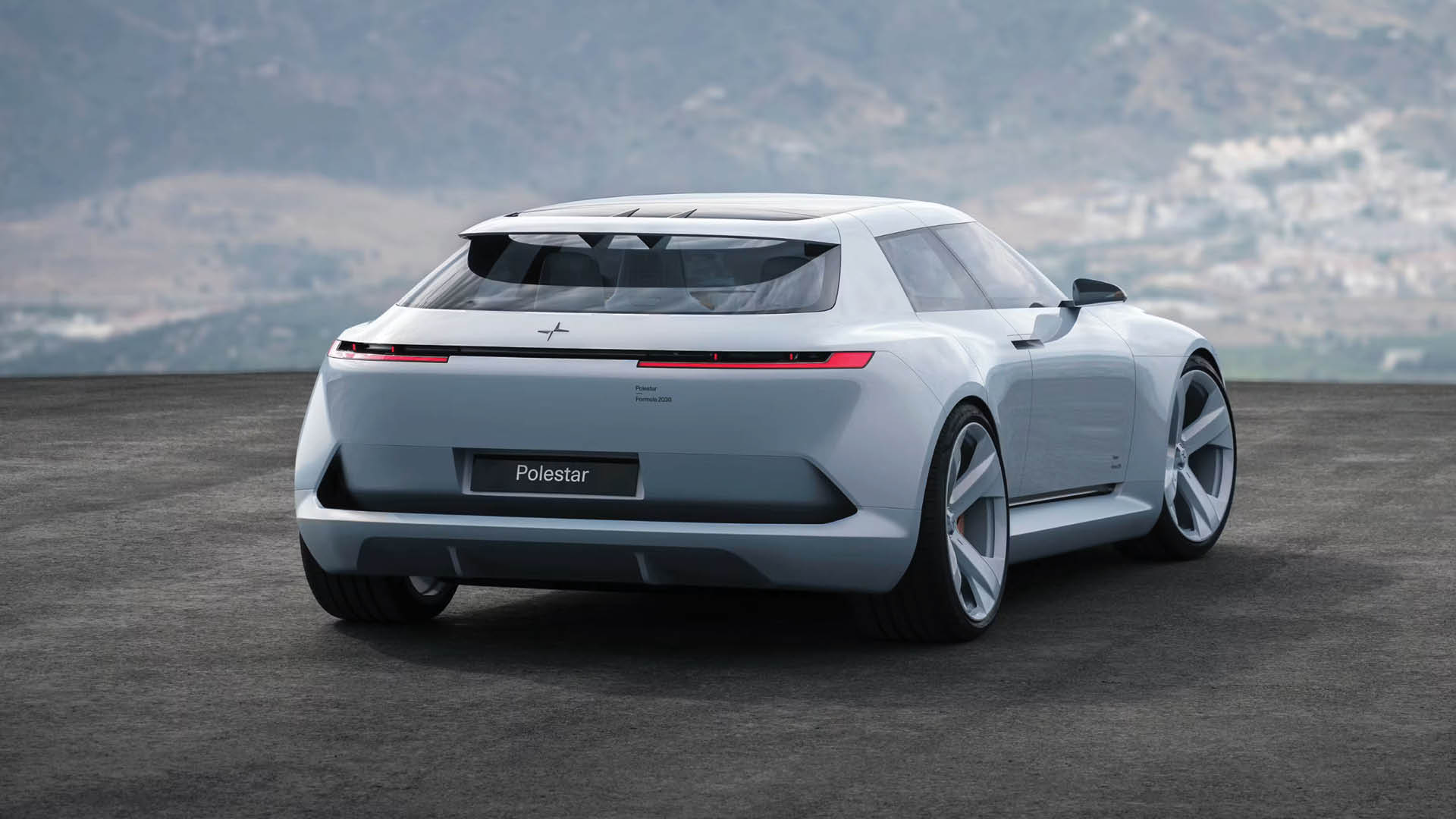
Polestar has confirmed that design elements from the Formula 2030 will appear in the next generation of the Polestar 2 and the upcoming Polestar 7.