Harley-Davidson Breakout Review

Sayantan De
Freedom comes at a price

Words: Sayantan De | Photography: Saidatta Naik

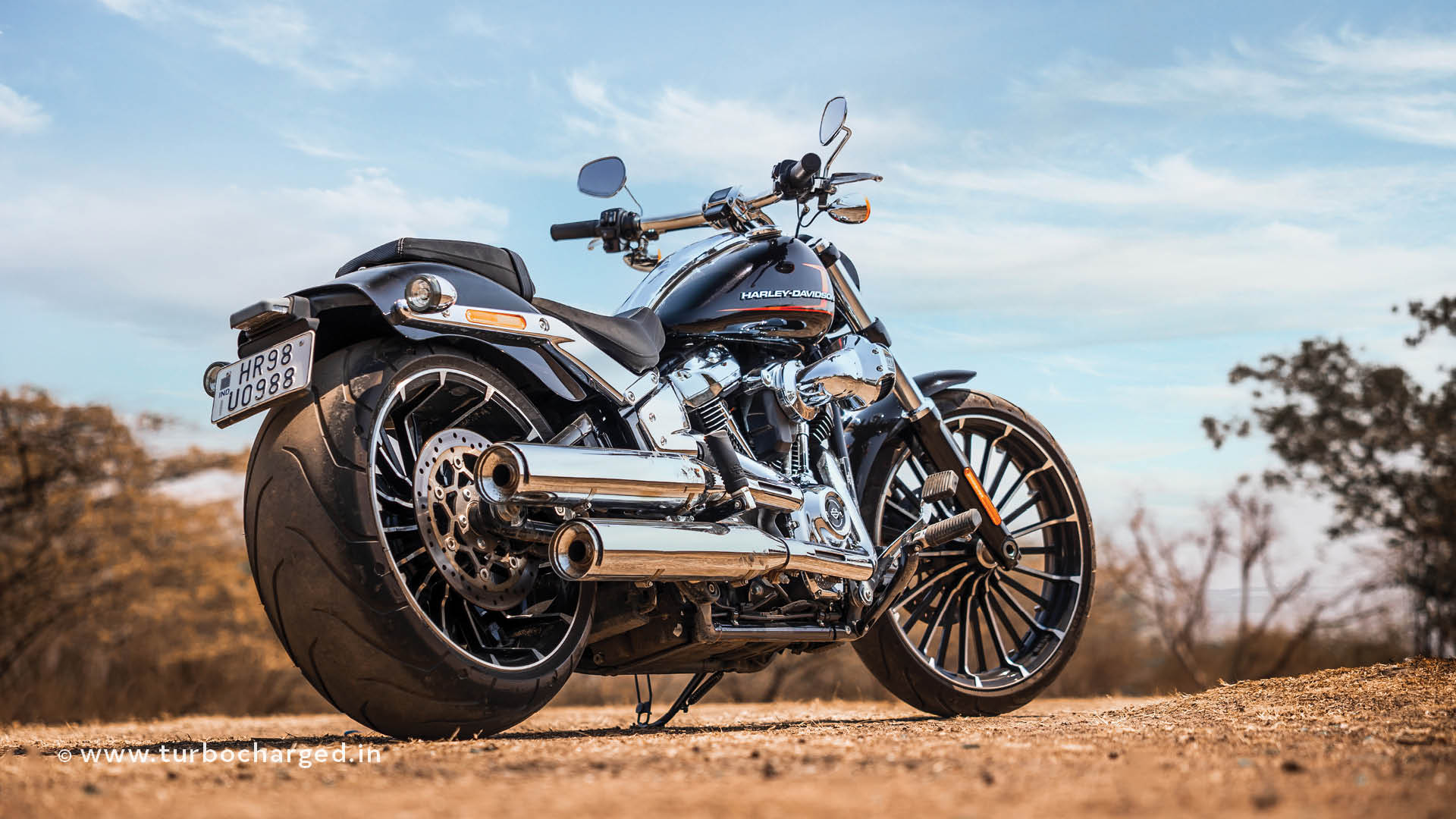
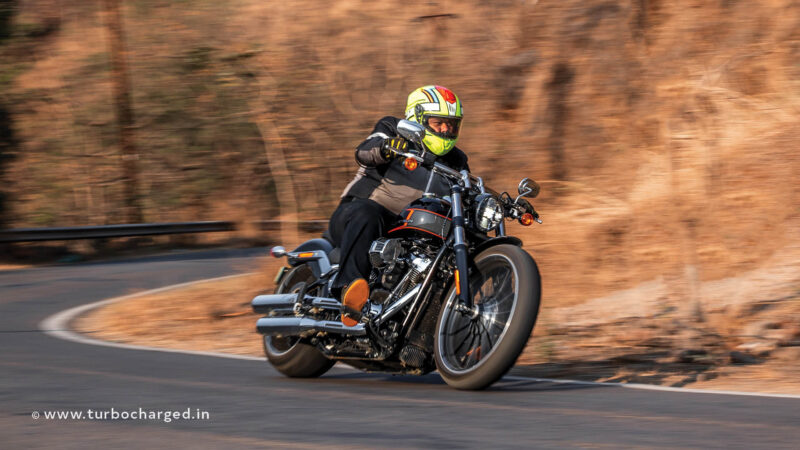
The Harley-Davidson Breakout is the kind of motorcycle that requires a little effort to understand, particularly as a potential owner. But it takes zero effort to understand as an onlooker. This dichotomy of the purpose of this motorcycle made me scratch my head a bit, but after riding it around the city and the highways for a couple of days, it became clear. This is the story of my journey to finally understanding the purpose of a motorcycle that doesn’t make much sense on paper, except lives are not lived on paper, either.
Harley

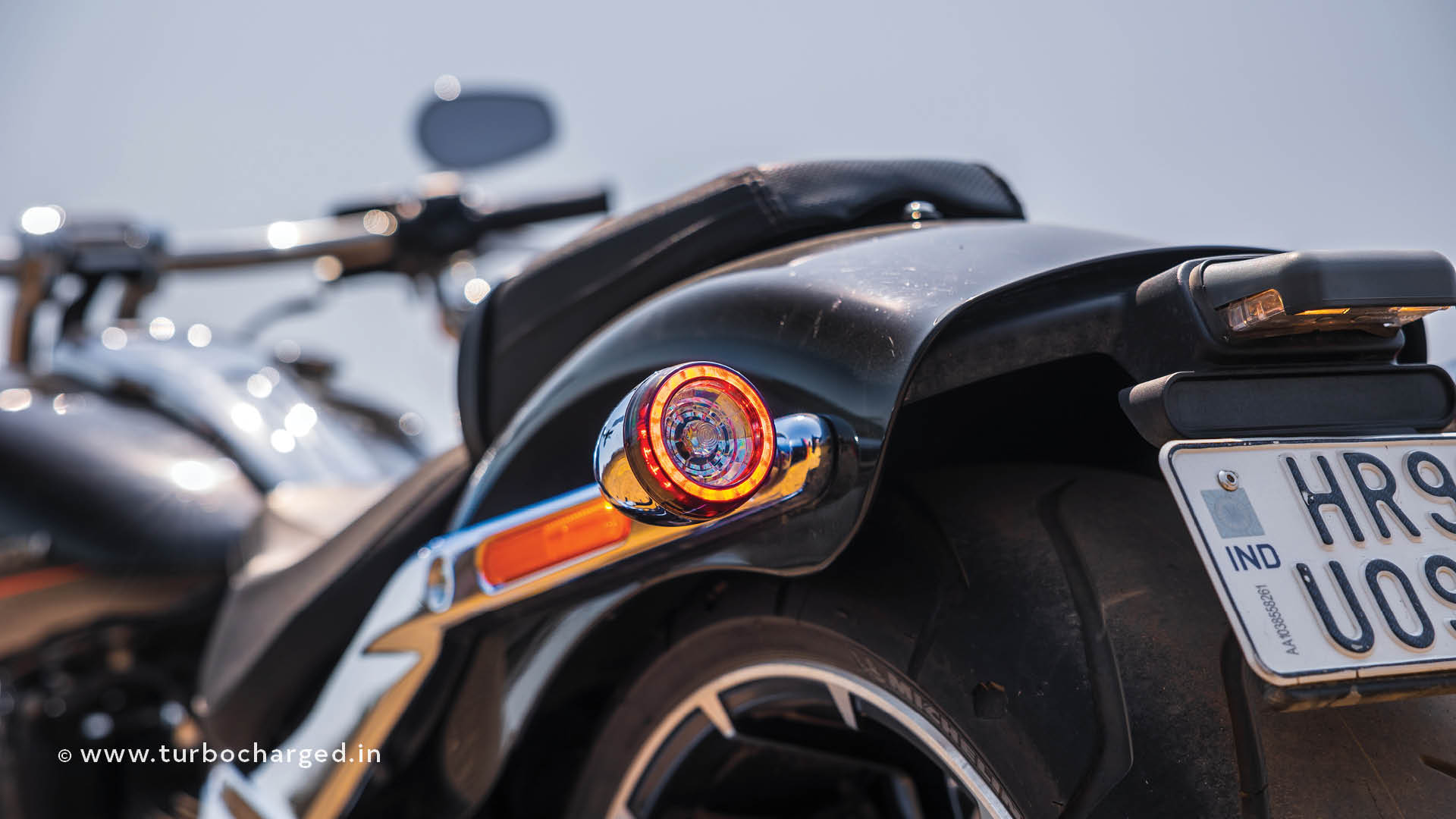
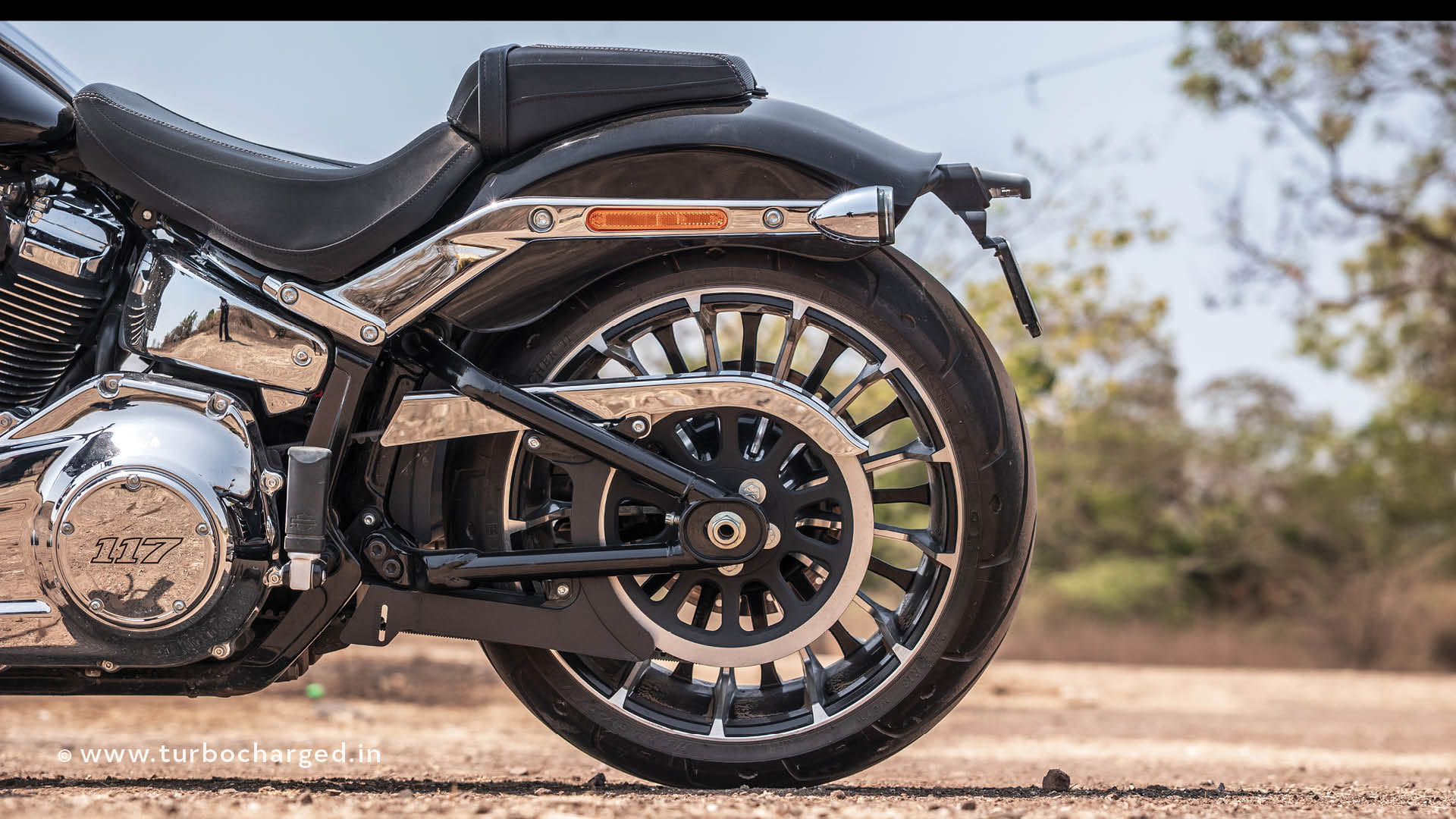
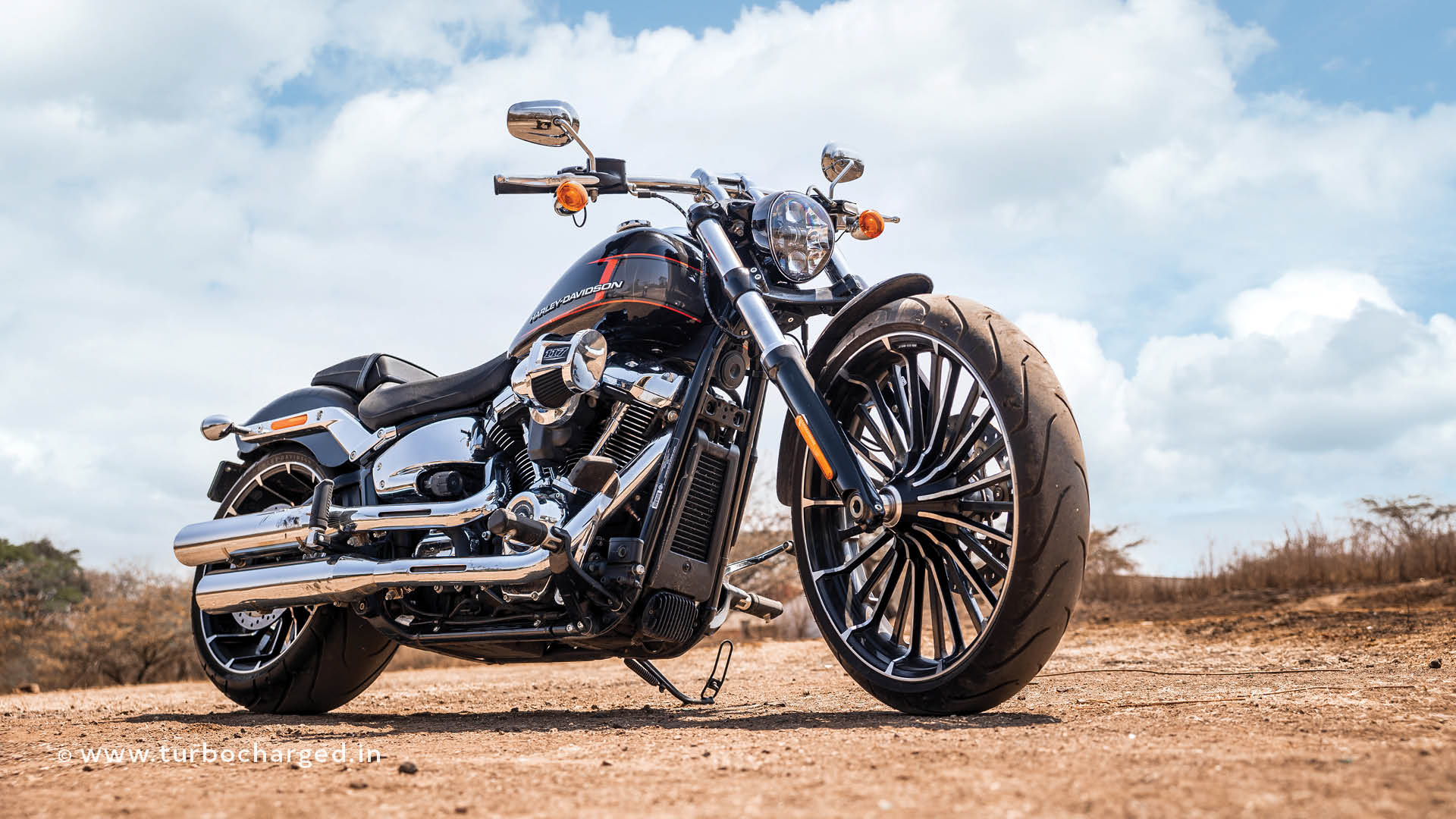
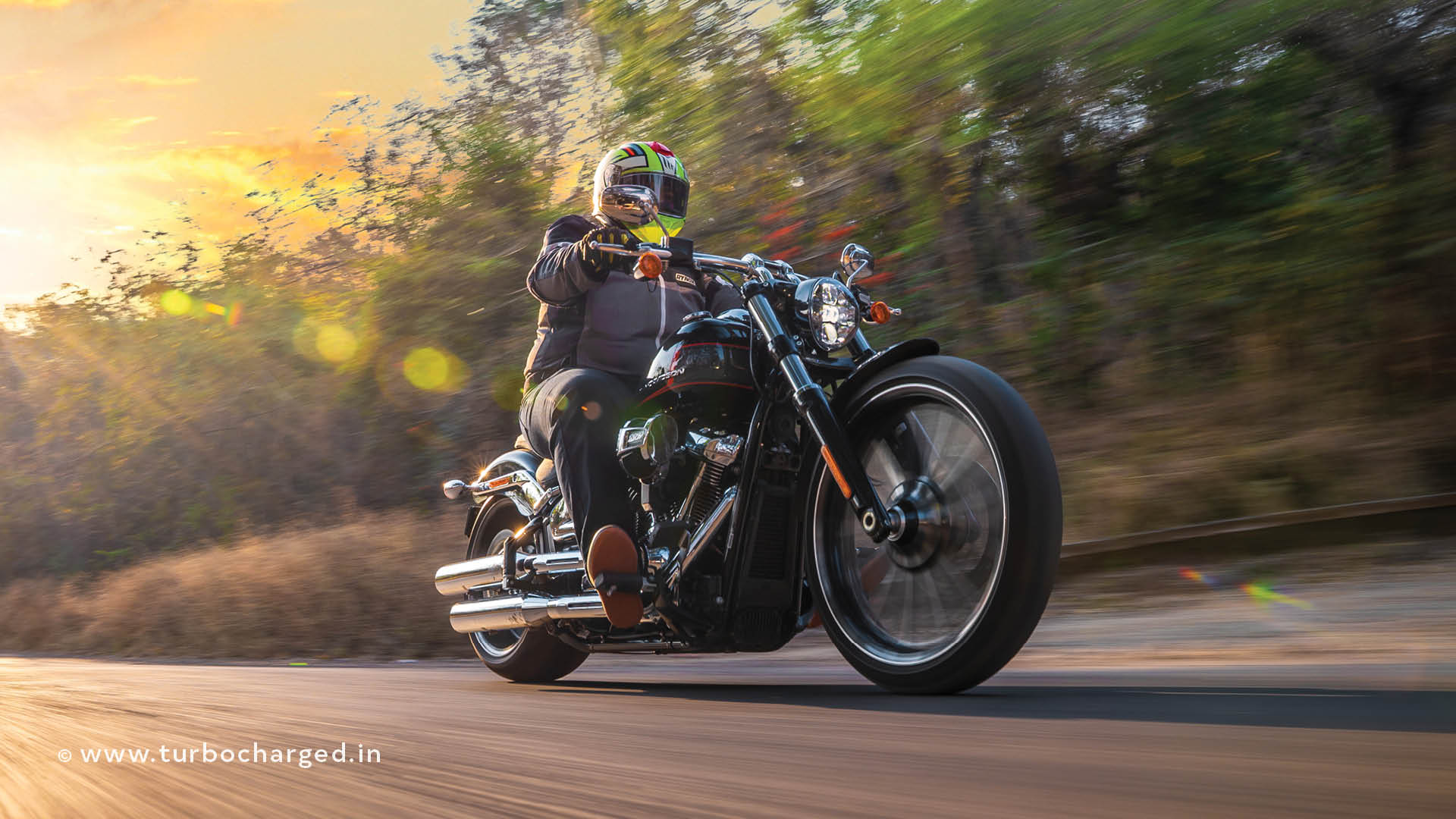
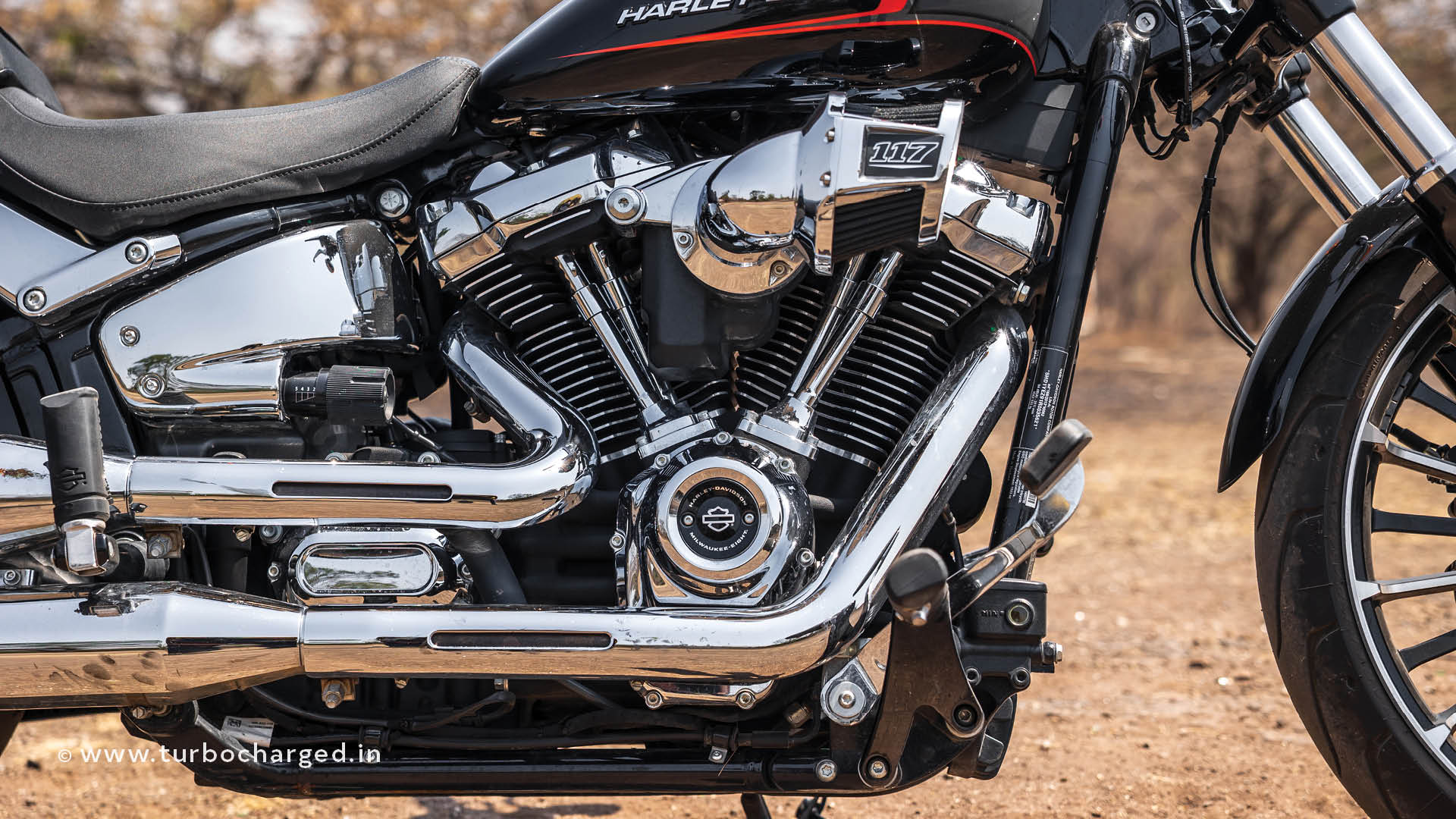
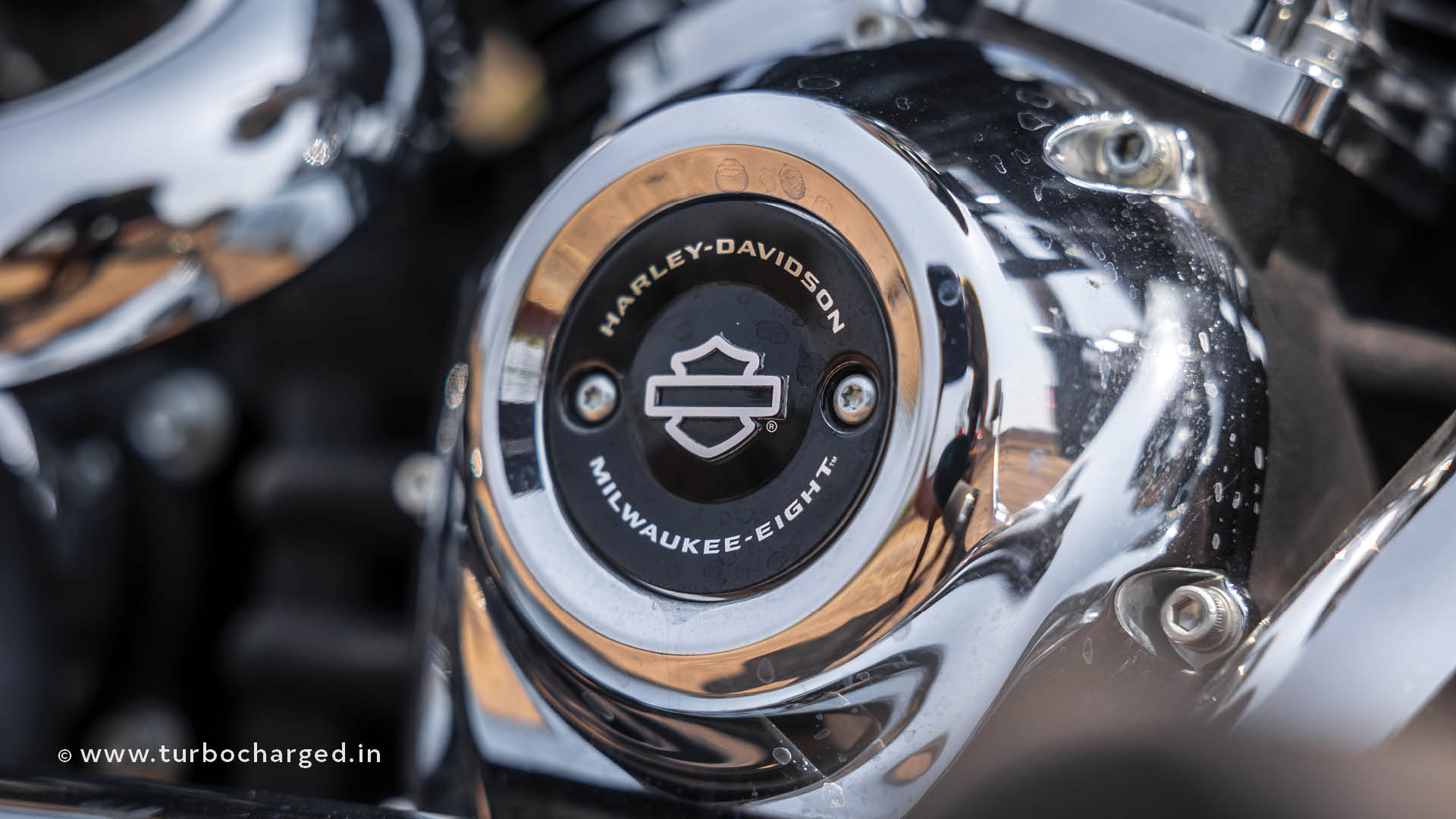
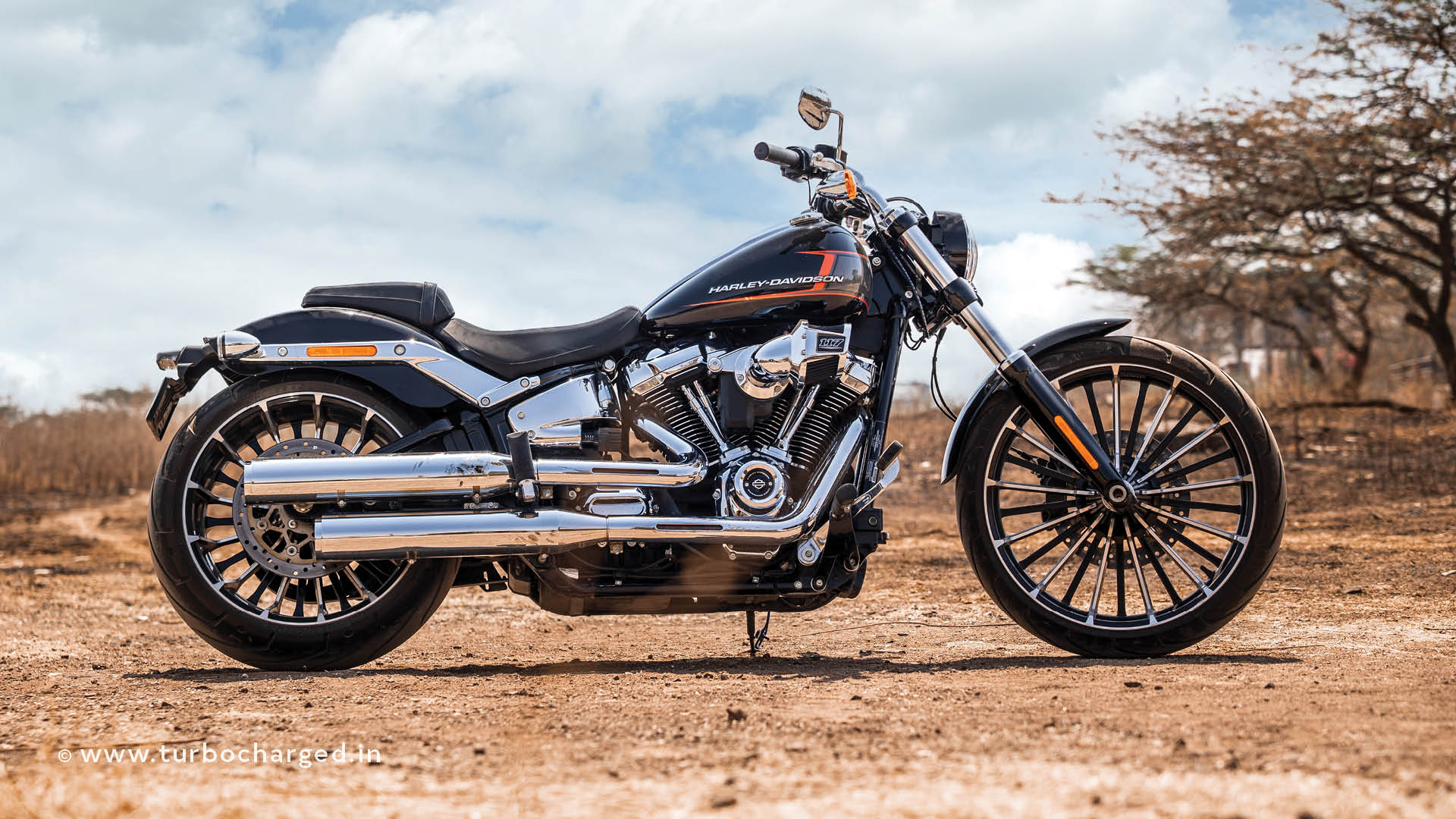
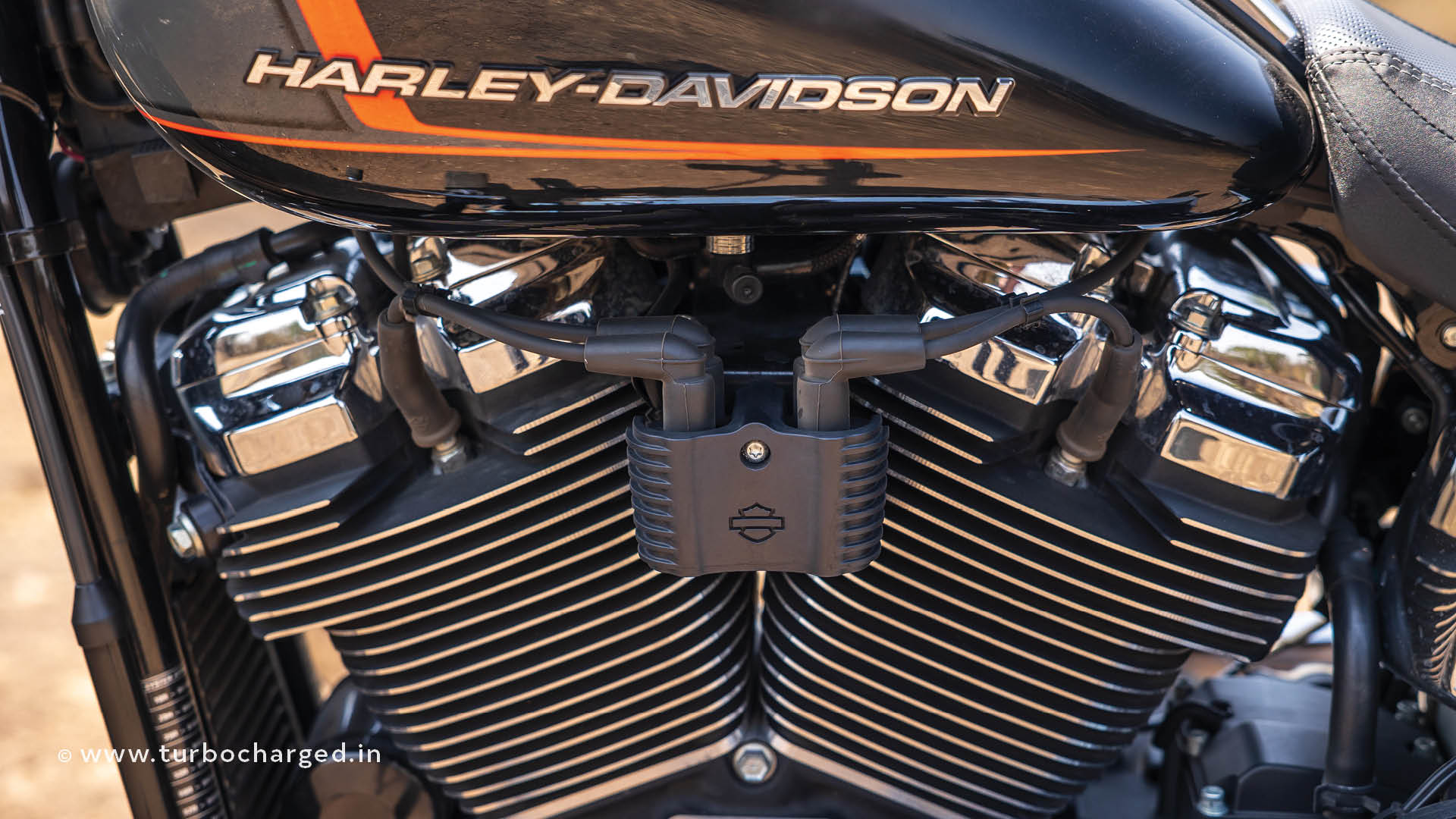
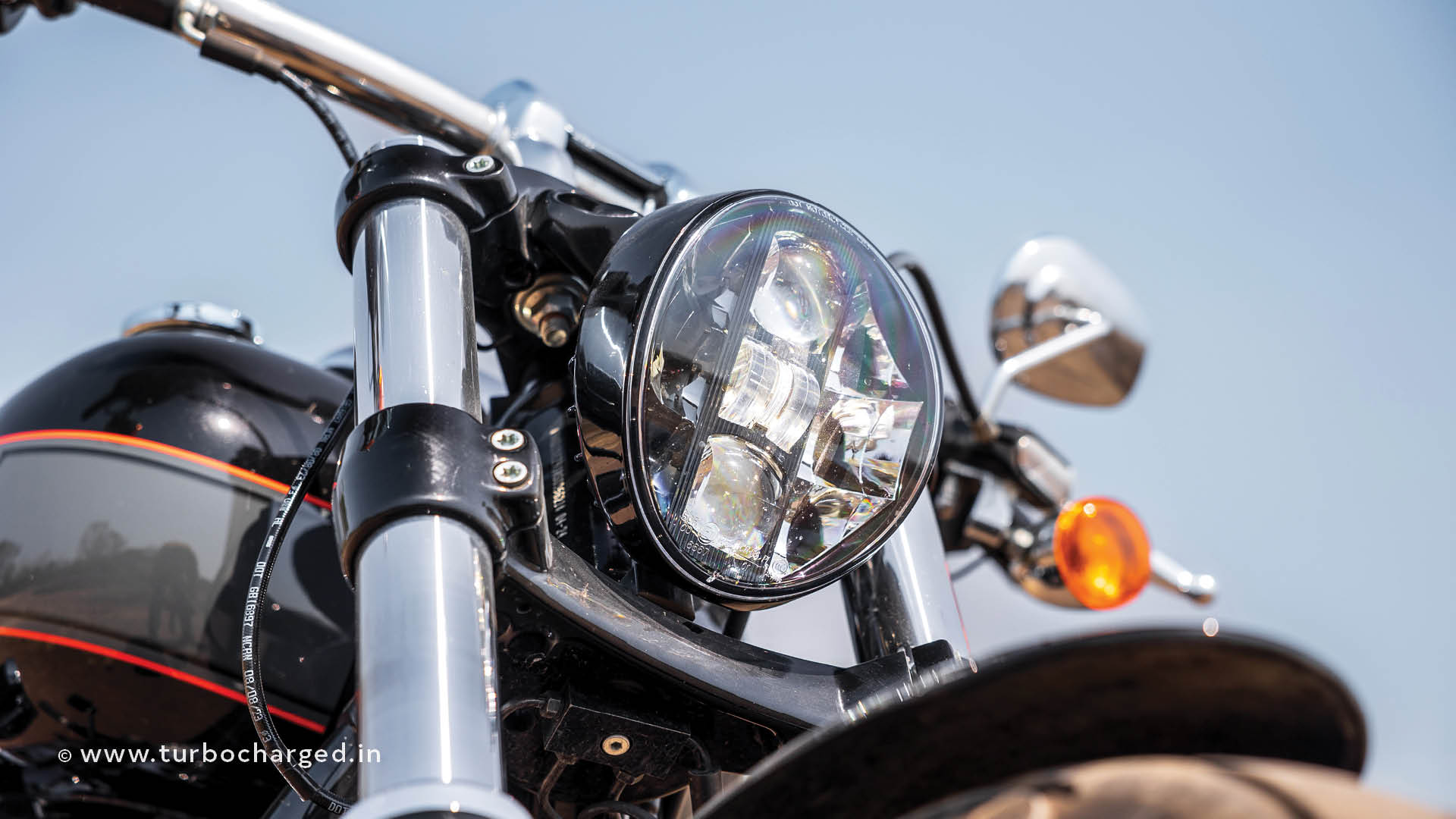
But before we dive into it, a little backstory: the Breakout name first appeared on the Harley-Davidson catalogue back in 2013. However, that was not the first time Harley-Davidson created a ‘factory custom,’ that honour goes to the Rocker C, which came out in 2008. These ‘factory custom’ motorcycles followed the custom chopper design language, which comprises a kicked-out front fork with a lazy rake (the Breakout measures at 34°), fat tyres (the rear tyre on the Breakout is a 240-section), and minimalist instrumentation (Breakout has one of the smallest instrument clusters ever fitted to a production motorcycle, I swear). After discontinuing the Rocker, Harley launched the Breakout. It initially had the 103CI engine (1,690cc), which grew to the 117CI (1,923cc) in 2023, producing 104PS and 168Nm. That torque number is higher than most midsize cars on sale in India, proving once again there really is no replacement for displacement.
The Harley-Davidson Breakout is the kind of motorcycle that requires a little effort to understand, particularly as a potential owner. But it takes zero effort to understand as an onlooker. This dichotomy of the purpose of this motorcycle made me scratch my head a bit, but after riding it around the city and the highways for a couple of days, it became clear. This is the story of my journey to finally understanding the purpose of a motorcycle that doesn't make much sense on paper, except lives are not lived on paper, either. 
But before we dive into it, a little backstory: the Breakout name first appeared on the Harley-Davidson catalogue back in 2013. However, that was not the first time Harley-Davidson created a ‘factory custom,’ that honour goes to the Rocker C, which came out in 2008. These ‘factory custom’ motorcycles followed the custom chopper design language, which comprises a kicked-out front fork with a lazy rake (the Breakout measures at 34°), fat tyres (the rear tyre on the Breakout is a 240-section), and minimalist instrumentation (Breakout has one of the smallest instrument clusters ever fitted to a production motorcycle, I swear). After discontinuing the Rocker, Harley launched the Breakout. It initially had the 103CI engine (1,690cc), which grew to the 117CI (1,923cc) in 2023, producing 104PS and 168Nm. That torque number is higher than most midsize cars on sale in India, proving once again there really is no replacement for displacement. 
Which tells us that big and large, however crude, will always have an advantage. And that essentially defines the motorcycle. That being said, Harley-Davidson engineers are some of the best in the world, and as a result, the Breakout does things you wouldn’t expect it to. The 310kg kerb weight is only felt when trying to push the bike uphill, as the aforementioned wave of torque makes short work of the job of propulsion. The Breakout surges ahead with every twist of the throttle, and the air-cooled V-Twin provides the soundtrack of hundreds of escapist fantasies that were committed to the silver screen.
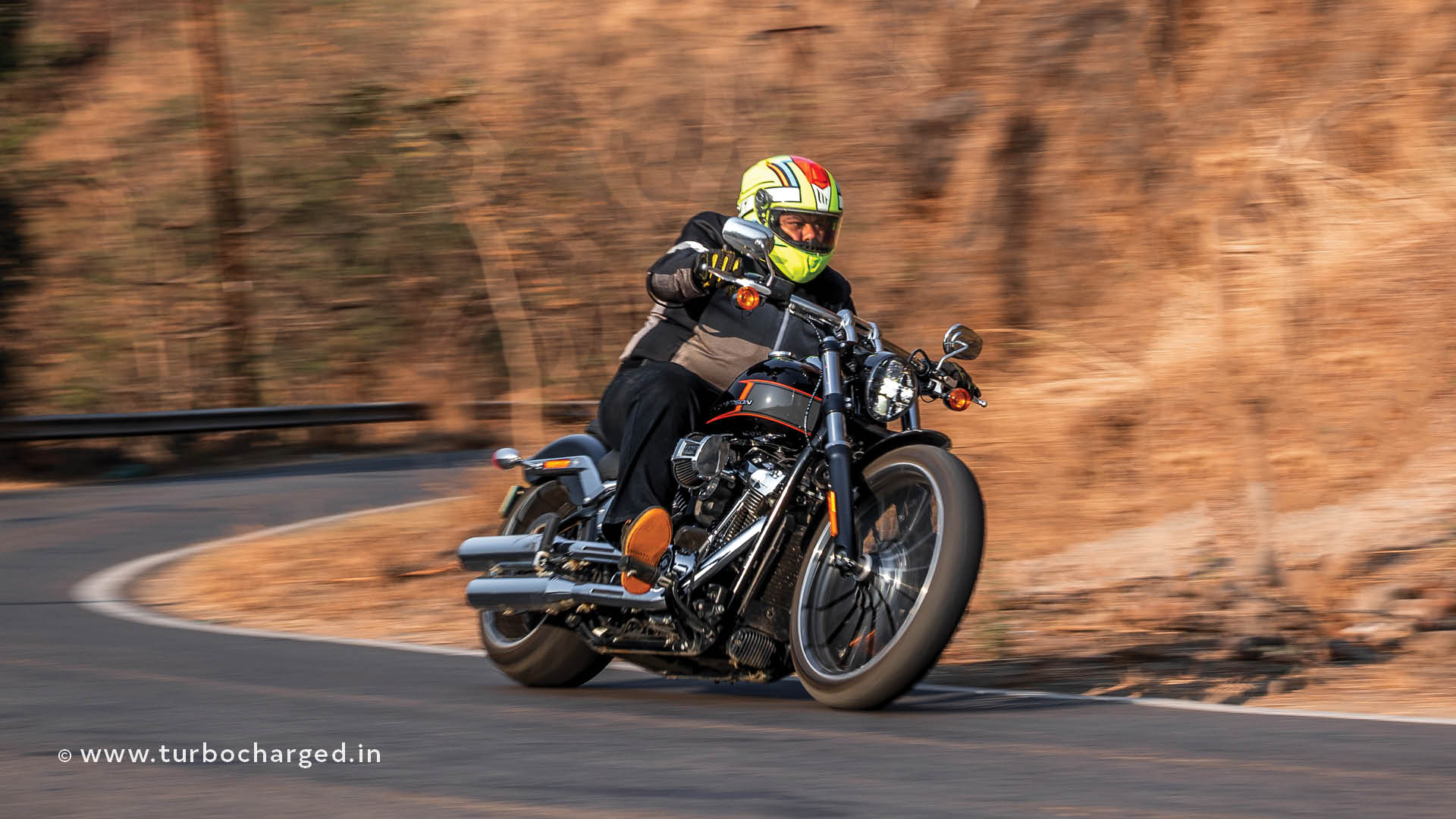
Despite having a wheelbase of 1,695mm, the turning circle is way smaller than expected and causes the same surprise when oil tanker captains are handed the keys to a tugboat. While the rake makes steering slow, it also makes it stable, aided by the county-spanning wheelbase. The chunky rubbers at both ends provide oodles of grip, even on less-than-ideal surfaces. Also, the front brake is quite effective, but like any proper cruiser, both brakes need to be used in tandem to get the best out of the retardation system (the rear brake’s actuation is impeded a bit by the air filter that juts out defiantly). 
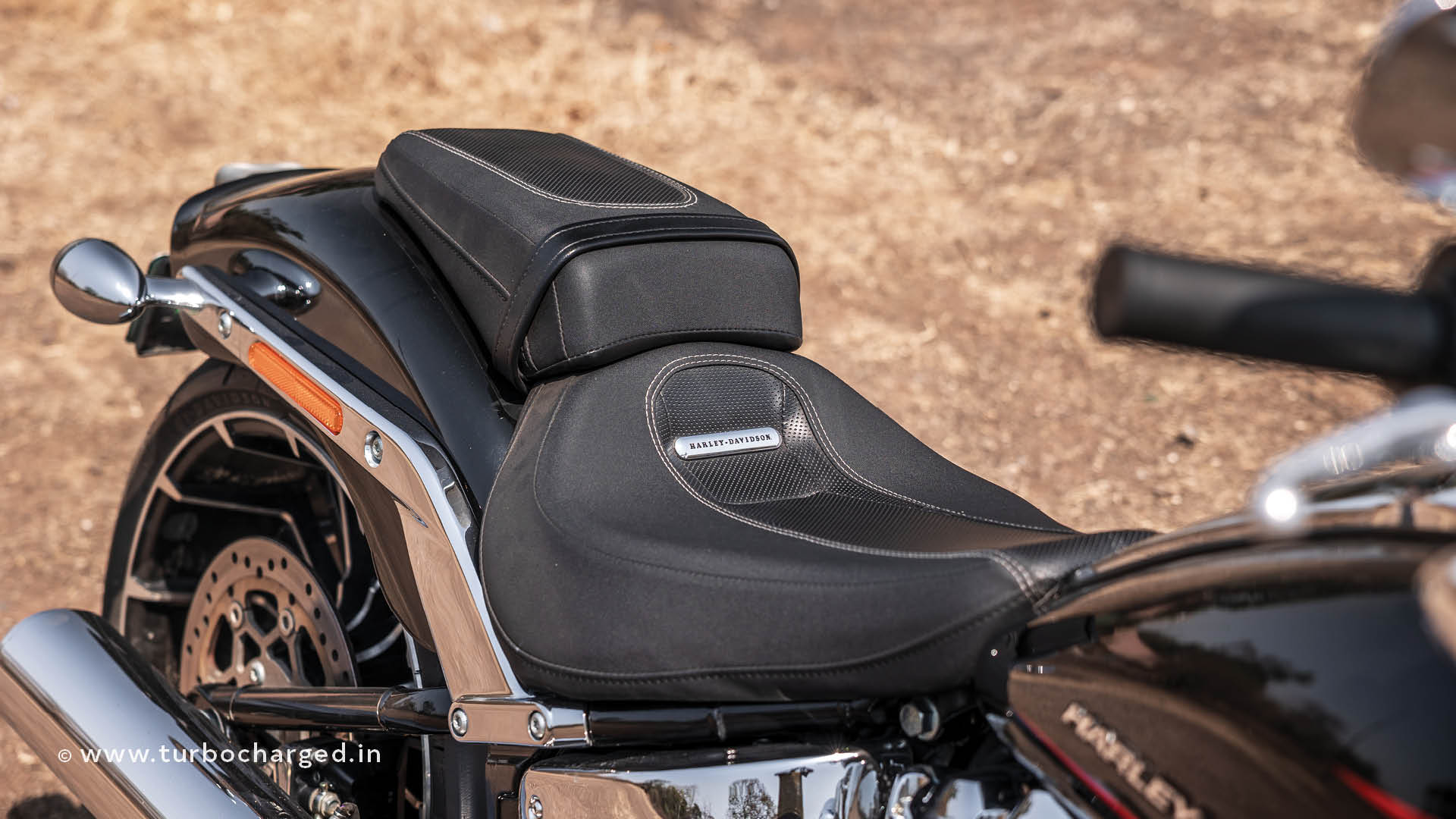
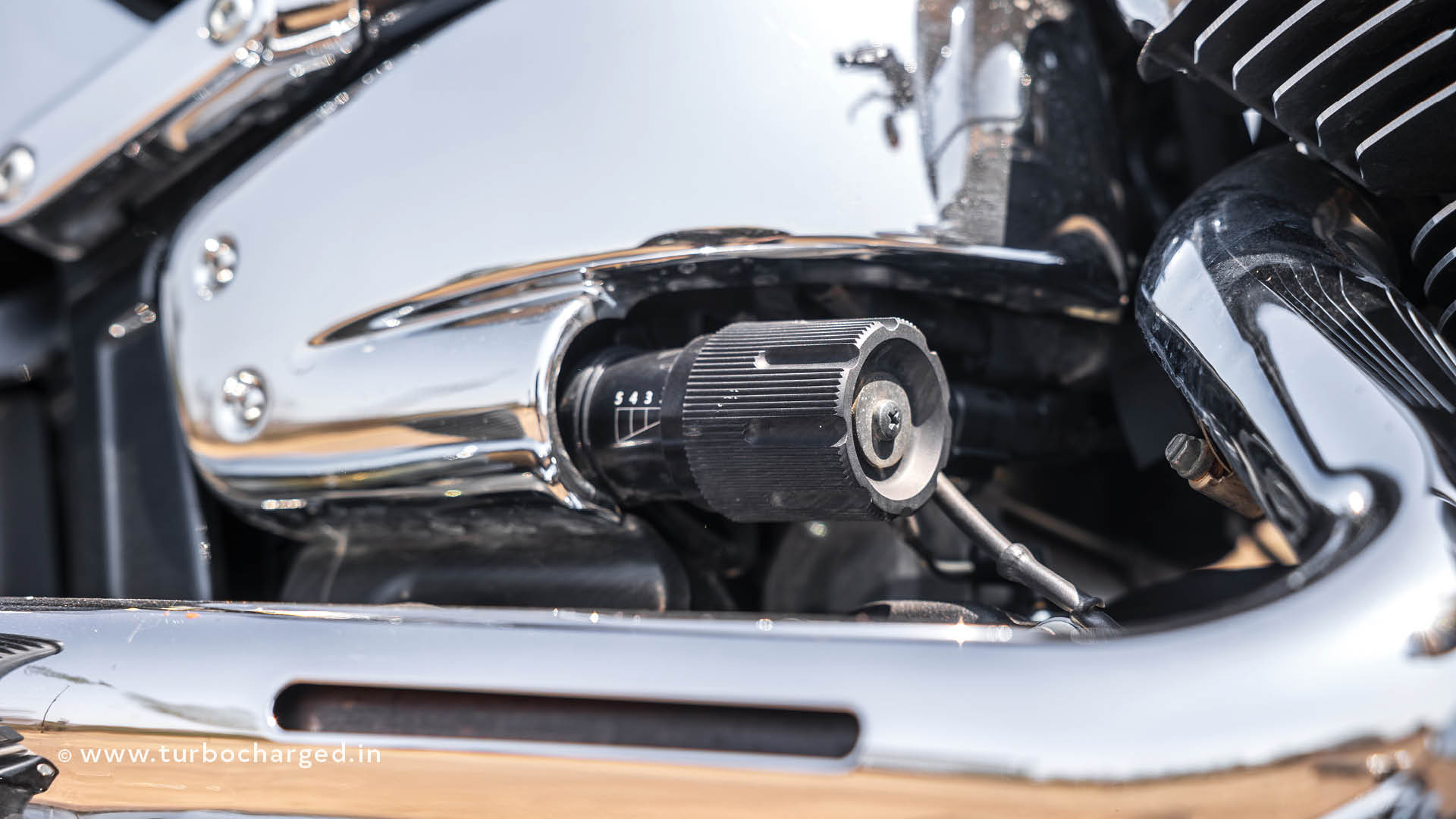
One issue is the ground clearance, which is, for all intents and purposes, non-existent. Some speedbreakers will force a diagonal maneuver, and steep driveways and gas station entryways will require proper strategising in advance. Speaking of learning the peculiarities of a motorcycle, the unique switchgear did take some getting used to, but it was easier than the horn and turn signal, with positions reversed as can be found on some modern Japanese motorcycles. Also, the separate left and right turn signal switches were quite intuitive, while the engine kill and starter being on separate switches were still easy to use, as a single thumb press was all it needed to actuate those. The minimalist console was highly informative, and the separate panel below it with the tell-tale lights conveyed what the console couldn’t. On a personal note, I wish more manufacturers would design beautiful LCDs like the one on the Breakout, instead of unnecessary TFT displays, which are often more distracting than both LCDs and analogue clocks. 
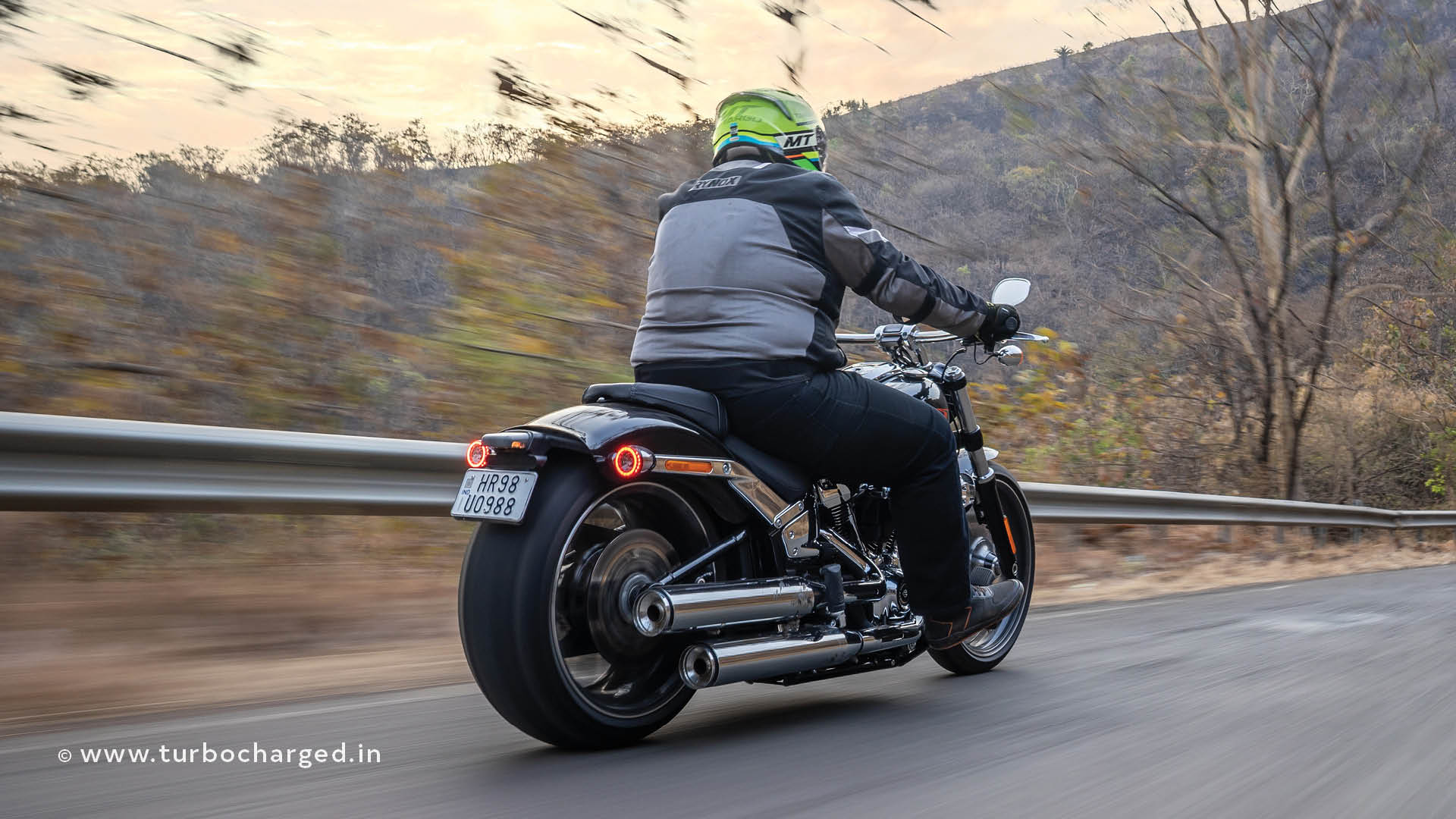
It is so long that whenever it is parked next to other two-wheelers, the tail sticks out by about a foot; it has such a tall gearing that in city traffic you will rarely have a rendezvous with the 4th gear; the noise is deafening and attracts dirty looks from the morning walkers as you thunder past them, trying your best not to look smug. But, despite it being a super-expensive motorcycle, it never got on people’s nerves, unlike a typical Japanese/European superbike. The chrome and black Harley was not designed to break speed records and terrorise other road users; it was made to make the rider feel good. Yes, cruisers are not meant to be the most efficient at anything; their motto in life is different. This is where the Breakout is well-nigh unbeatable. I received way more thumbs-ups astride the Breakout than I had in any other motorcycle ever, and I have ridden a fair few in the last two-and-a-half decades. It somehow spreads joy around, even when you occasionally whack the throttle open and draw a few glances. Maybe because, despite the performance on tap, the Breakout manages to produce more drama than forward motion, which makes it less of an instrument and more of a toy. 
And that’s exactly what it is. Admittedly, a very expensive toy, but a toy nevertheless. This is palpable to other road users and passers-by, which has a profound effect on how the motorcycle, and consequently the rider, is perceived by the masses. When you are aboard a crotch-rocket, all they see is a grown man pretending to be a kid; but onboard the Harley-Davidson Breakout, you are a kid — no pretensions. The people may get a bit annoyed at the booming exhaust, but that amounts to no more than a kid playing with a noisy toy — people tune it out because no one is usually cruel enough to take toys away from kids. And we don’t need to discuss mundane things like price tags for items that spread joy around, like a Harley-Davidson Breakout.

Which tells us that big and large, however crude, will always have an advantage. And that essentially defines the motorcycle. That being said, Harley-Davidson engineers are some of the best in the world, and as a result, the Breakout does things you wouldn’t expect it to. The 310kg kerb weight is only felt when trying to push the bike uphill, as the aforementioned wave of torque makes short work of the job of propulsion. The Breakout surges ahead with every twist of the throttle, and the air-cooled V-Twin provides the soundtrack of hundreds of escapist fantasies that were committed to the silver screen.

Harley

Despite having a wheelbase of 1,695mm, the turning circle is way smaller than expected and causes the same surprise when oil tanker captains are handed the keys to a tugboat. While the rake makes steering slow, it also makes it stable, aided by the county-spanning wheelbase. The chunky rubbers at both ends provide oodles of grip, even on less-than-ideal surfaces. Also, the front brake is quite effective, but like any proper cruiser, both brakes need to be used in tandem to get the best out of the retardation system (the rear brake’s actuation is impeded a bit by the air filter that juts out defiantly).
Harley

One issue is the ground clearance, which is, for all intents and purposes, non-existent. Some speedbreakers will force a diagonal maneuver, and steep driveways and gas station entryways will require proper strategising in advance. Speaking of learning the peculiarities of a motorcycle, the unique switchgear did take some getting used to, but it was easier than the horn and turn signal, with positions reversed as can be found on some modern Japanese motorcycles. Also, the separate left and right turn signal switches were quite intuitive, while the engine kill and starter being on separate switches were still easy to use, as a single thumb press was all it needed to actuate those. The minimalist console was highly informative, and the separate panel below it with the tell-tale lights conveyed what the console couldn’t. On a personal note, I wish more manufacturers would design beautiful LCDs like the one on the Breakout, instead of unnecessary TFT displays, which are often more distracting than both LCDs and analogue clocks.
Harley

It is so long that whenever it is parked next to other two-wheelers, the tail sticks out by about a foot; it has such a tall gearing that in city traffic you will rarely have a rendezvous with the 4th gear; the noise is deafening and attracts dirty looks from the morning walkers as you thunder past them, trying your best not to look smug. But, despite it being a super-expensive motorcycle, it never got on people’s nerves, unlike a typical Japanese/European superbike. The chrome and black Harley was not designed to break speed records and terrorise other road users; it was made to make the rider feel good. Yes, cruisers are not meant to be the most efficient at anything; their motto in life is different. This is where the Breakout is well-nigh unbeatable. I received way more thumbs-ups astride the Breakout than I had in any other motorcycle ever, and I have ridden a fair few in the last two-and-a-half decades. It somehow spreads joy around, even when you occasionally whack the throttle open and draw a few glances. Maybe because, despite the performance on tap, the Breakout manages to produce more drama than forward motion, which makes it less of an instrument and more of a toy.
Harley

And that’s exactly what it is. Admittedly, a very expensive toy, but a toy nevertheless. This is palpable to other road users and passers-by, which has a profound effect on how the motorcycle, and consequently the rider, is perceived by the masses. When you are aboard a crotch-rocket, all they see is a grown man pretending to be a kid; but onboard the Harley-Davidson Breakout, you are [1] a kid — no pretensions. The people may get a bit annoyed at the booming exhaust, but that amounts to no more than a kid playing with a noisy toy — people tune it out because no one is usually cruel enough to take toys away from kids. And we don’t need to discuss mundane things like price tags for items that spread joy around, like a Harley-Davidson Breakout.
Total
0
Shares
Previous Post
Simple

Simple Ultra Launched At ₹2.35 Lakh

Next Post
tourRad

Reise tourRad Tyres – First Impressions

Related Posts