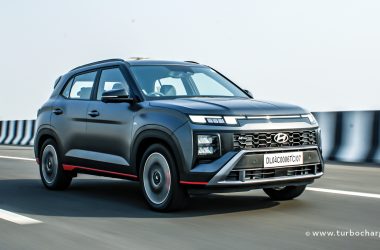


There’s no two ways about the fact that the Sierra.ev is a very strategic product for Tata Motors. And that’s because it joins a sub-segment of SUVs that’s becoming increasingly popular. No prizes for guessing, I am referring to electric midsize SUVs, a space that has some very impressive names like the Hyundai Creta Electric, VinFast VF 6, Maruti Suzuki e VITARA, Toyota Urban Cruiser Ebella and even the Mahindra BE 6 vying for attention already. But what’s helping the Sierra.ev standout on paper is that it is the only one to come with the option of dual electric motors and an AWD system. Is this a master stroke from Tata Motors? I spent a day behind its wheel, driving it on some smooth, fast highways, besides testing it on a dedicated off-road circuit too.
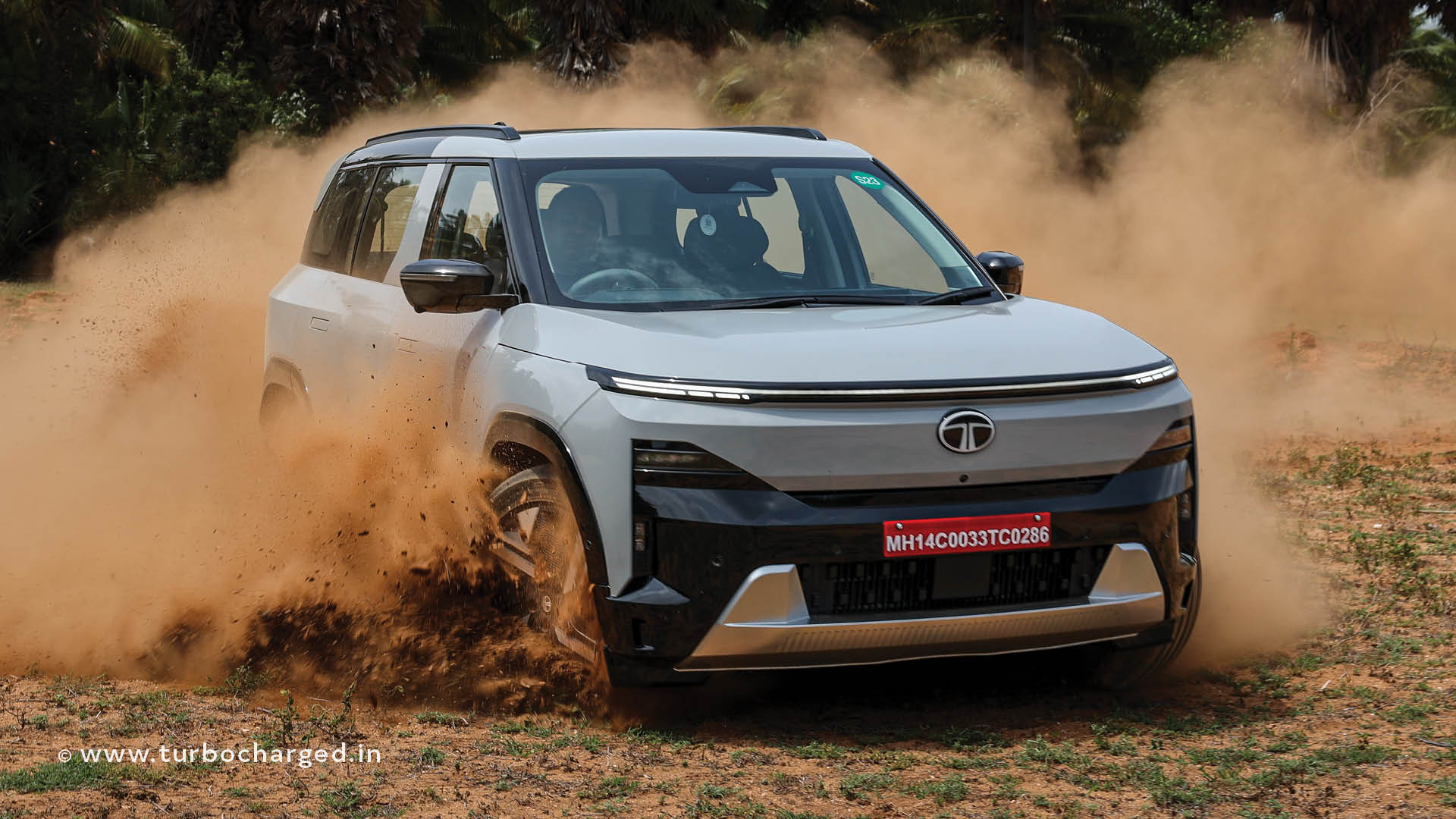
Tata Motors wanted us to test the Sierra.ev off-road first, and had set up a dedicated off-road course with a range of obstacles to have us experience the SUV’s abilities. The course was a pretty challenging one for the matter, and had been setup by professionals to help us assess the Sierra.ev on various parameters, including its suspension, which uses frequency dependent damping, besides the SUV’s excellent approach and departure angles, the multiple terrain modes and driving modes, and more.
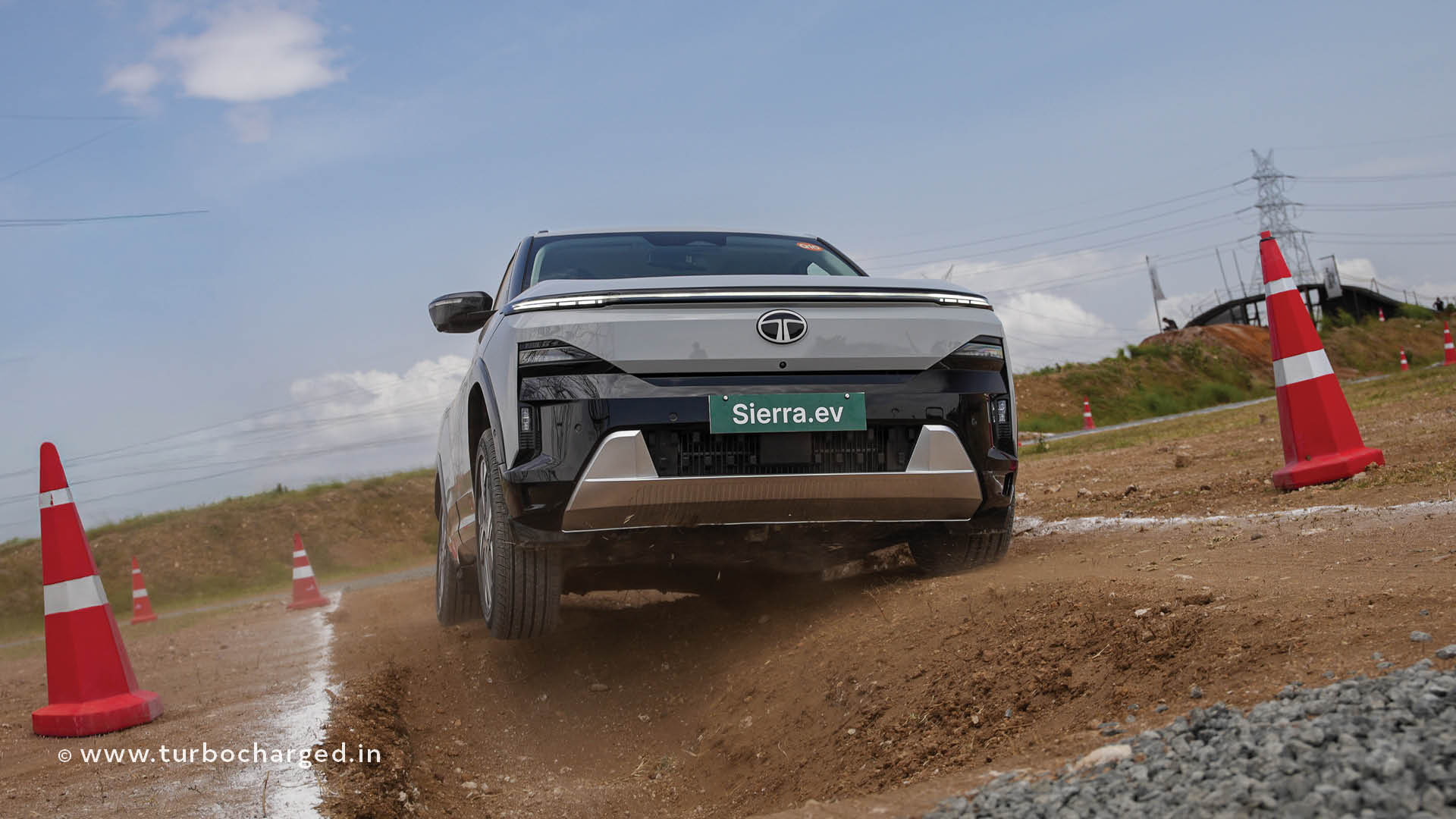
Besides the usual logs of wood, a rock bed and articulation pits, the circuit also included steep inclines, slopes and a see-saw. Switching between terrain modes like Rock mode, and Mud and Sand helped me understand the difference between throttle responses, and also how well the Sierra.ev allows throttle modulation on various surfaces. For the matter, the dual-motor equipped all-wheel drive version (dubbed Quad-Wheel Drive by the manufacturer) gets six terrain modes to choose from, including Normal, Snow/Grass, Mud-Ruts/Gravel, Sand, Rock Crawl and Custom, while the rear-wheel drive version gets four modes, including Normal, Wet/Rain, Rough and Custom.
The difference in throttle responses is more than noticeable, with Sand allowing some wheel slip and delaying traction control intervention, while Rock mode dulls throttle responses and has the ESP kick in early. The suspension impressed me too, as it soaks up the worst of surfaces without really unsettling occupants, as I discovered while crawling on the rock bed. The Sierra.ev’s excellent approach and departure angles, and 360-degree view system with a 180-degree ‘transparent’ underfloor view (called 540-degree view by Tata Motors) ensured I had enough confidence to drive across the obstacles with ease. The experience ended with a mud-slinging session where we were let loose in the Sierra.ev in an oval pit, with all electronics off.
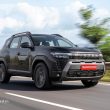
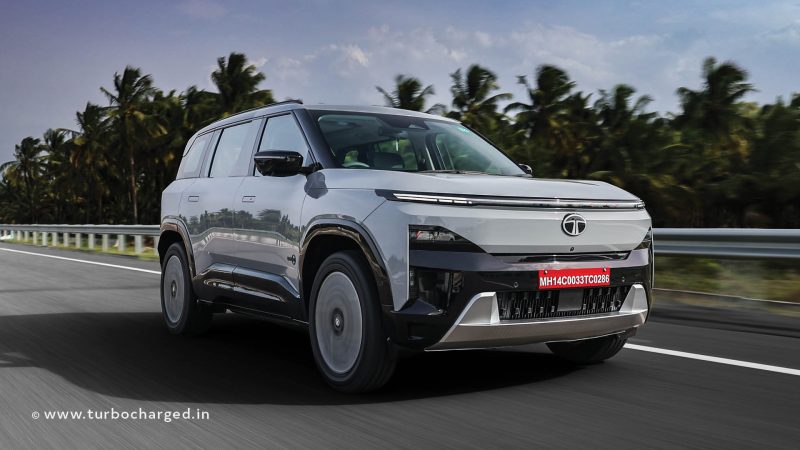
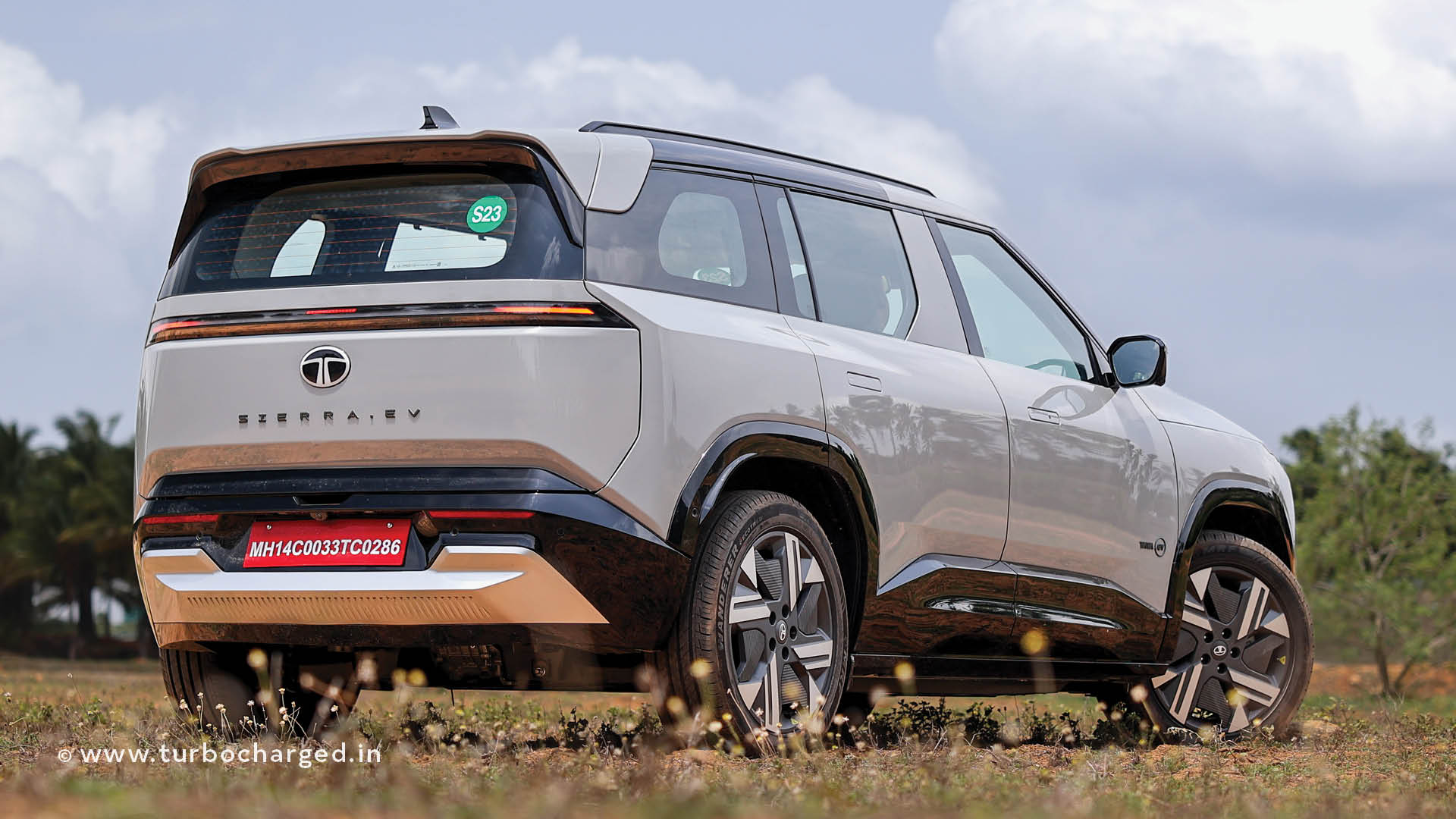
The EV looks similar to the Sierra’s petrol and diesel versions, but with some noticeable differences, like the blanked-off grille. The slim LED DRLs running from end to end add to its futuristic looks, while the front bumper gets a gloss black finish and faux skid plate, to offer a sense of ruggedness. The Sierra.ev remains unchanged from the sides and rear though, and the only way to tell it apart are the Sierra.ev badges on the front doors and tail gate, as higher variants of the EV also uses the same, 19-inch wheels as its petrol and diesel versions.
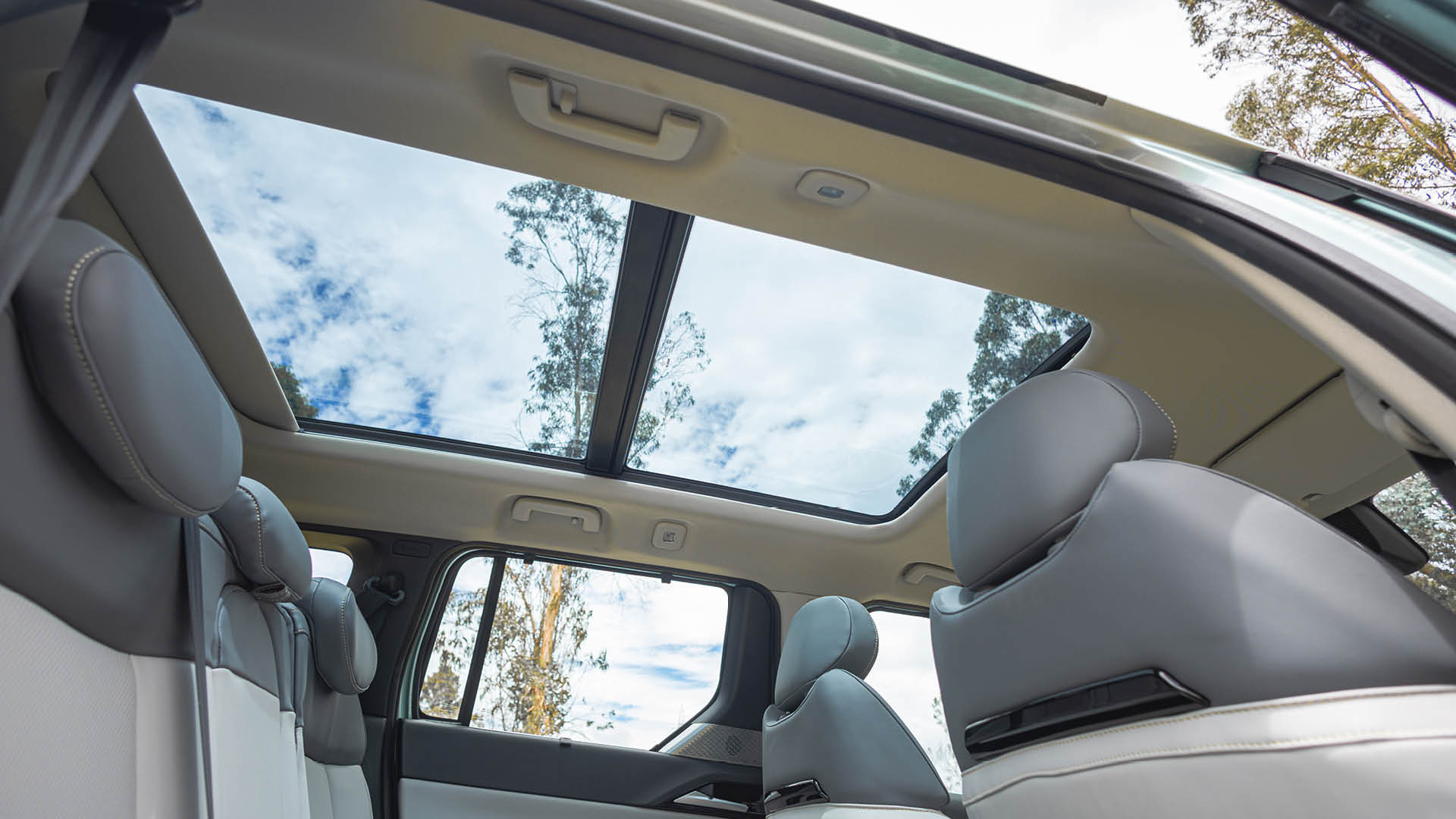
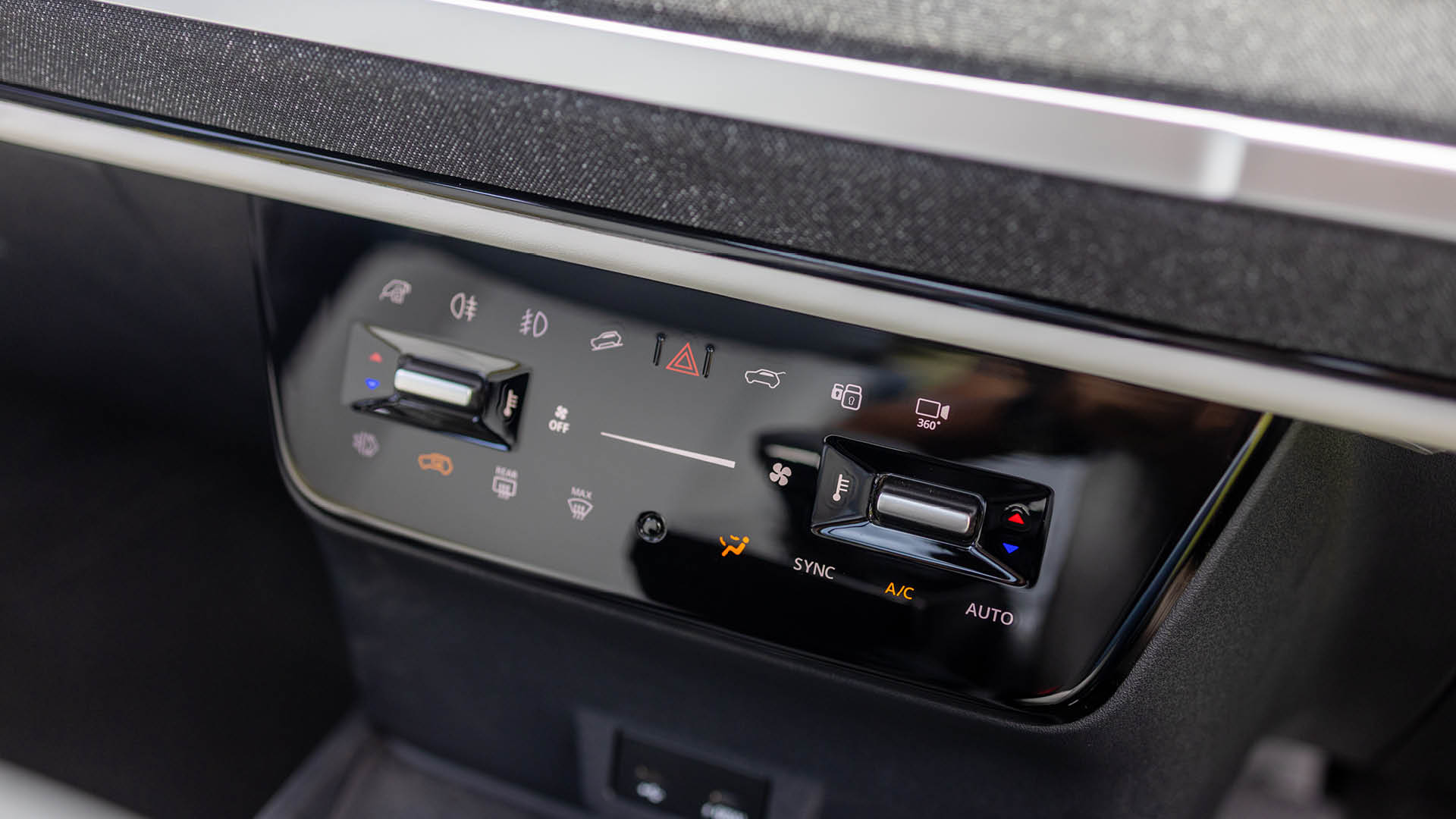
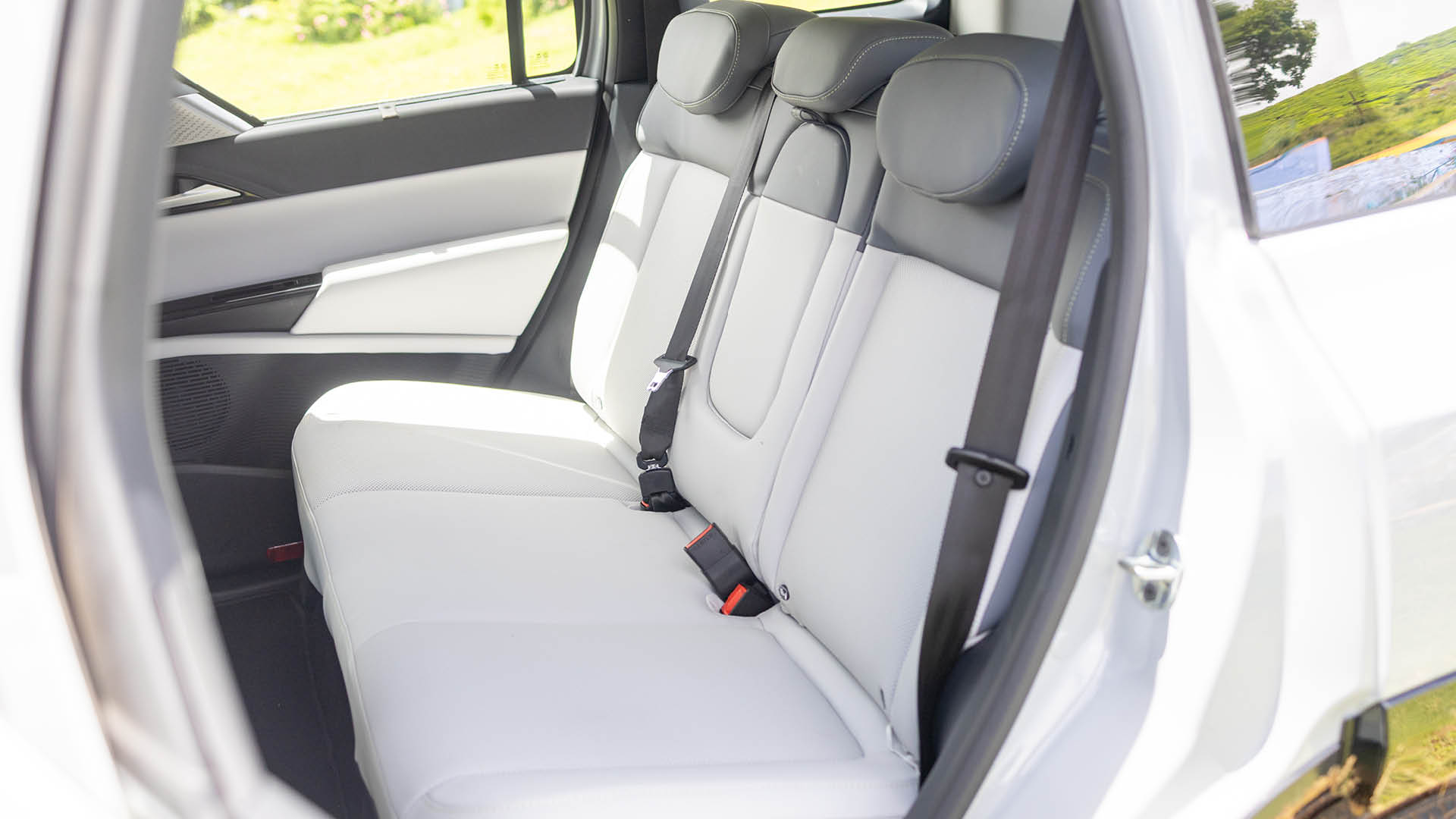
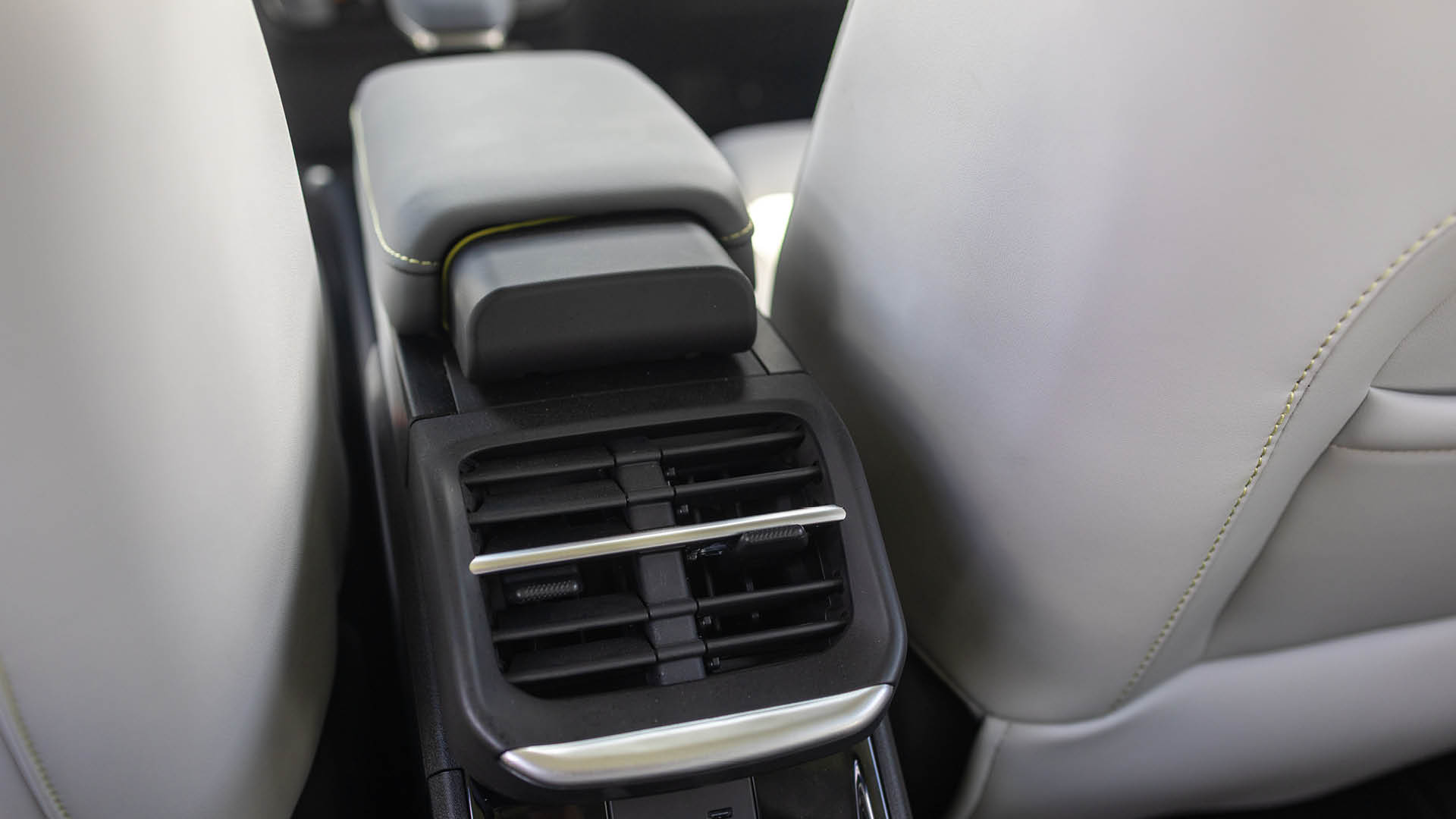
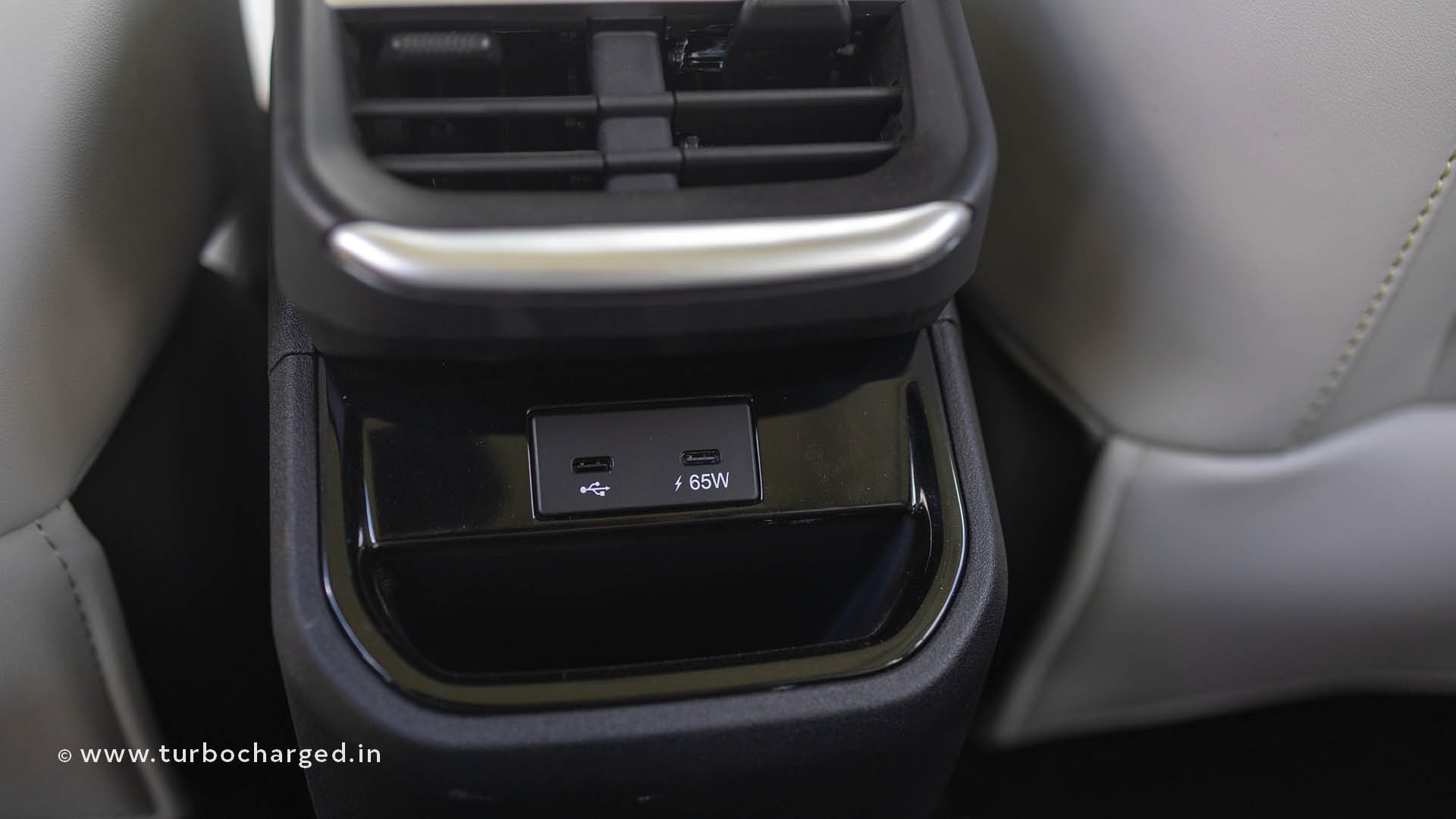
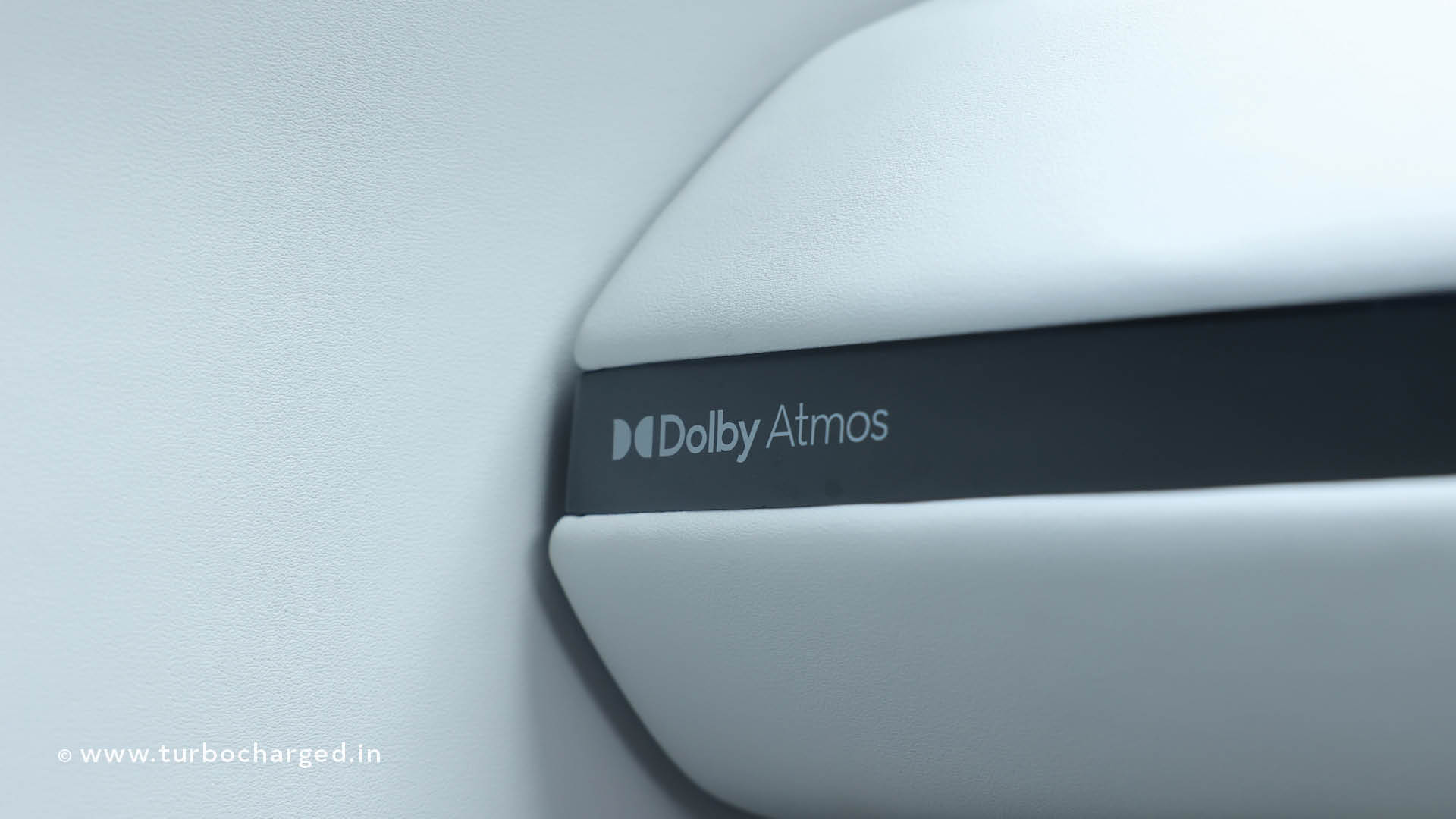
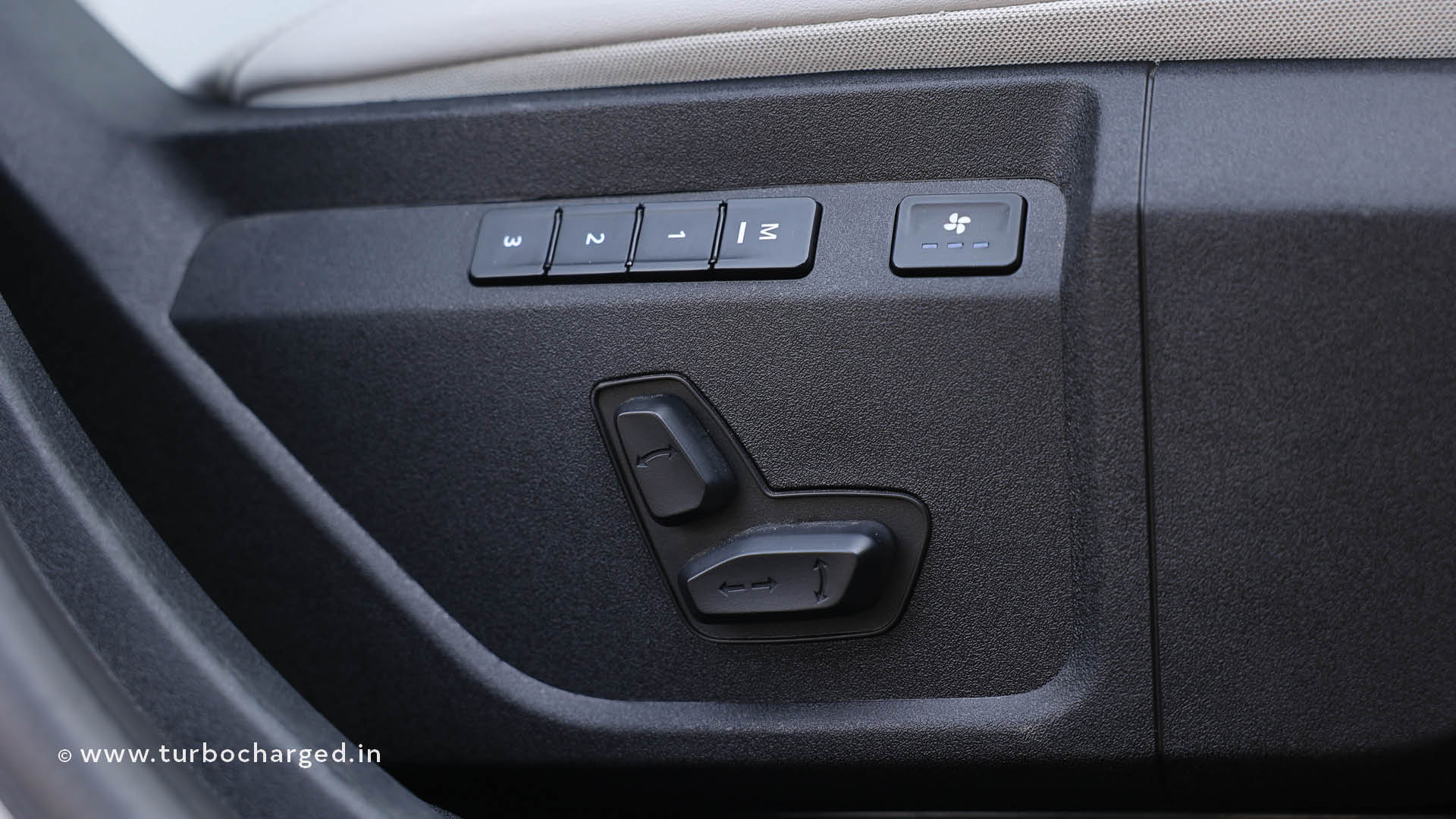
Interiors look and feel familiar too, as you get the same, triple-screen layout, along with the same minimalistic, dual-tone grey and white theme. A single slab of glass houses the 10.25-inch driver display and 12.3-inch displays for the central screen and front passenger both, and all three displays boast a high resolution. The EV also gets an additional display, in the form of a head-up display for the driver. The dashboard feels premium thanks to its soft touch panels and high quality plastics, and also houses a soundbar for the 12-speaker JBL Black audio system, which sits behind the AC vents. The second row looks and feels spacious, while the large glass panels add to the sense of roominess, along with the panoramic sunroof. You also get a ‘boss mode’ which lets you adjust the front passenger seat from the second row, a feature that’s becoming increasingly common.
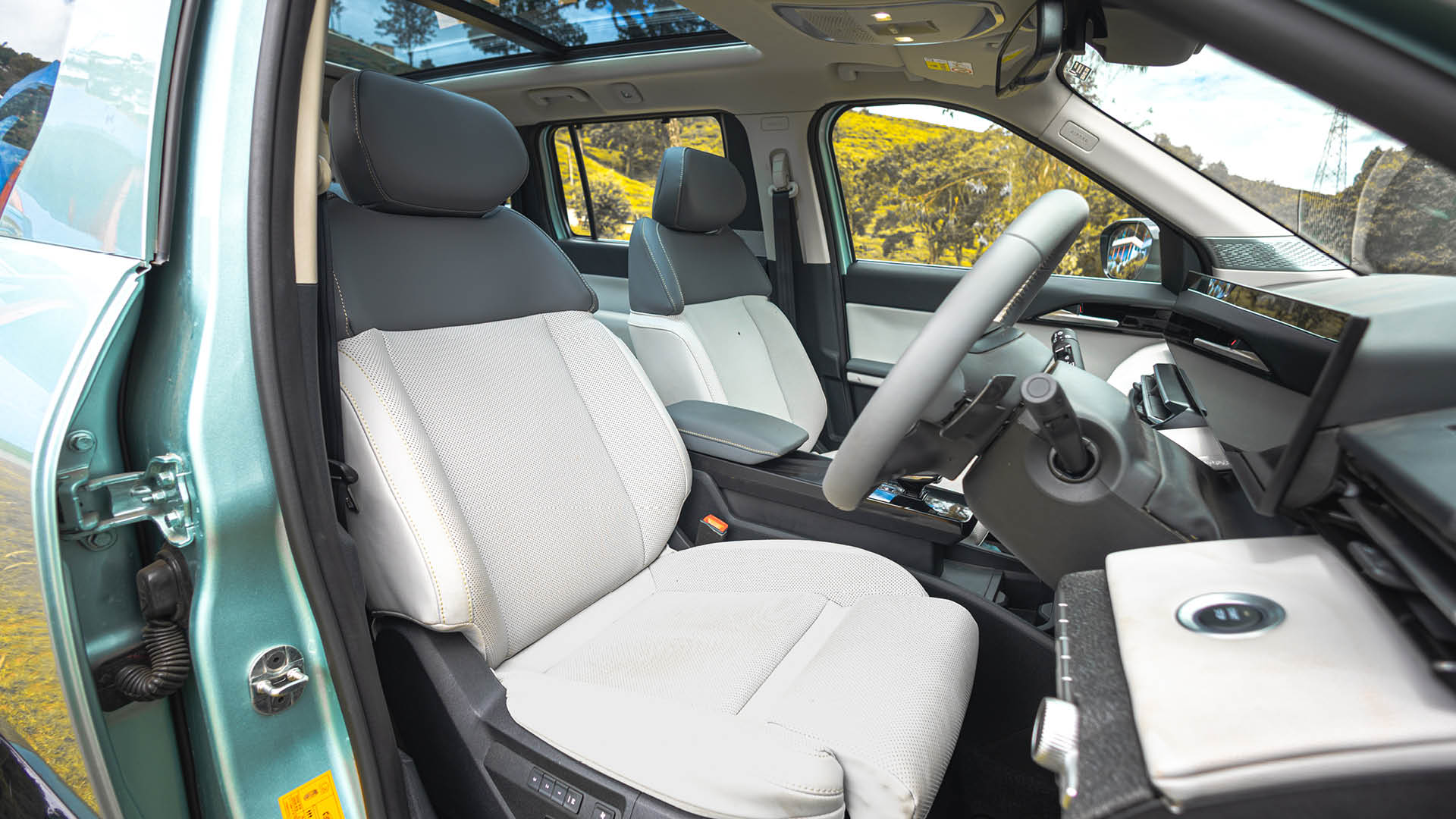
The Sierra.ev also comes loaded with features, just like the SUV’s petrol and diesel versions. This means you get wireless Apple CarPlay and Android Auto, dual-zone climate control, powered and ventilated front seats, ambient lighting, a powered tailgate, rain-sensing wipers, automatic headlamps and more, in addition to the features mentioned above. On the safety front, the Sierra.ev is equipped with what Tata Motors calls Level 2 + ADAS besides six airbags, hill hold, electronic stability control, terrain modes, driving modes and more. In short, the full list of safety and convenience features is an exhaustive one, making the Sierra.ev one of the most feature-rich electric midsize SUVs on sale currently.
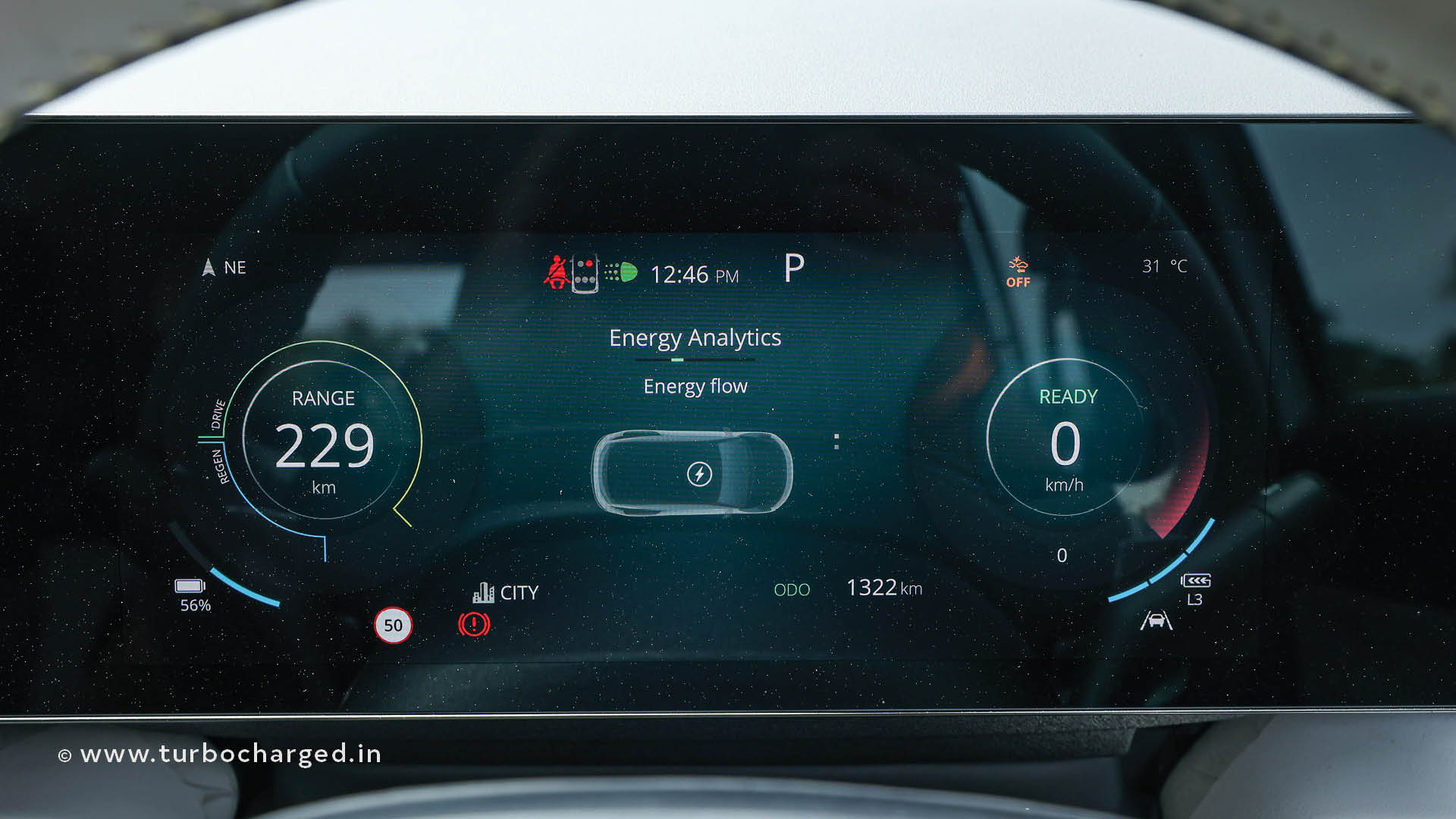
You can have the Sierra.ev with either a 63kWh battery or a 75kWh one, and claimed range per charge for both is 565km and 665km respectively, for the rear-wheel drive, single motor versions. The dual-motor version can only be had with the 75kWh battery which boasts a claimed range of 624km per charge. We only got to drive the dual-motor version where the powertrain offers a highly impressive 349PS and 504Nm. Its claimed 0-100kmph time is just 5.8 seconds, and we managed to clock just a shade over 6 seconds, which confirms that the Sierra.ev is one of the quickest accelerating Indian SUVs! The SUV thus feels very quick on the road, especially in Sport mode, with Boost function on, so getting to triple digit speeds or overtaking other vehicles feels effortless. You also get three regeneration levels that you can change via the paddle shifters behind the steering, but even Level 3 might leave some drivers wanting for stronger regenerative braking.
Given its excellent range, the Sierra.ev should impress on long journeys too. And that’s because while performance is blisteringly quick, the SUV also impresses in terms of how easy and effortless it is to drive, while feeling very comfortable thanks to its well-tuned suspension and frequency dependent damping. There’s a sense of sportiness to the driving experience on open roads, and when driving in traffic, the Sierra.ev also feels easy to manoeuvre thanks to its light steering, well-tuned throttle responses and the seating position that offers a good view of the road ahead.
To sum it up, the Sierra.ev does impress in the real world, and certainly has a lot going for it, especially in terms of its technology, features and abilities. Prices begin from ₹ 18.79 lakh ex-showroom for the base variant though, which means the Sierra EV commands a premium over many of its rivals, especially when you look at higher variants. That being said, if you are looking for serious performance and some off-roading abilities with zero tailpipe emissions, the Sierra.ev should feature on your list, especially, given the ongoing concerns regarding fossil fuels!
Words Abhay Verma
Photography Saidatta Naik