


Photography: Alex Rohan Toppo
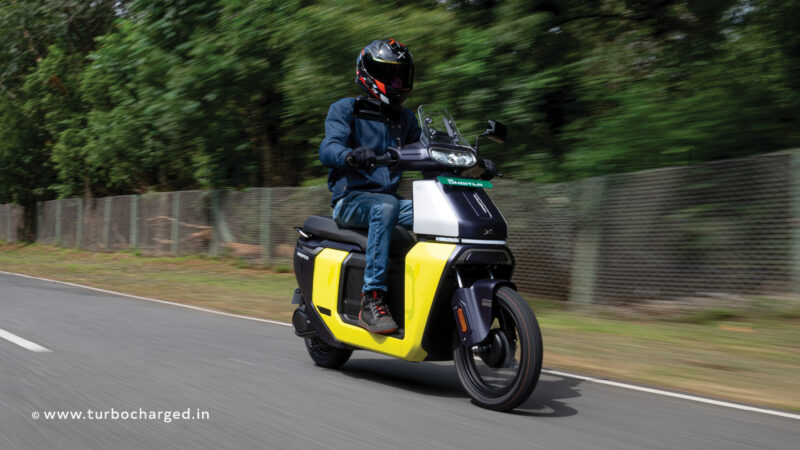
The entry-level TVS Orbiter is built with accessibility in mind, being straightforward, beginner-friendly, and offers a practical range
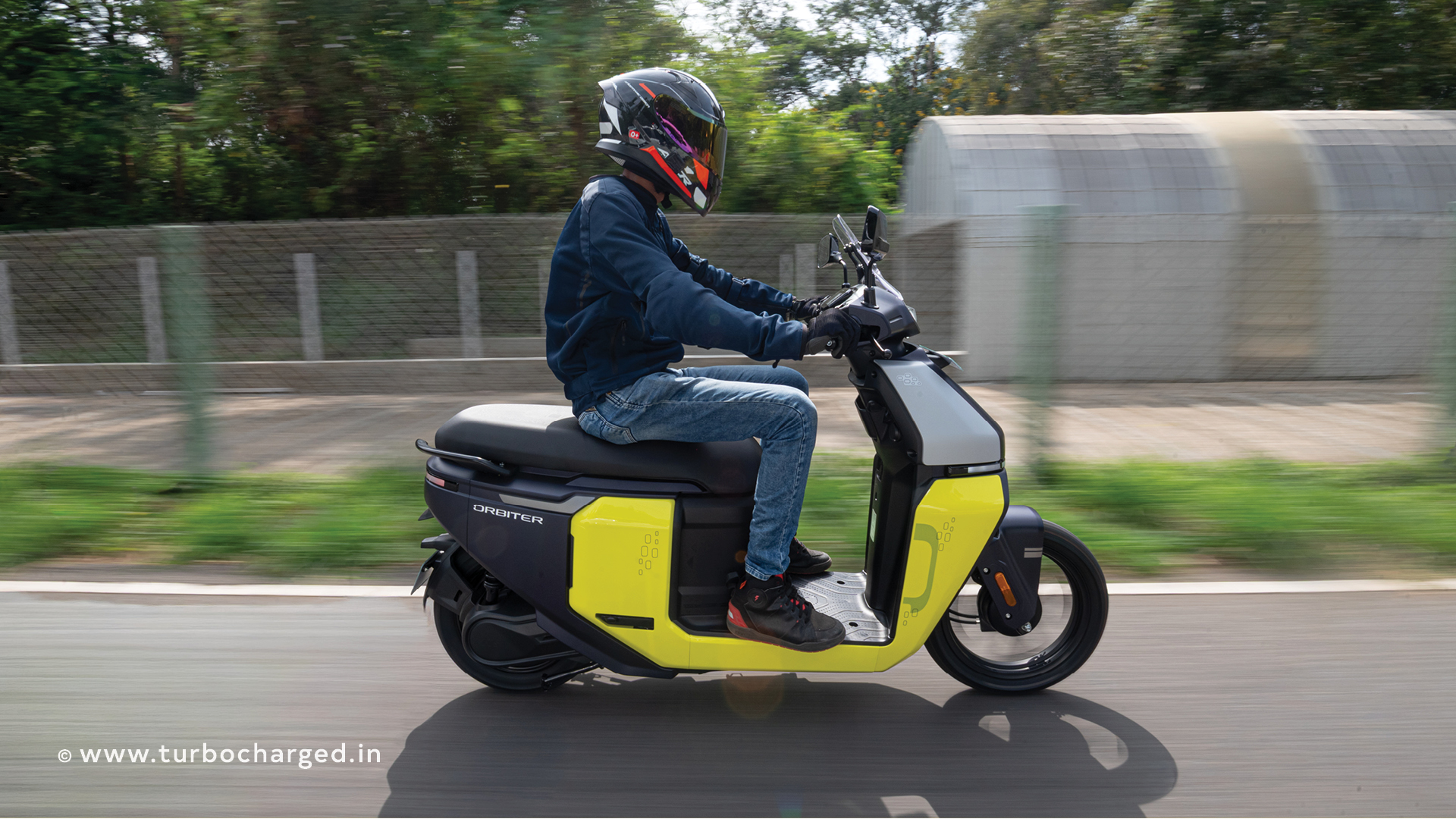
With each passing month, electric scooters are gaining popularity at a rapid pace, not because they tend to keep your fuel bills in check, but because they are easy to ride, maintain and come with overall less hassle than an ICE car, scooter or motorcycle. There are plenty of options from major manufacturers in the EV market for all types of buyers; however, TVS did not have one in the entry-level electric scooter segment. That was until the Orbiter arrived on the scene. It is the third product of its electric scooter range, and hopes to take the entry-level segment head-on with the TVS Orbiter; however, is it capable enough to challenge the market leaders? We find out.
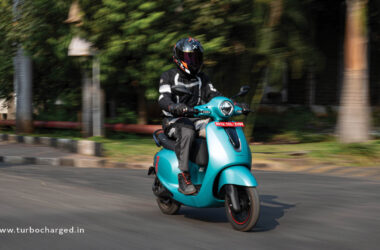
TVS’ Orbiter is based on simplicity, so everyone, including the non-tech-savvy folks, can approach it without any hesitation. The boxy design, practical features, and compact dimensions give it a very simple yet quirky look that will surely make the onlookers curious.
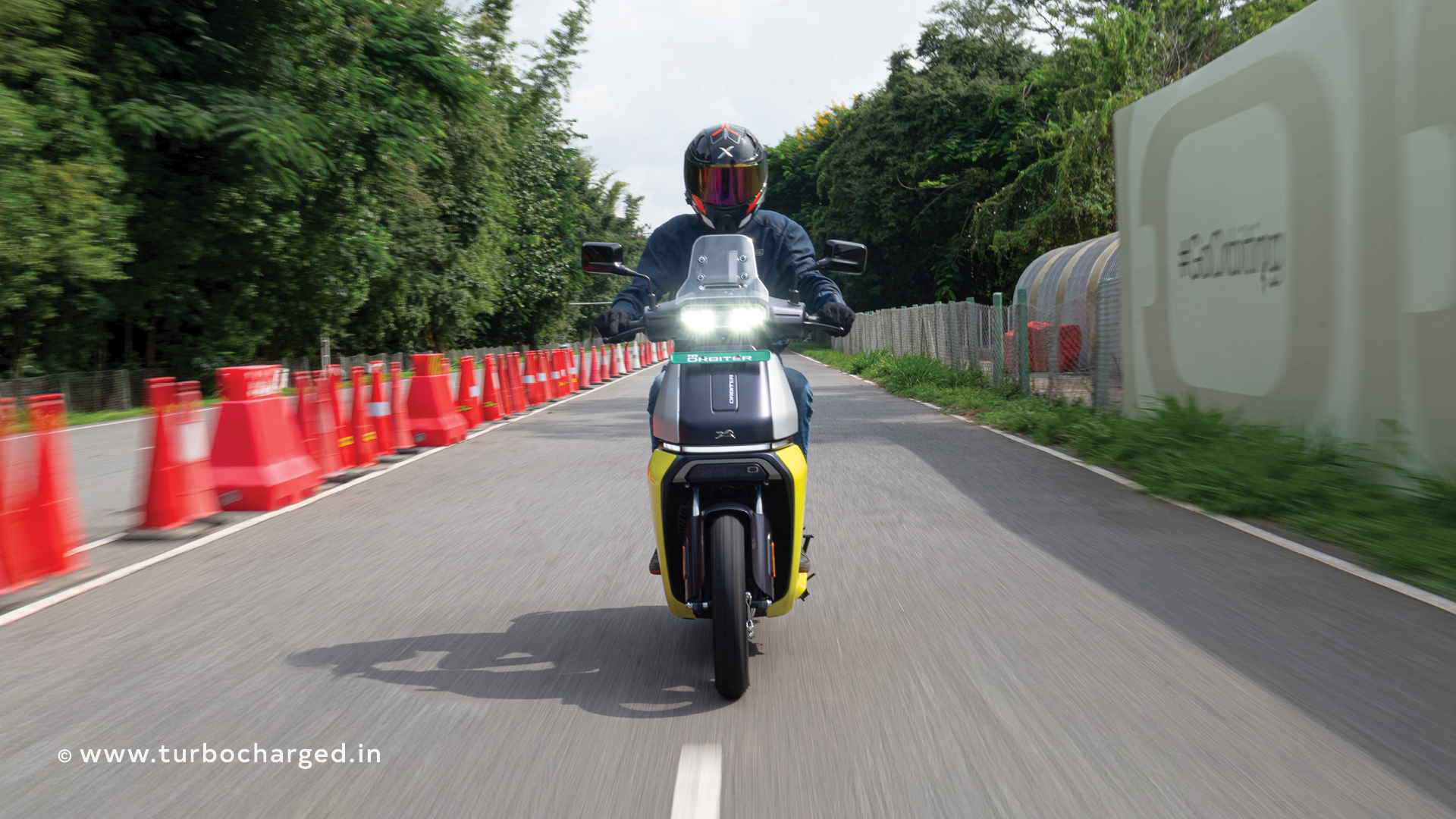
On the front, the LED headlamp looks utterly simple, but the small windscreen adds some visual volume to it. Tucked between the top and lower panel is the LED light bar, which houses the DRL and the turn indicators. Look at the Orbiter from the side, and you notice the quirky nature of the design. The dimensions look like they were drawn up using precise geometric instruments, which lends an eye-pleasing, symmetric look. However, the eagle-eyed among you would notice something is off with the wheels, and you would be absolutely correct. The front features a 14-inch wheel, again with a geometric pattern, and the rear is a 12-inch one with a hub motor. At the rear, everything has been kept simple, a tad too simple for my liking, as the tail lamp and turn indicators are incorporated into the LED lightbar just like on the front.
For practicality, there is a large enough footboard that allows carrying everyday items with ease without any compromise on the space for your feet. Another practical feature is the long seat, 845mm to be precise, which is wide enough and cushioned quite well for comfort even on slightly longer city runs. The 34-litre underseat storage is abundant on the Orrbiter as it can easily accommodate two half-face helmets with some room to spare for knick-knacks.
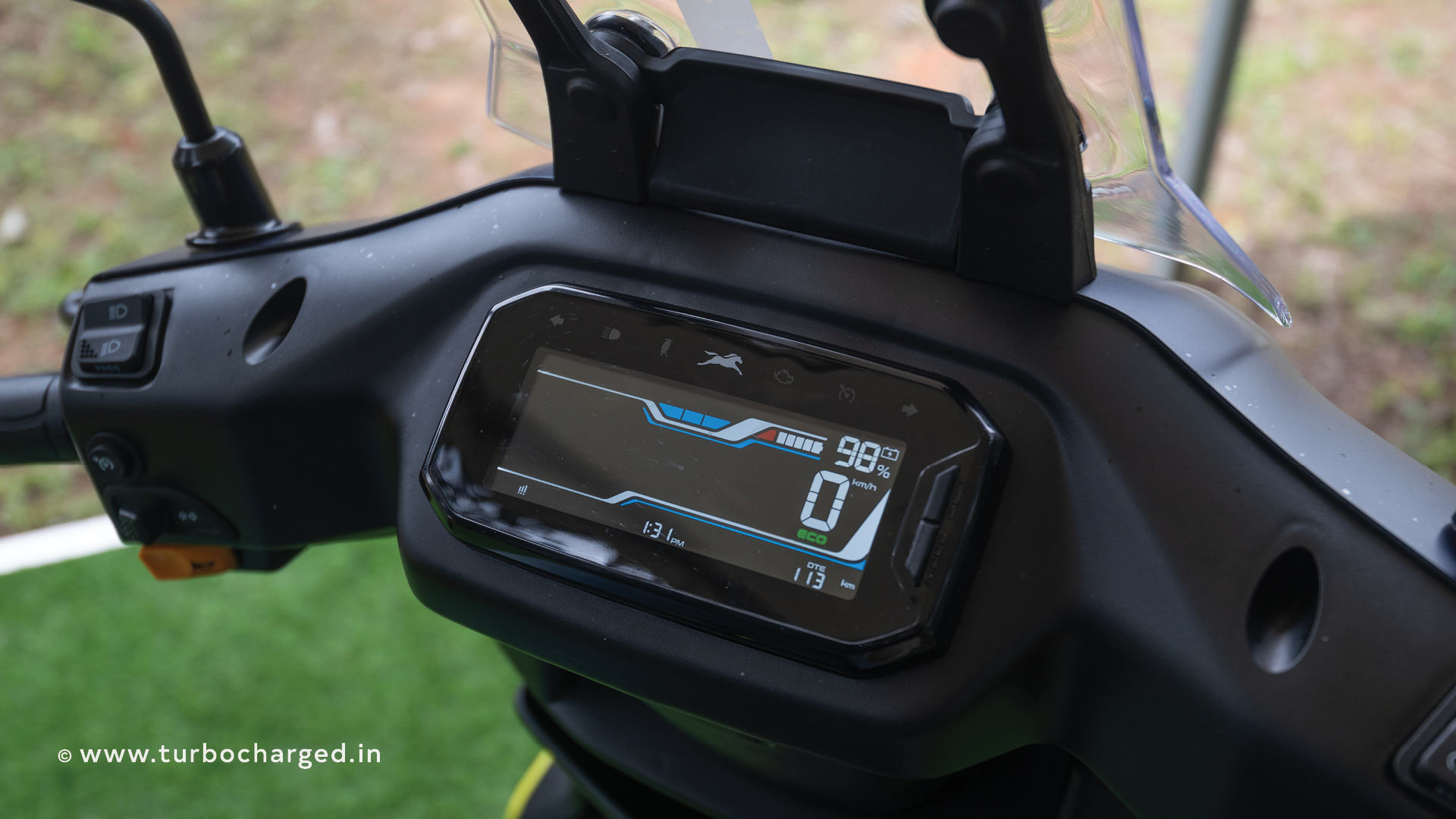
Talking of more practicality, TVS has equipped the Orbiter with a 5.5-inch colour LCD console that has the usual suspects like Bluetooth connectivity, turn-by-turn navigation, and distance-to-empty. The TVS SmartXonnect app also gives you access to geo-fencing, time-fencing, crash alert, and tow alert, among others. There is something called park assist, which is nothing but a term TVS uses for reverse mode. It also gets an open storage compartment beside the key slot and a USB Type-A port for charging your smartphone on the go. The fit and finish of everything on the Orbiter is pretty good; however, it is not as good as its elder sibling, the iQube.
The BLDC hub-mounted motor delivers its peak 2.5kW of power from the 3.1kWh battery pack, which is claimed to give a range of 158km. With two modes – Eco and City, which alter the power delivery, with the top speed being capped at 68kmph. Moreover, the 650W supplied charger is claimed to charge the scooter from zero to 80 percent in four hours and 10 minutes. Braking duties are handled by drum brakes with combined braking for safety.
I rode the Orbiter at TVS’ Hosur facility, and there were quite a few things that stood out for me. First was the 3.1kWh battery pack, which TVS claims is good enough for 158km; however, we couldn’t test the claim as we spent limited time with the scooter at the test track. However, the 2.5kW power from the BLDC hub-mounted motor was something that I was able to test. It linearly delivered the power as soon as I twisted the throttle. The motor does not get any fancy launch or boost mode, just a simple eco and city mode, which alters the power delivery depending on the mode you are in. The eco mode would reduce your range anxiety by limiting the power and speed, whereas the city mode gives you access to full power. TVS tried to simulate various city scenarios within the test track at Hosur, where the Orbiter performed well; however, real-world conditions are quite unpredictable. So we will need to ride it in a city to assess it better.
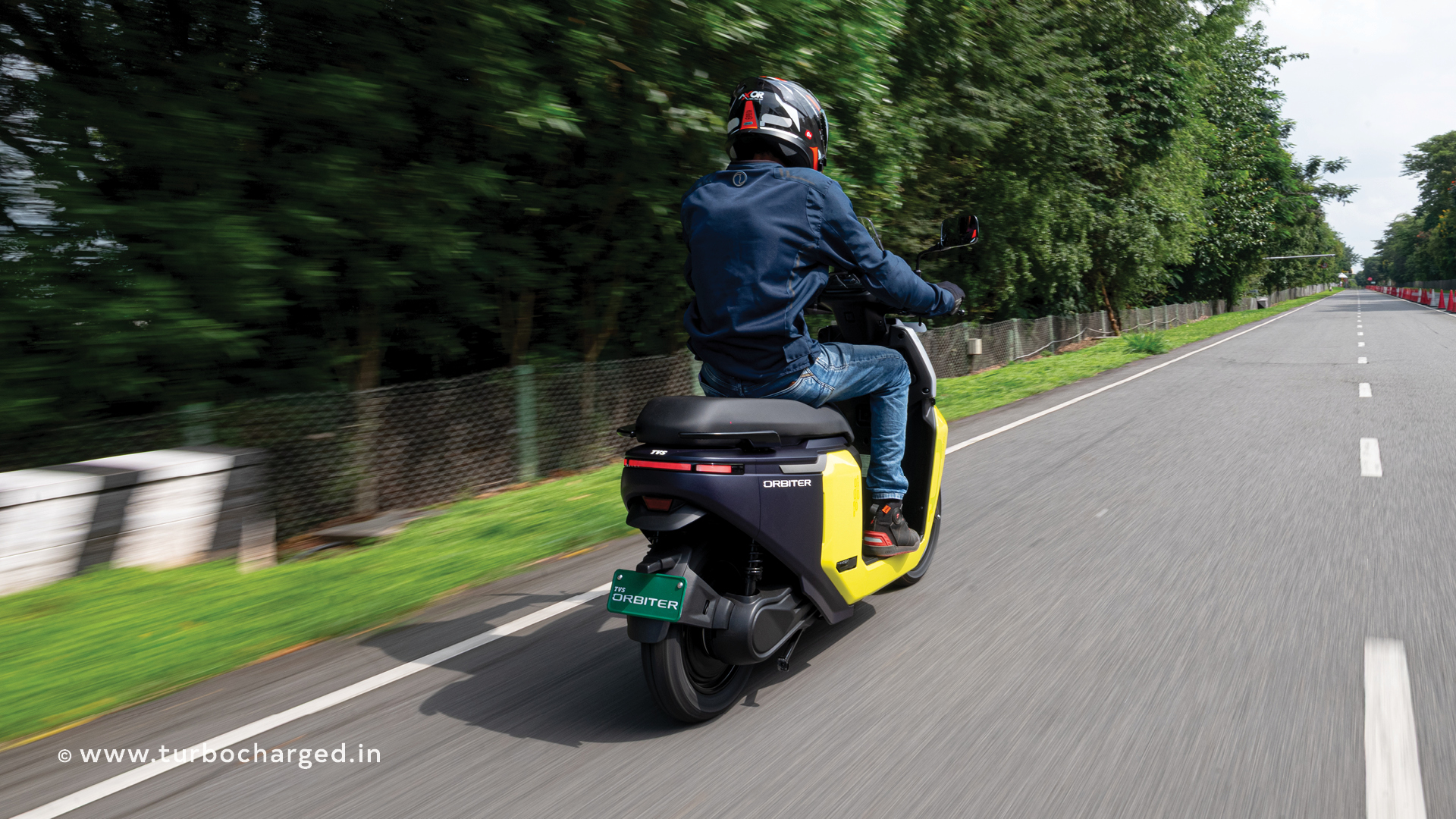
Riding on the track made me realise that the chassis of the Orbiter is simple and well-balanced with just the right amount of flex, which allowed me to push it hard into the corners without breaking a sweat. The front telescopic forks and the twin rear shocks worked like clockwork with enough damping to absorb the few undulations the test track had on offer. As for the tyres, the Eurogrip Etorq rubber at both ends was grippy on the track; however, with a limited top speed, and my limited time with the Orbiter, I was unable to test their grip to the limit. Braking is provided by the humble drum brakes at both ends, and TVS is equipping the Orbiter with combined braking, which adds a bit of safety into the mix.
Overall, the TVS Orbiter is a no-frills electric scooter made for the city. It has all the typical traits required for the job, like space, practicality, basic features, connectivity, enough power, smooth acceleration, neutral handling, good suspension, comfortable ride quality, and two special features like cruise control and hill-hold assist, which are practical and add more value to the entire package. It is light too, at just 112kg, which makes it easy to handle. At a price tag of ₹99,990 ex-showroom, the Orbiter is one of the smartest choices you can make for a city-focused electric scooter, which can be used by almost any family member without any hassles. So, this festive season, you have one more scooter to check out before making that buying decision.