

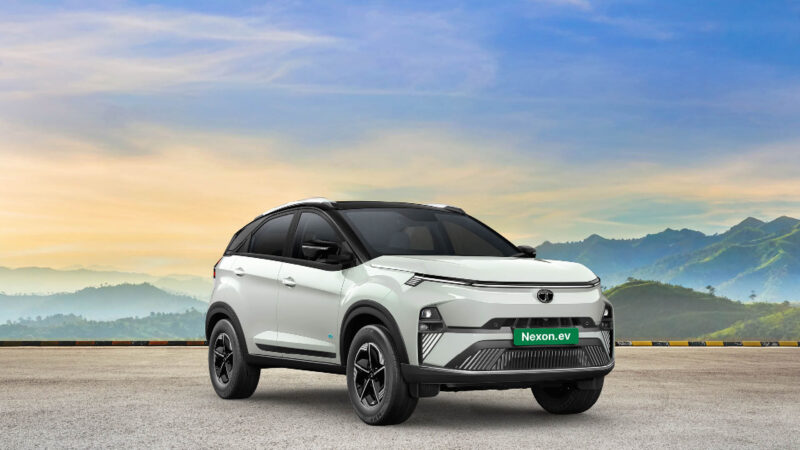
In 2018-29, Tata Motors ventured into the electric vehicle segment with the Tigor.ev meant for fleet operators and as government vehicles. However, in 2025, Tata.ev leads the four-wheeler EV market with 66 percent market share. Tata did get the first-mover advantage with the Tigor.ev, followed by the Nexon.ev, a compact electric vehicle that not only popularised EVs in India but has now crossed the magical 1,00,000 sales figure in just half a decade, making it the first four-wheeled electric vehicle to cross the six-digit sales figure. And to mark the occasion, Tata Motors today held an event at which Shailesh Chandra, Managing Director, Tata Motors Passenger Vehicles Limited & Tata Passenger Electric Mobility Limited, spoke about Tata.ev’s achievements in the Indian EV space while highlighting the Nexon.ev’s sales figures and the brand’s future roadmap.
Chandra also revealed that in 2026, Tata Motors will launch the Sierra EV, which will be based on the company’s EV-specific platform and will feature 65kWh and 75kWh battery packs, the same as the Harrier EV. Another major update from the event was the announcement of the facelifted Punch.ev, slated for a launch in CY2026. This also indicates that the regular Tata Punch will also receive a major facelift next year. However, the big surprise was the announcement of the Avinya brand, a new premium EV sub-brand that will introduce more nameplates from Tata Motors. And by the end of CY2026, Tata Motors will introduce the first premium product under Avinya.
Tata Motors is pushing its EV narrative and has committed to providing an EV to Indian consumers at every price point, from ultra-affordable to luxurious. Tata Motors is aggressively pushing localisation, as the company plans to source battery cells from Agratas, a Tata Group company that is setting up a plant in Sanand, Gujarat, to manufacture high-voltage battery cells. It is also looking to streamline vehicle manufacturing and to create a robust finance solution network to provide a balanced ecosystem for potential customers. In terms of charging infrastructure, Tata Motors aims to scale its current setup to 1 million charging points by 2030 and 100,000 public chargers.