

Words: Abhay Verma
I’ve always maintained that sportsbikes are the purest form of motorcycles, built with the singular intent of going fast. There is something special about crouching behind the fairing, looking through the flyscreen and wringing the throttle to its stop. And turning that sportsbike into a race machine has that intent get purer, as you’re get rid of everything that comes in the way of speed, eke out every ounce of energy from the engine and optimise handling, while not giving two hoots about comfort.
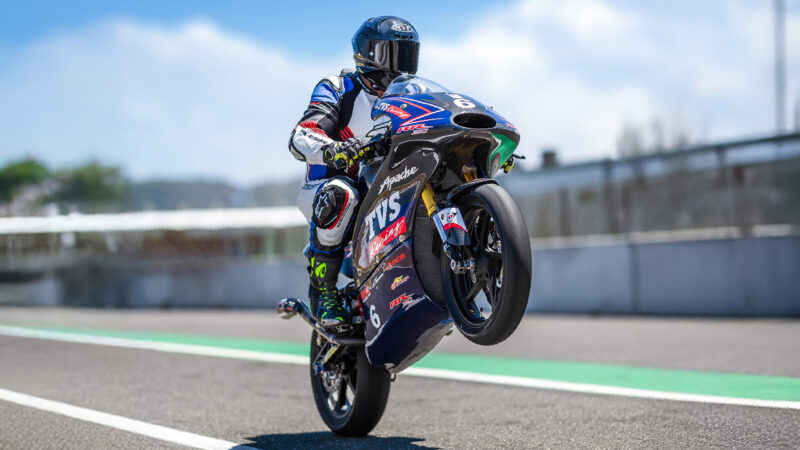
So when TVS Motor invited us to ride its Asia One Make race bike based on its Apache RR310, I just had to pull rank and go myself. The RR310 has been around since 2018, and TVS has been using it a race bike in the national racing championship for a while, but four years ago it did something out of the ordinary. TVS Motor announced its own international one-make championship, as a support series to the Asia Road Racing Championship, and turned its flagship Apache into the lightest, most exotic, quickest accelerating and fastest Apache the world had ever seen for the series.
Over the past four seasons of the TVS Asia One Make Championship, TVS has been making the race-prepped Apache RR310 quicker, and the bike you see here is the race bike in its best form yet. The icing on the proverbial cake was the fact that we were to test the race bike at the Mandalika International Circuit in Indonesia – the stunning looking circuit that sits right next to Indian Ocean and is one of the newest and most exciting circuits on the MotoGP calendar! Following the race weekend, we were at the circuit on Monday morning once the racers were done laying down rubber on the track and uncorking their bubbly, to swing a leg over the bike ourselves. Now, it is a sin to not admire a race machine riding it, which meant I couldn’t help but spend a few minutes soaking in the bike’s details.
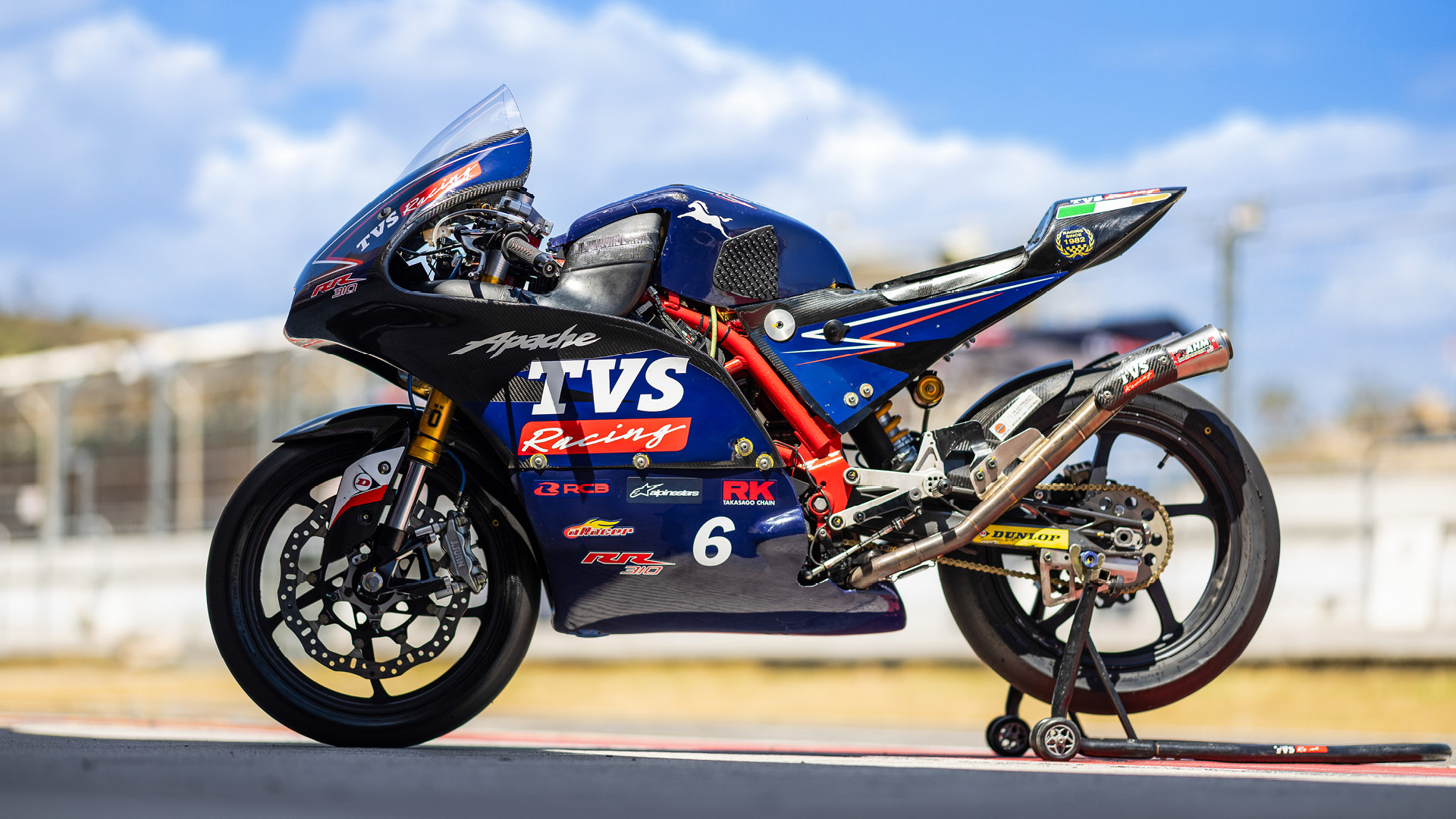
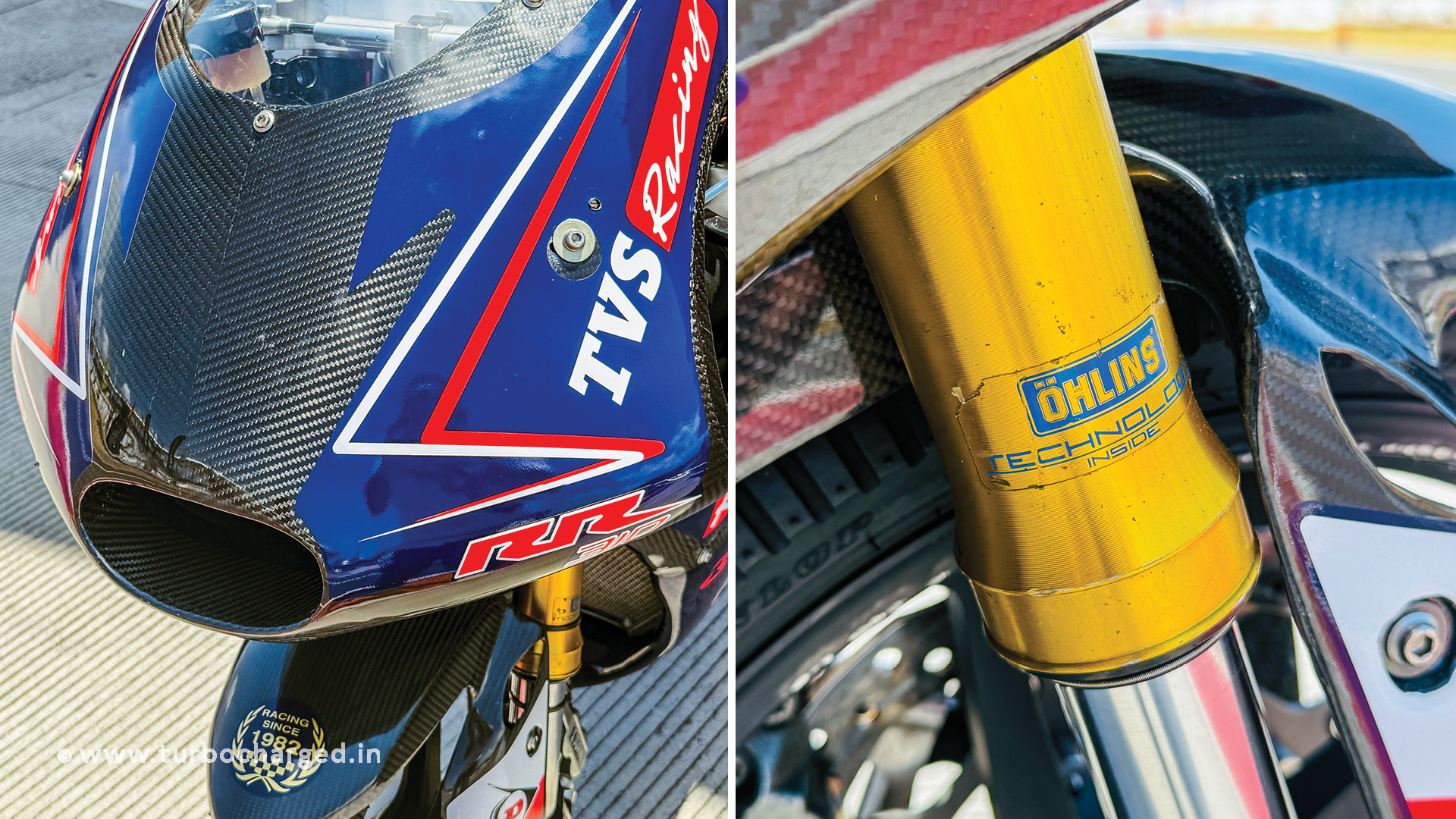
What caught my attention first was the exotic carbon fibre bodywork. Actually, that was after I noticed the massive, gaping air intake, the shape of the fairing itself, the bike’s lean form and its drop ultra-aerodynamic design. Heck, if you were to take off the TVS Racing decals, you cannot really tell the race bike is based on the TVS Apache RR310! The carbon fibre bodywork results in massive weight savings, besides which, the clear coat of lacquer on the fairing had the carbon fibre beneath it glisten and add huge dollops of exoticness.
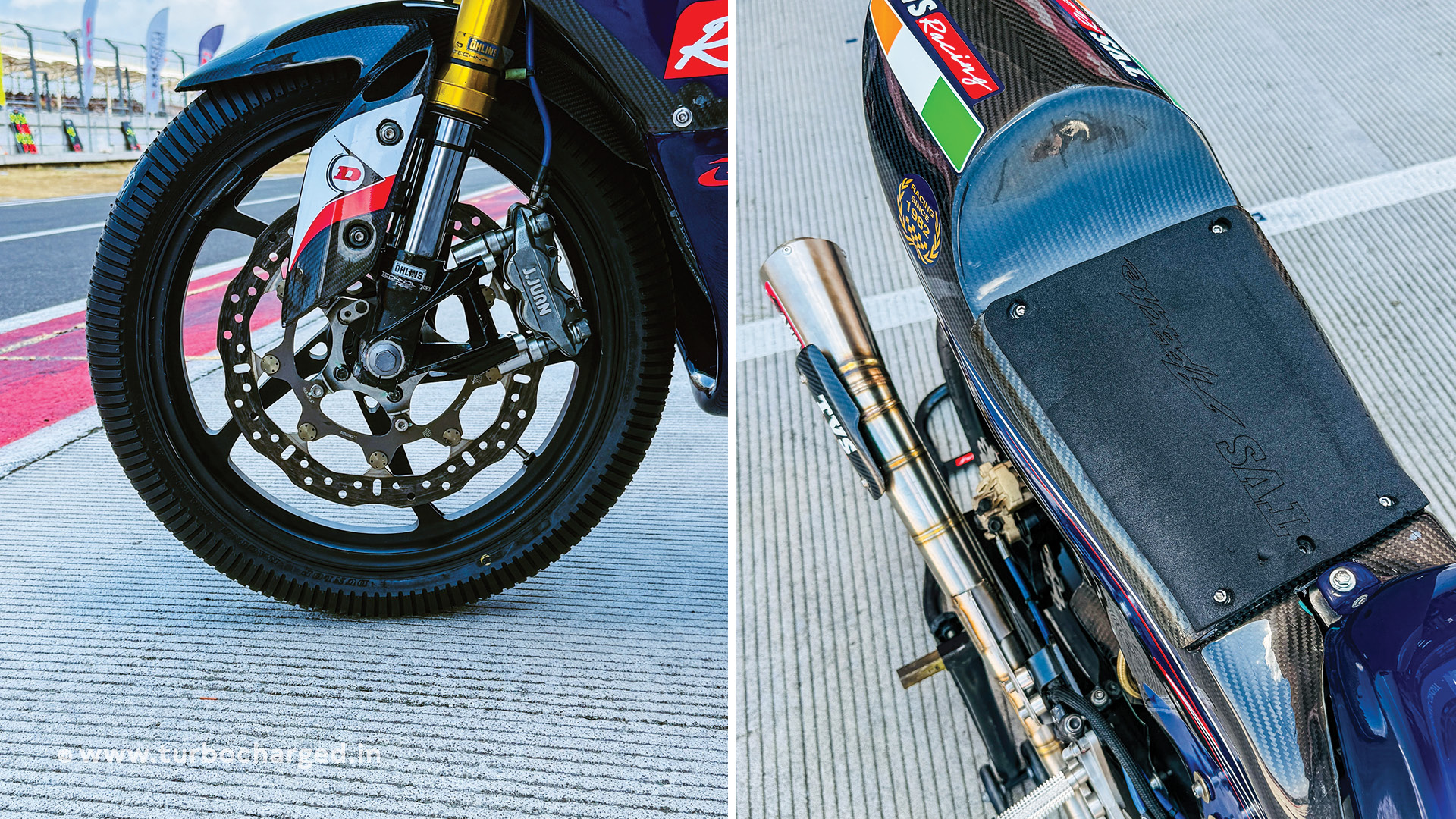
Besides the carbon fibre, the race bike also runs a lot of other trick bits for weight savings like forged aluminium wheels with slimmer spokes that do not compromise strength and aid aerodynamics, billet parts all round and more. Effectively, kerb weight is down by a whopping 31 percent. In fact, the race bike’s dry weight is a mere 119kg! It’s machines like these that have you believe in the wonders engineers can do, especially race engineers. On the same note, the RR 310’s 312cc, liquid-cooled single cylinder engine has also been transformed into something RR310 owners wouldn’t believe possible.
TVS Racing cleverly refrained from giving us exact outputs, but we’re told the engine puts out 51 percent more power here, so it’s safe to assume there’s well over 50PS on offer in race form. Do the math, and it’s not hard to deduce that the race bike’s power to weight is astronomical as compared to a stock RR310. A number of trick components, made from exotic materials, like high-lift cams for instance, have been employed to achieve the results. Then there’s the electronics. The ECU allow three maps with varying levels of engine braking, besides which engineers are constantly tweaking engine maps and overall performance to suit the various circuits where the championship is held.
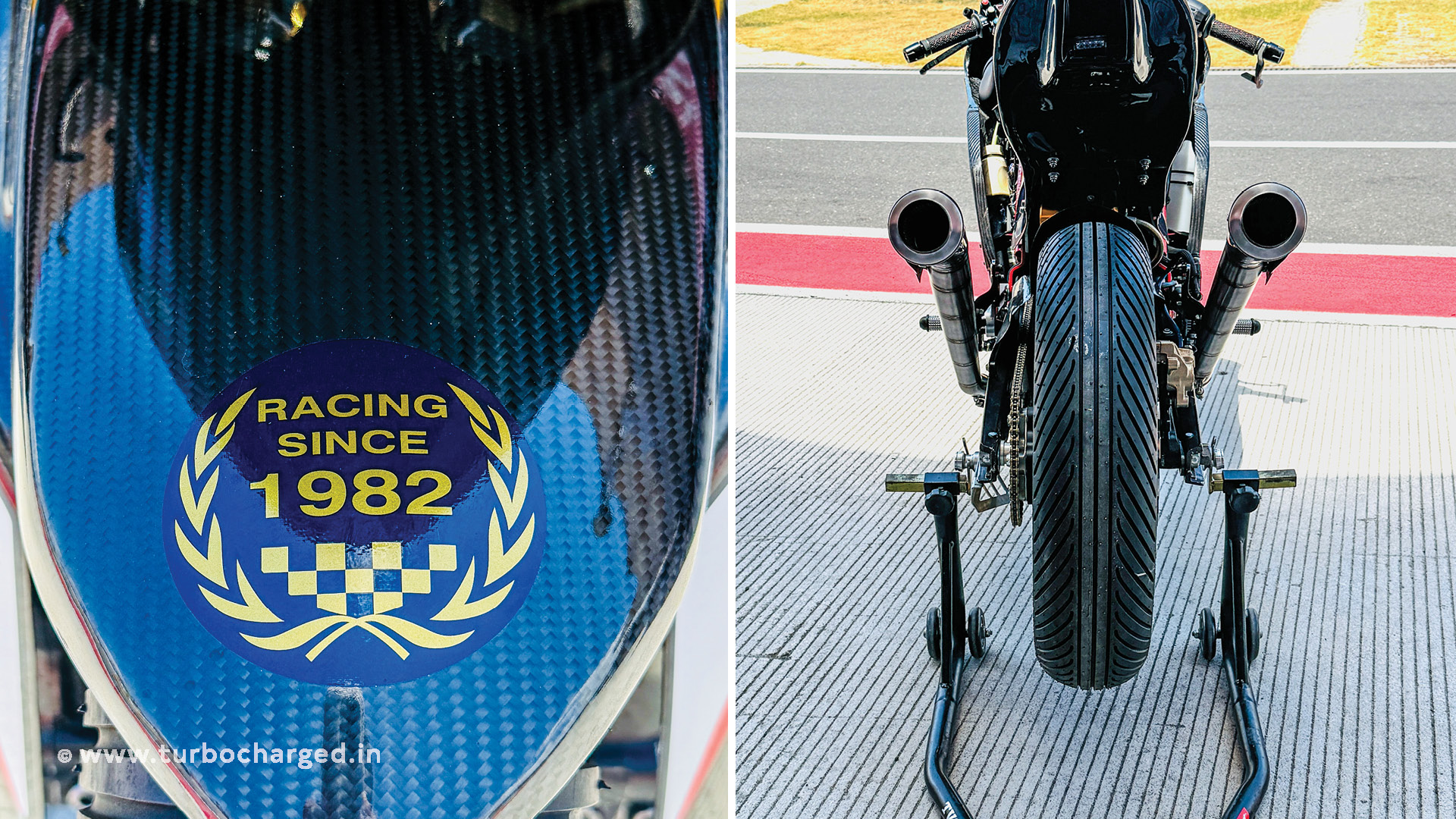
This includes Thailand’s Buriram International Circuit, Malaysia’s Sepang International Circuit, and more. In fact, the race bike has clocked a top speed of 216kmph at Sepang – yes, we’re talking about a TVS Apache doing that! The bike also runs race-spec Ohlins suspension along with racing slicks from Dunlop Tyres, which have taken the handling to another level. Before hitting the track, I acquainted myself with the bike’s controls, which include three MotoGP-style switches on the left handlebar yoke, while a tiny digital display tells you engine revs, the gear you’re in, lap times and more. The race bike also runs a 1-into-2 exhaust system and the dual exhausts are properly loud, as you would expect of a race bike.
On track the engine performance, throttle response and ultra-slick gearbox meant the bike was pushing me to my limits easily, rather than the other way round. The bike’s straight-line acceleration belies it running ‘just’ a 312cc single cylinder mill, while the throttle response and six-speed gearbox allow you to make the most of the engine’s explosive performance with ease. The Ohlins suspension and super-sticky Dunlop slicks meant I was able to lean hard into corners and give the throttle a fistful without having to even blink. Our first session on track was also spent trying to learn the circuit as Mandalika is very technical, with lots of interesting corners, meaning I was slow.
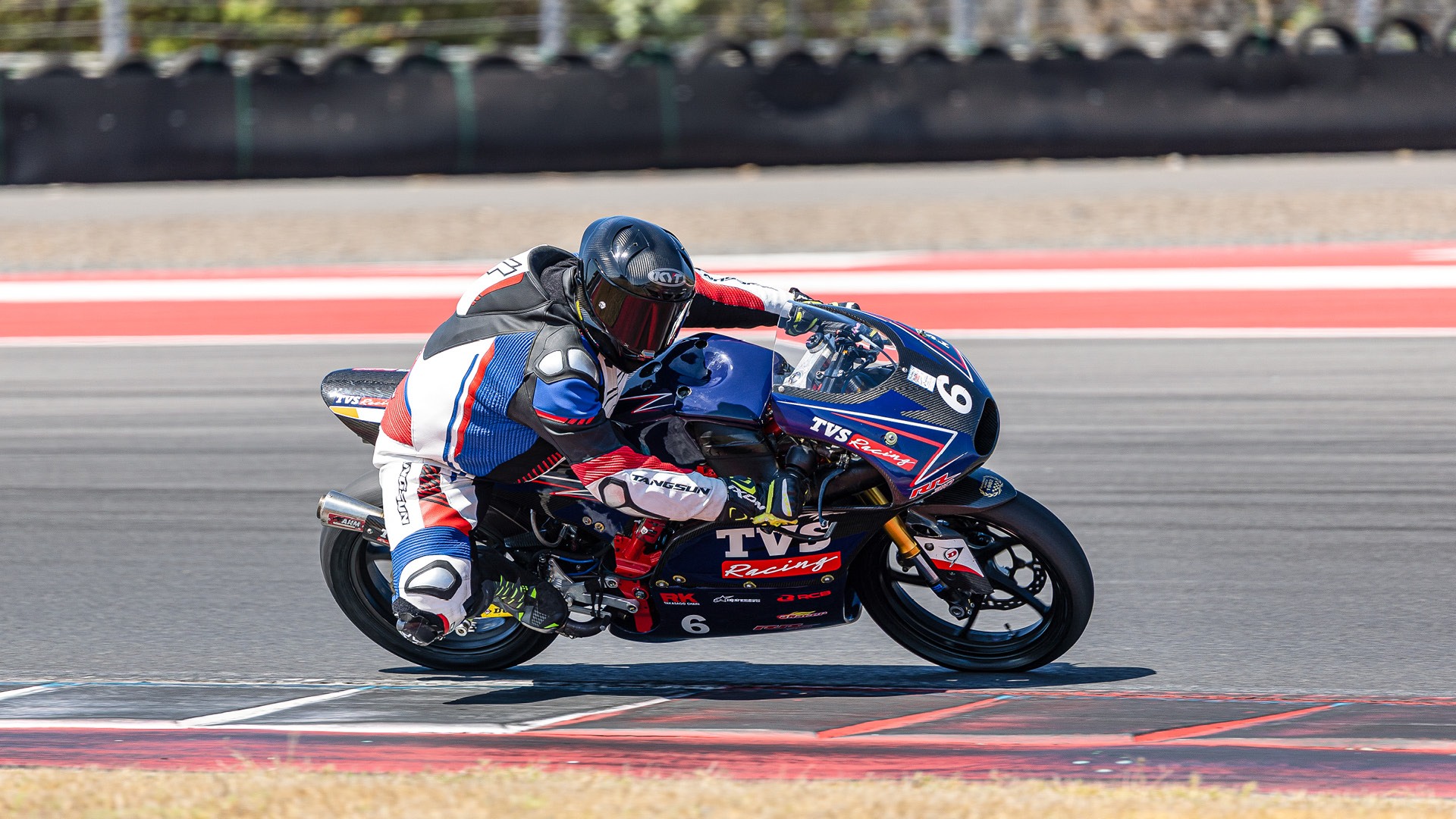
The second session felt a lot better, and my lap times also dropped by around 7 seconds, as I was also able to push the bike harder. And as I pushed harder, the suspension and tyres performed better, allowing higher speeds through corners along with faster exit speeds. Riding a full-blown race bike also calls for serious physical effort, which meant my lack of fitness was more than apparent before the chequered flag was out. But I was far from done, and wished for at least one more session, given the bike’s addictive performance, handling and purity of intent. Then there’s the fact that it isn’t very often that you get to ride a thoroughbred race machine at a MotoGP-spec racetrack. It’s one of those experiences I would give an arm and a leg for!