


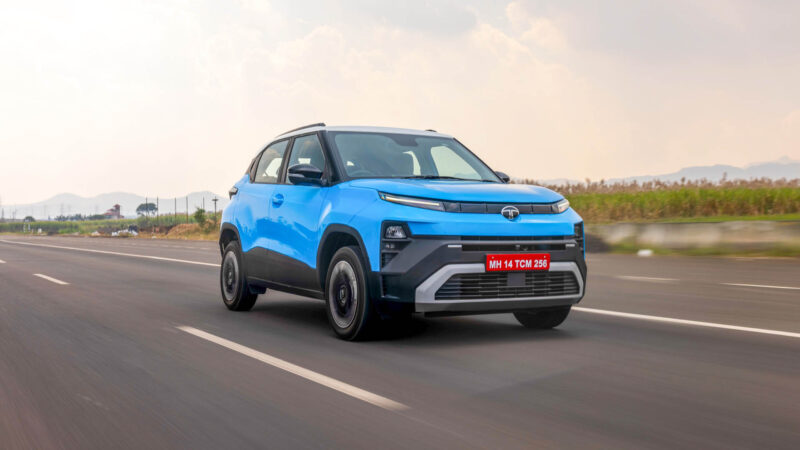
The Punch was launched in 2021, so it has been due an update right around this time. And Tata has slotted in an update to its small SUV right in the middle of other launches like the Sierra, and the Safari and Harrier petrols. What are the changes, though, and are they significant enough to give this Tata product some added punch?
The Nose (And Tail) Job
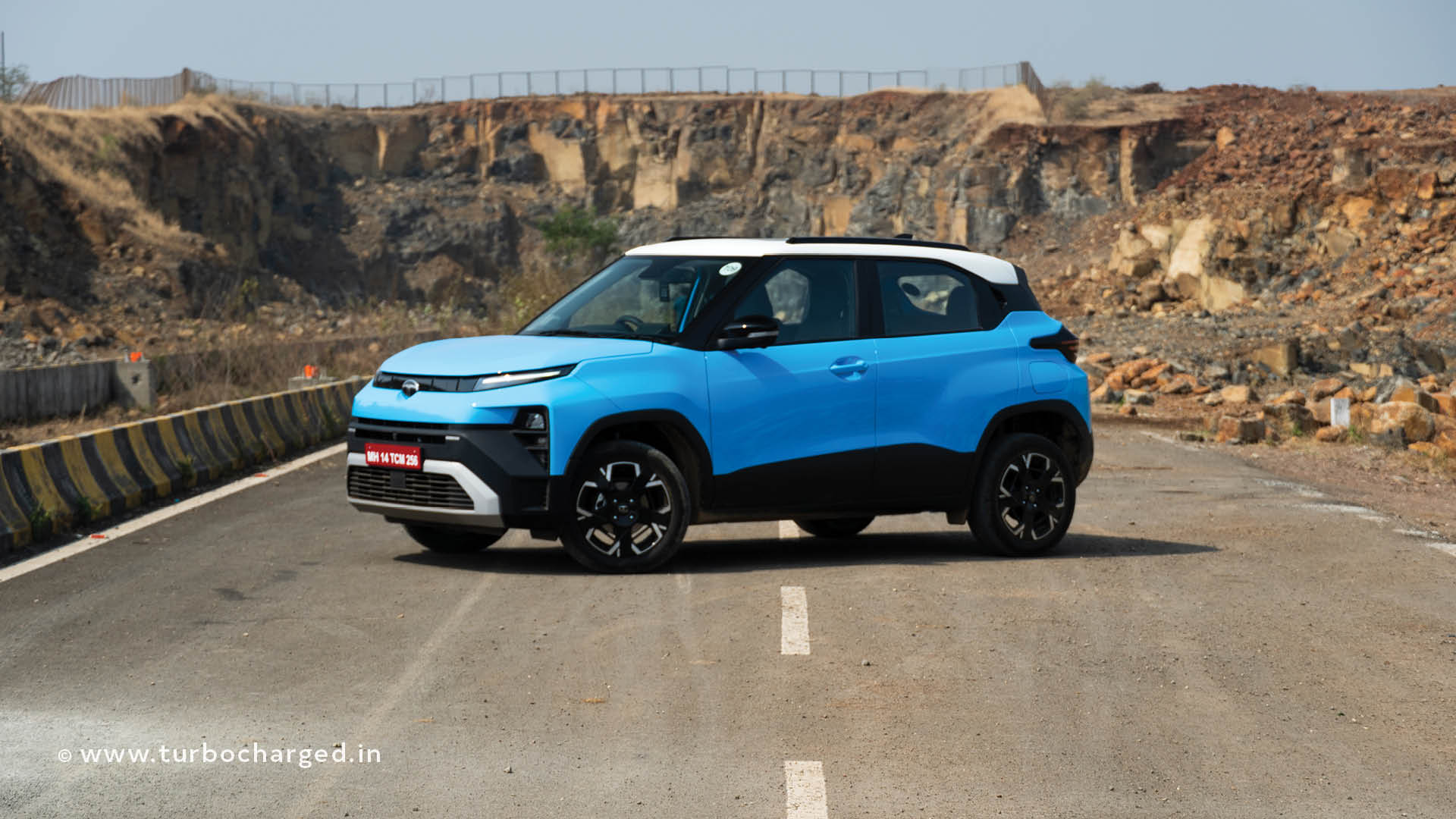
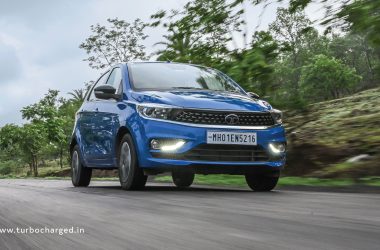
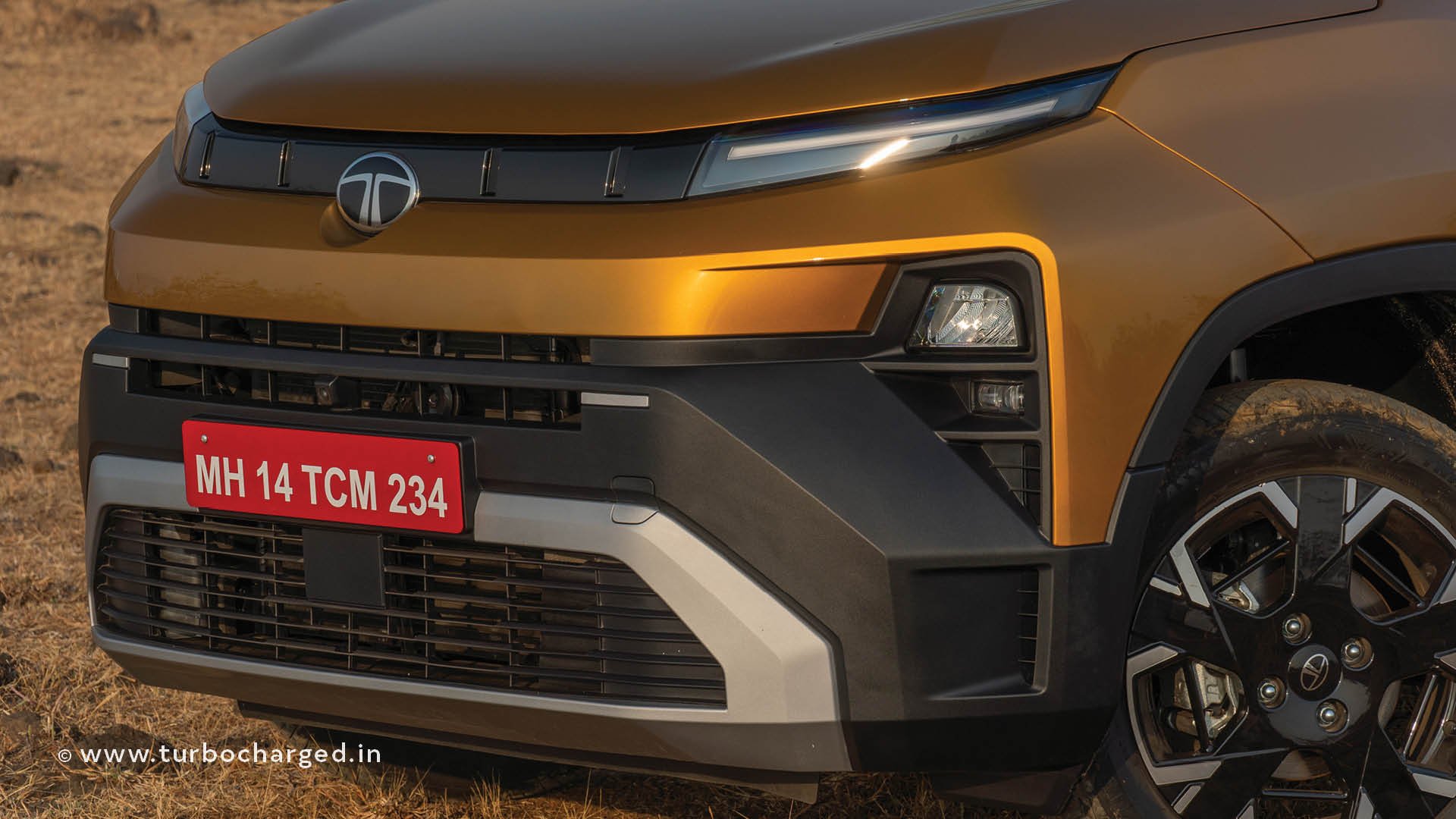
The looks have changed significantly. Gone is the tetrapod-inspired look of the original Punch, and instead there is a sleeker, yet more aggressive look in place. It puts it in line with the larger SUVs, the Sierra, Safari and Harrier. The front bumper has a large matte black plastic element which apes the bullbars from old-school SUVs. The LED DRLs are different, too, and they flank a slim grille element with notches in it. The DRLs are in line with the larger Tata SUVs as well, which is a good thing.
At the side, the profile remains similar. The big change is the alloy wheel design. It remains a two-tone design, but is a more sophisticated one. You probably won’t notice this, but the ground clearance has been increased to 193mm from the previous 187mm. The new tail lamps also make their presence felt in the side view of the new Punch.
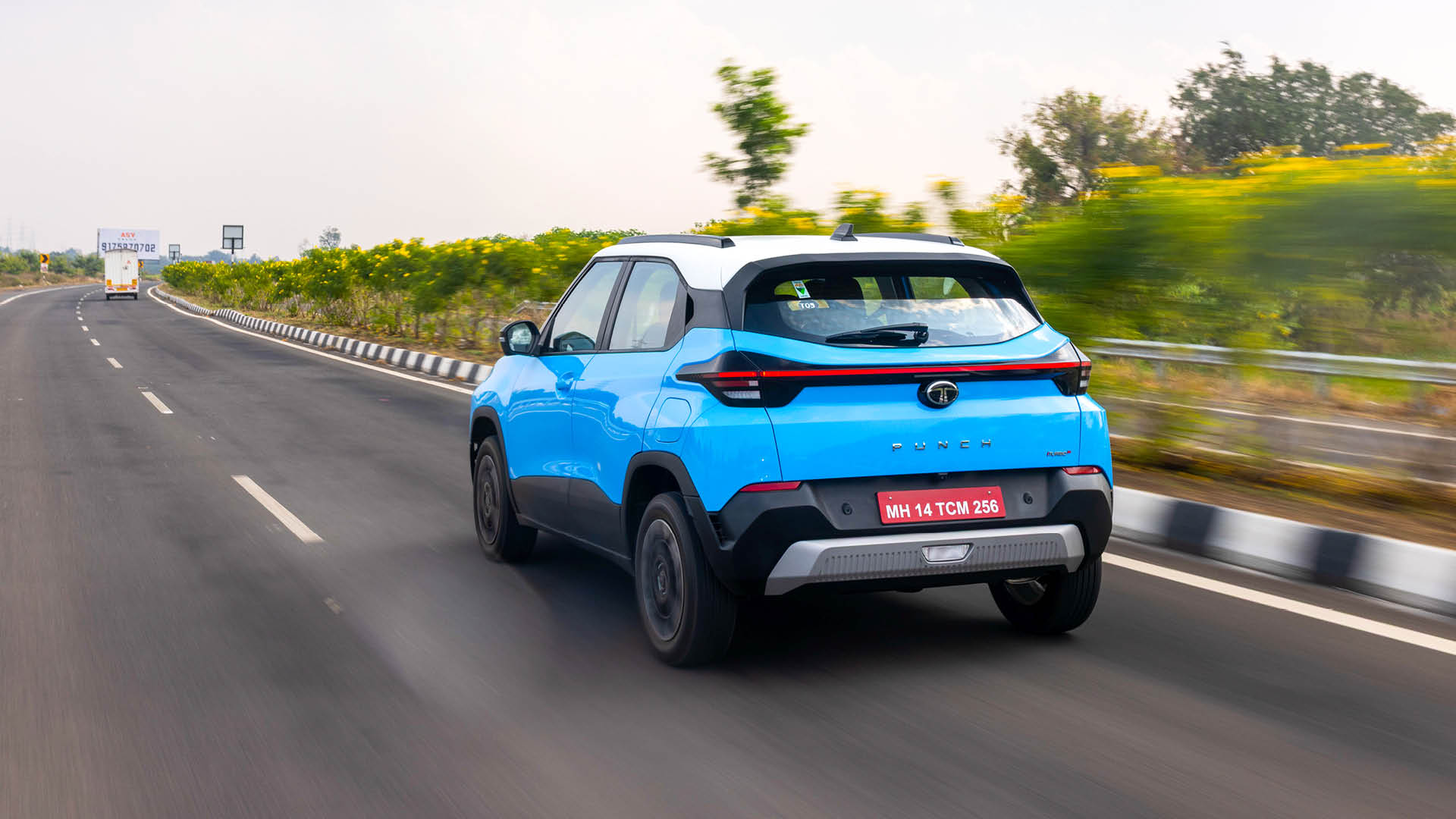
At the rear, it’s an all-new look, just like the front. There’s a light guide across the hatch, with horizontal elements in the tail lamps. The roof also now has a spoiler that extends the roof just a little, but makes it look a lot sportier.
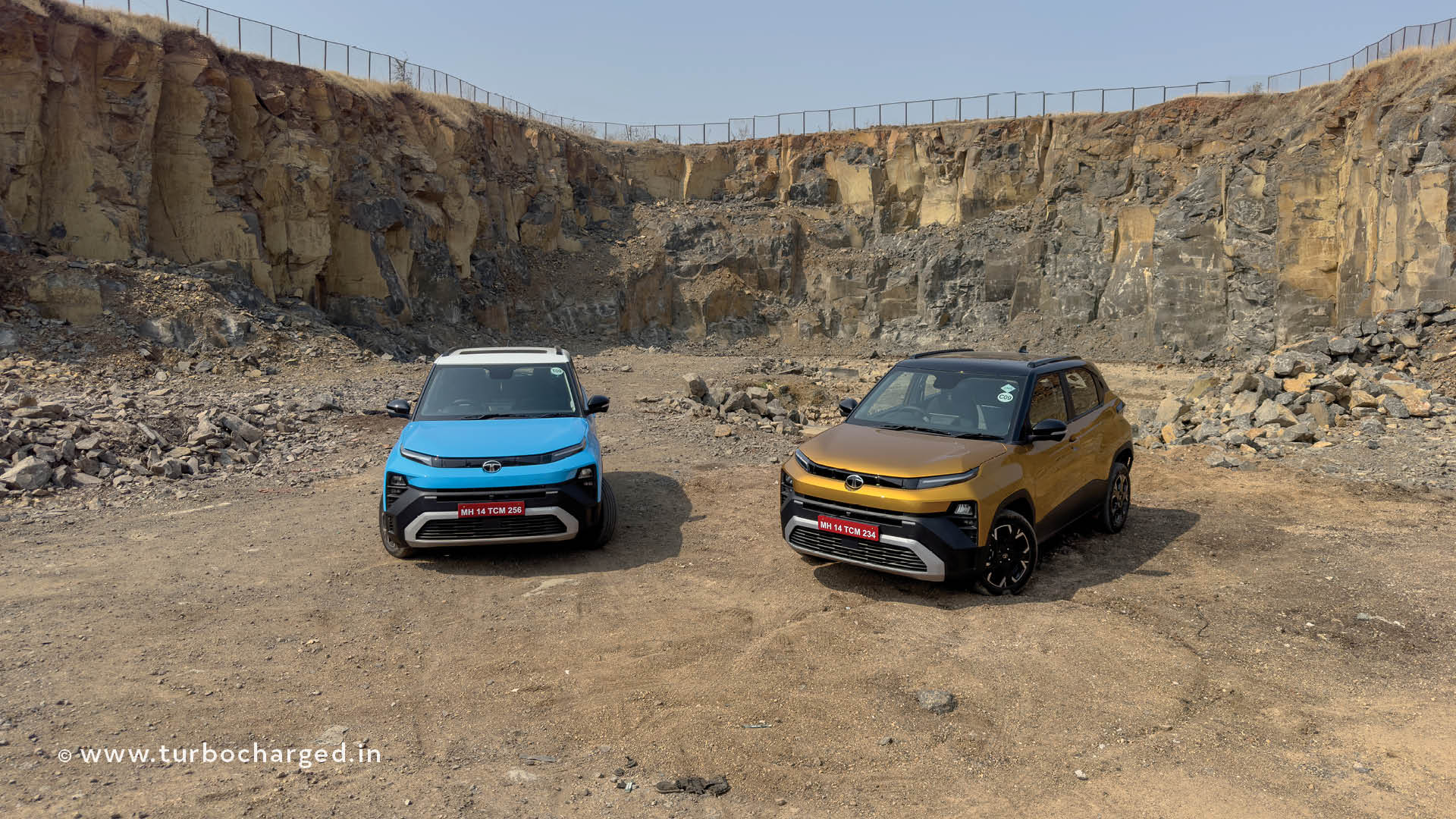
Speaking of the roof, the cars we drove had contrasting roofs – the blue had a white roof, while the gold one has a black roof.
True Change Comes From Within – Or So They Say
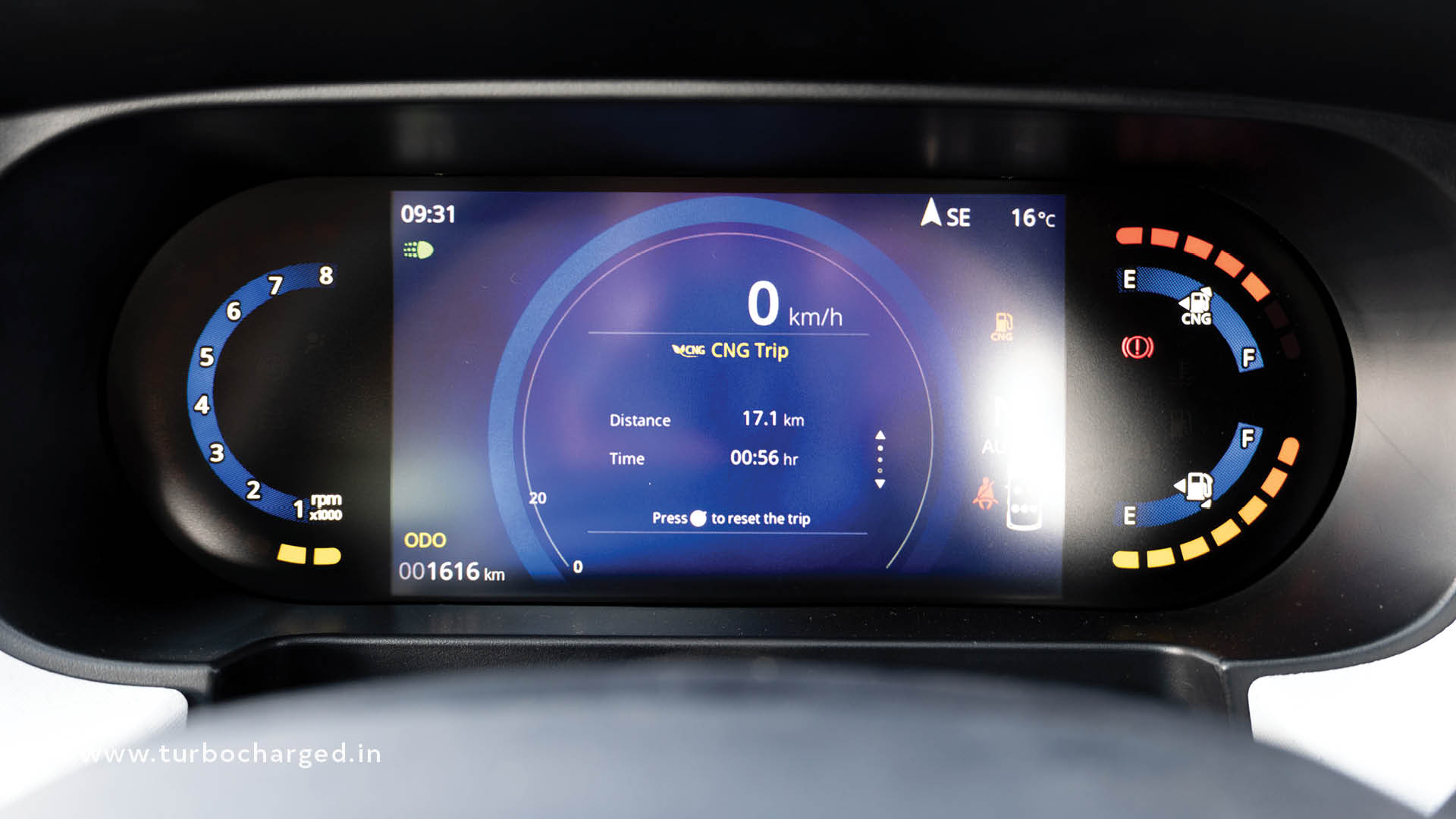
Tata has taken this saying very seriously, so you’ll find the interior looking quite different as well. It has a 10.25 inch central touchscreen from the Punch EV, and the most noticeable change is the 7 inch TFT screen that replaces the dials for the driver. There is a lot of information that is packed into it, and we really do like the design of the coloured blocks that indicate revs, fuel level and coolant temperature. However, the Punch does need bigger numerals for the speed – this will help the driver register the speed with a quicker glance.
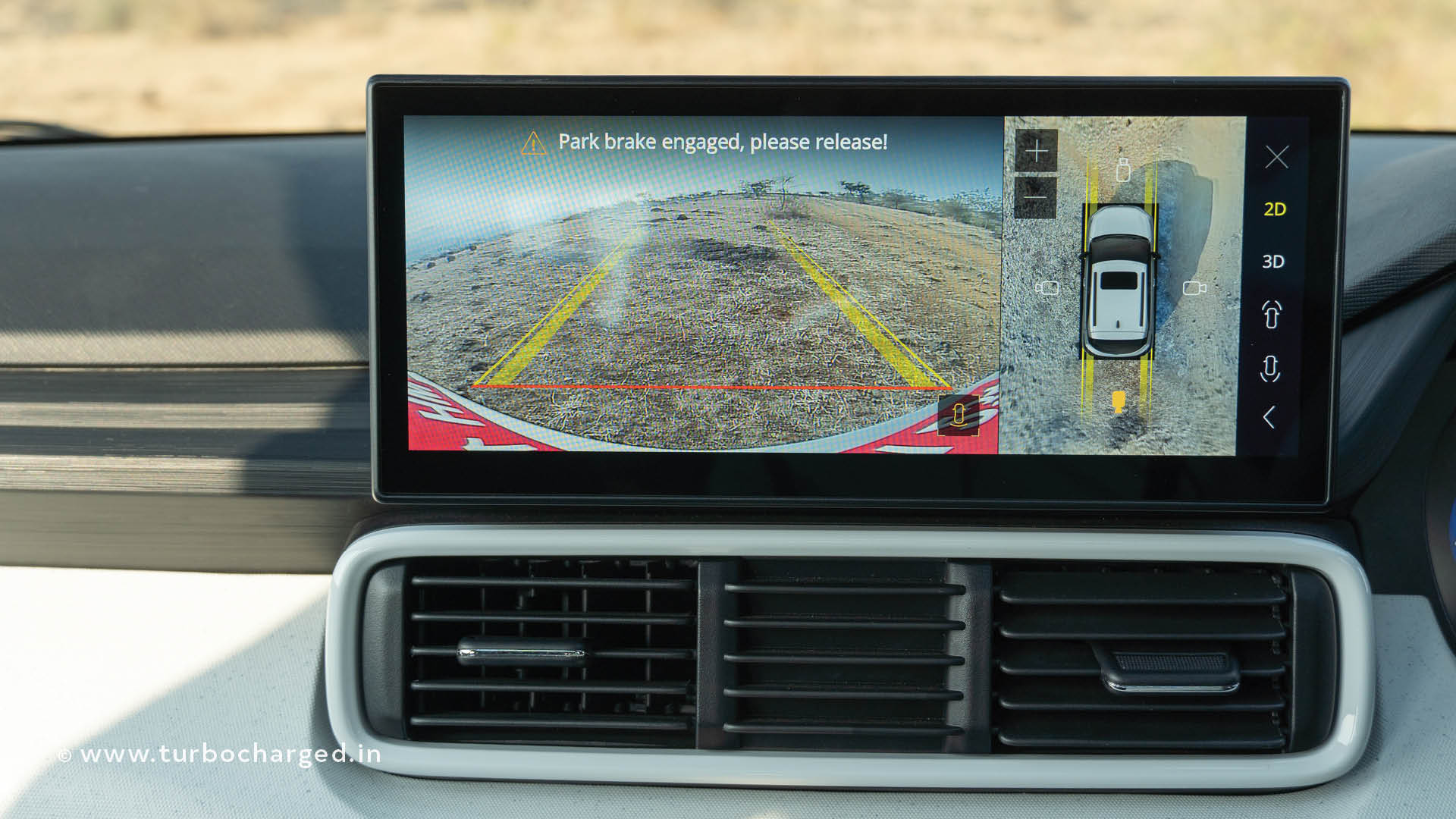
Another feature that we’d like changed is the blind spot camera feed on the central display every time you engage the turn indicators. It occupies the whole screen, only displaying the map once the indicator turns off. This is alright in a city like Chandigarh, where every intersection is a guaranteed 90 degree turn, but we were in Pune, where intersection design is organically evolved, to put it mildly. We would have been far more comfortable if the map was retained in a corner of the screen. Everything else is great – we were also impressed with the dual fuel gauges on the CNG variant, although that means you lose out on the coolant temperature gauge.
The updated two-spoke steering wheel has the illuminated Tata logo in it. It adjusts for rake but not reach. The gearlever for the AMT looks nice, but we’d have liked a better looking shifter for the turbopetrol. There is nothing wrong with it, mind, but a plain black shifter doesn’t quite deliver the same kind of premium feel that the rest of the cabin, or the AMT shifter, does. The centre console has some new additions as well – there are capacitive buttons for the AC, and we like that Tata has retained two physical buttons for the temperature and blower speed.
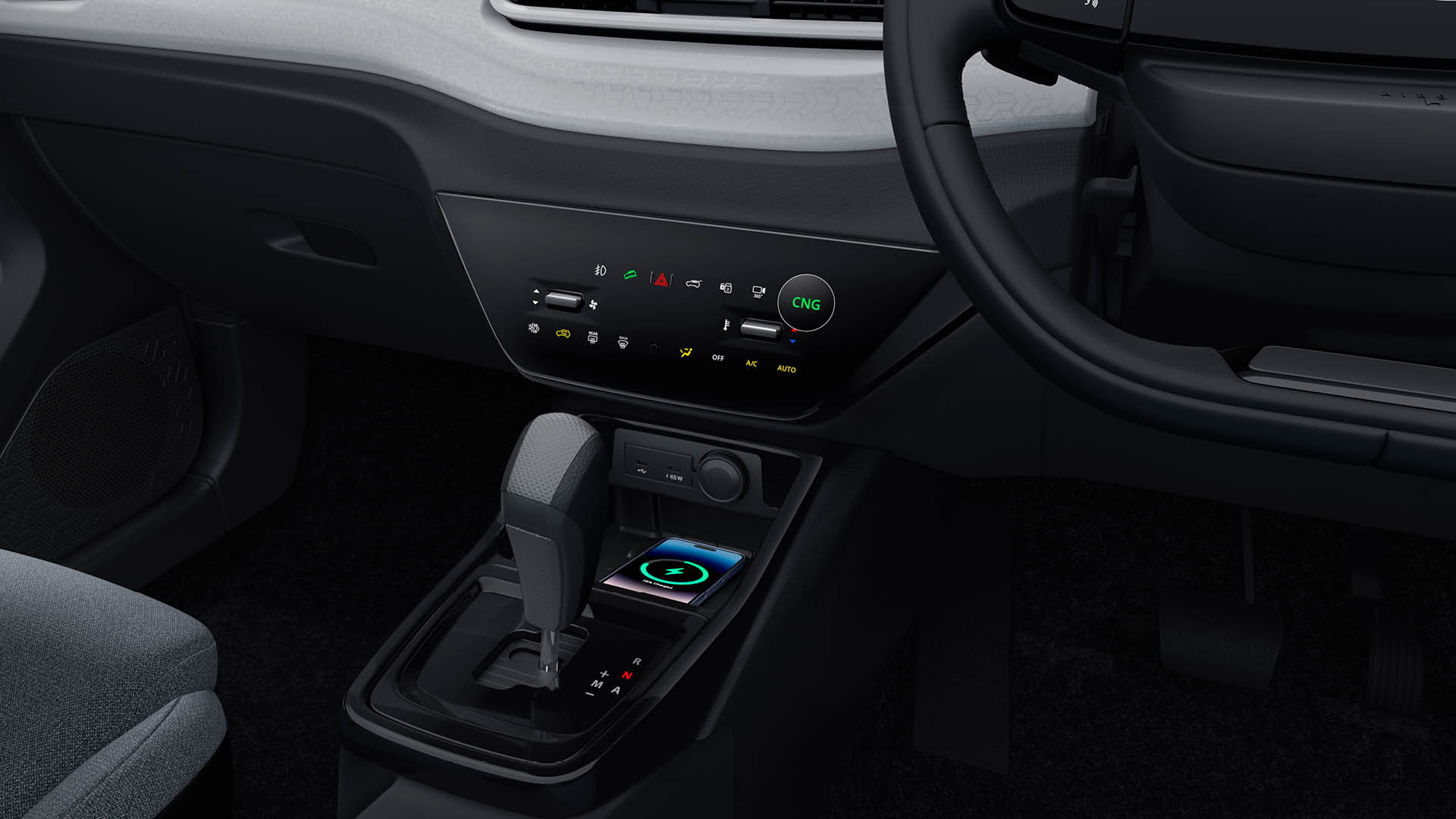
The space between the front seats has redesigned cupholders, and a movable centre armrest. Two type C chargers are provided along with a 12V socket. One of the type C chargers is a 65W one, and we can attest to its quick-charging capabilities, having used it during our drive! Other notable features include a 360 degree camera, LED fog lamps, an auto dimming rearview mirror, tyre pressure monitoring, a cooled glovebox, rain-sensing wipers, automatic calling in case of an emergency, wireless charging, a sunroof, an audio system with four woofers and tweeters each, and app connectivity. There are six airbags as well as a 5-star BNCAP safety rating.
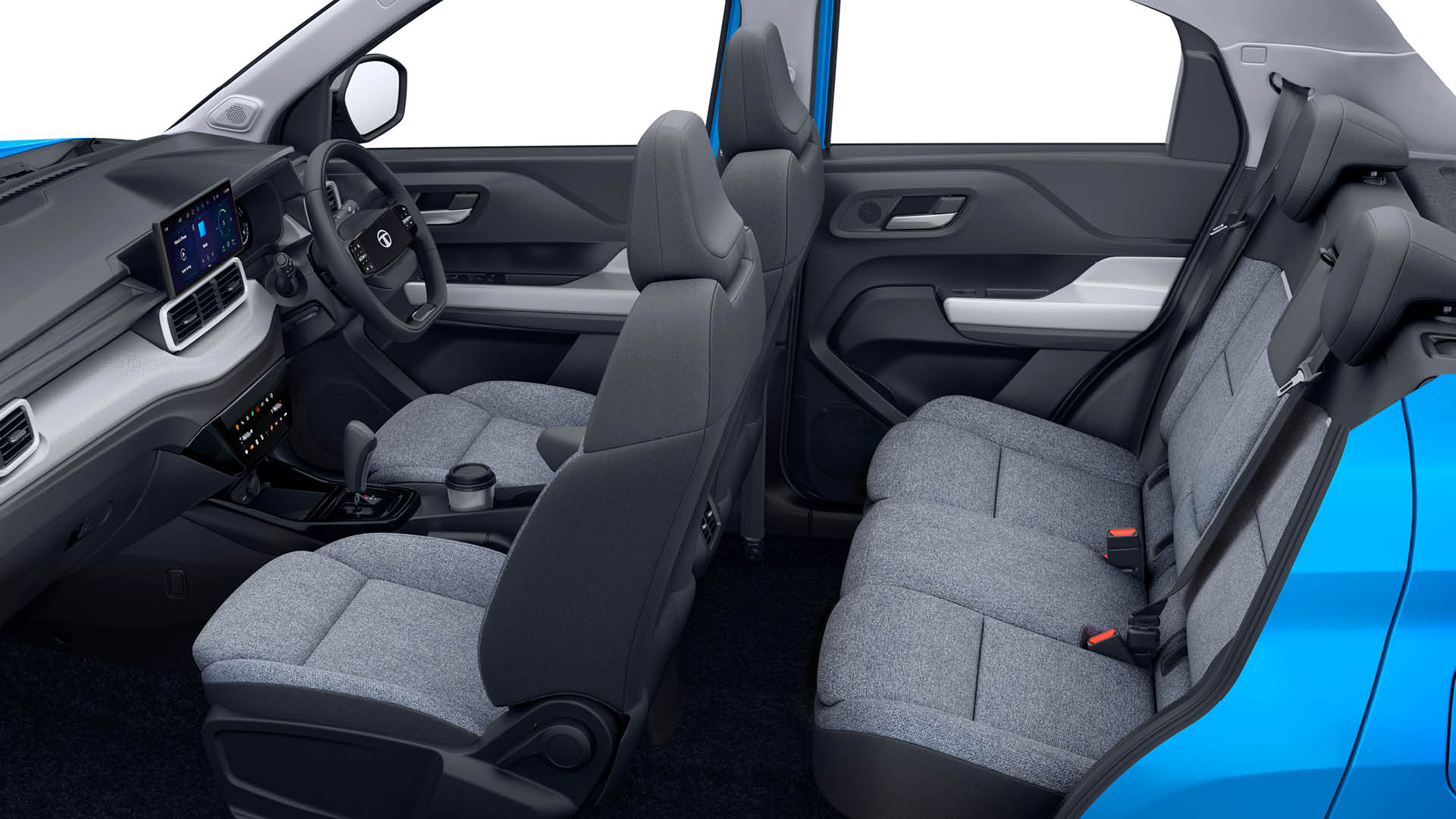
Tata has also changed the seats of the Punch. There is more underthigh support at the front, and tall people will find these seats quite comfortable. There is good kneeroom and head room in the back, and there even is a three point seat belt for the middle rear passenger. There is an armrest, a rear AC vent, a charging port, and a place to stow your phone while it charges as well. The fabrics have been changed as well to reduce static electricity. The light grey/black combination is elegant, and has brushed silver inserts that lend class to it.
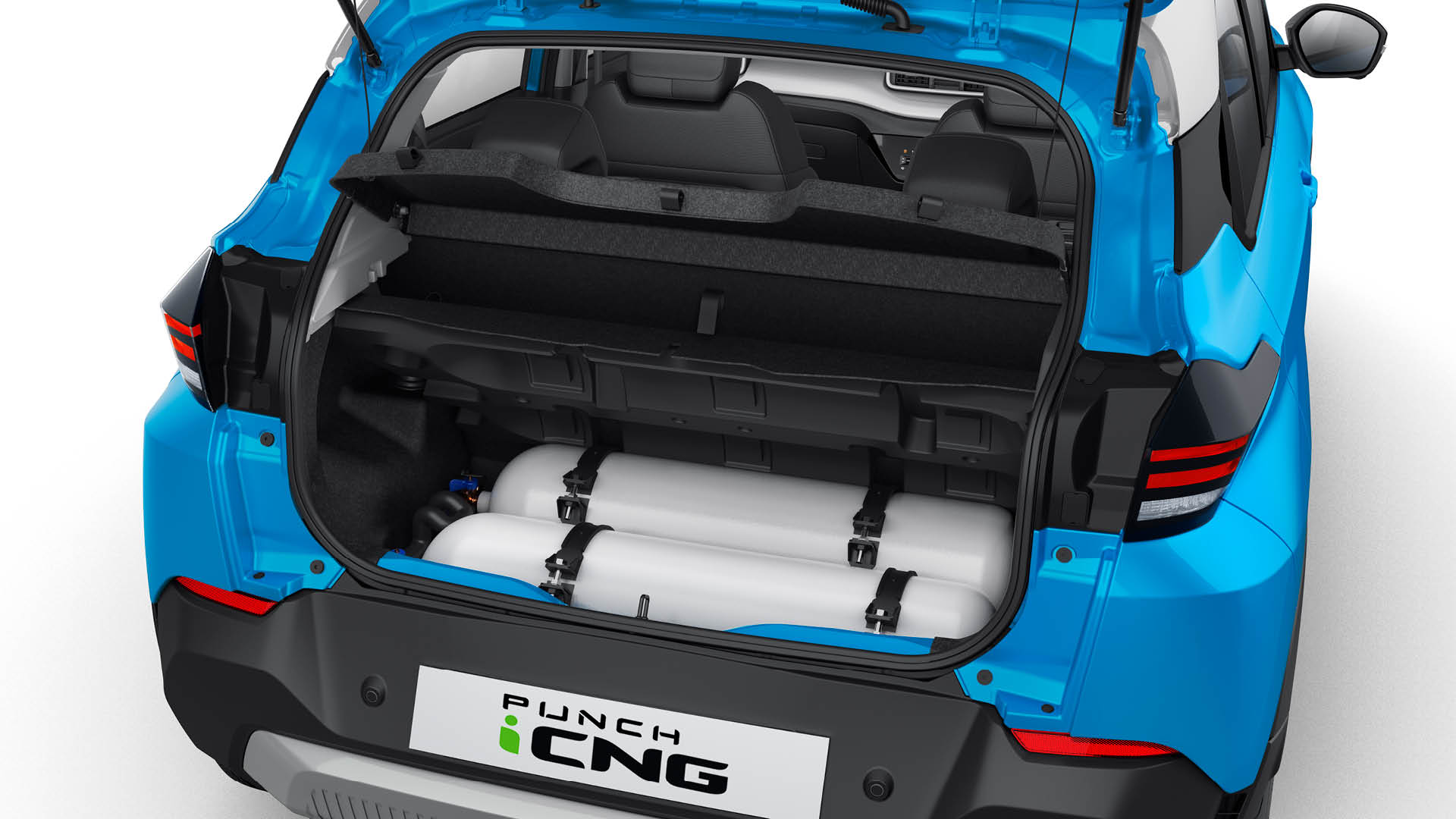
The petrol variants’ boot is large enough for everything you’d want to do at 366 litres, but you do lose space to the CNG tanks if you opt for those variants. It still remains quite usable for short trips – and it changes the access to the spare wheel, which now has to be lowered from the bottom like an MPV’s spare. Thank goodness there’s more ground clearance, eh?
Punch-y Engine Options
Let’s deal with the CNG first. This is the 1.2 Revotron engine that makes 87.8PS at 6,000RPM and 115Nm at 3,250RPM in petrol mode, but drops a little to 73.4PS at 6,000RPM and 103Nm at 3,500RPM. The difference in the city at least is negligible, and Tata has put in a lot of work to make this engine feel just as peppy on CNG as it does on petrol. Other interesting things include the fact that it has a unified ECU for the CNG, and it can start on CNG – it doesn’t need petrol at all.
This is also the only CNG powered vehicle in its segment that also has an automatic gearbox. This is a five-speed AMT, and Tata has equipped it with paddle shifters as well! There is also a 5 speed manual gearbox if you prefer to do the shifting yourself. If you like manuals, though, there is a 6 speed one in the Punch with the turbopetrol.
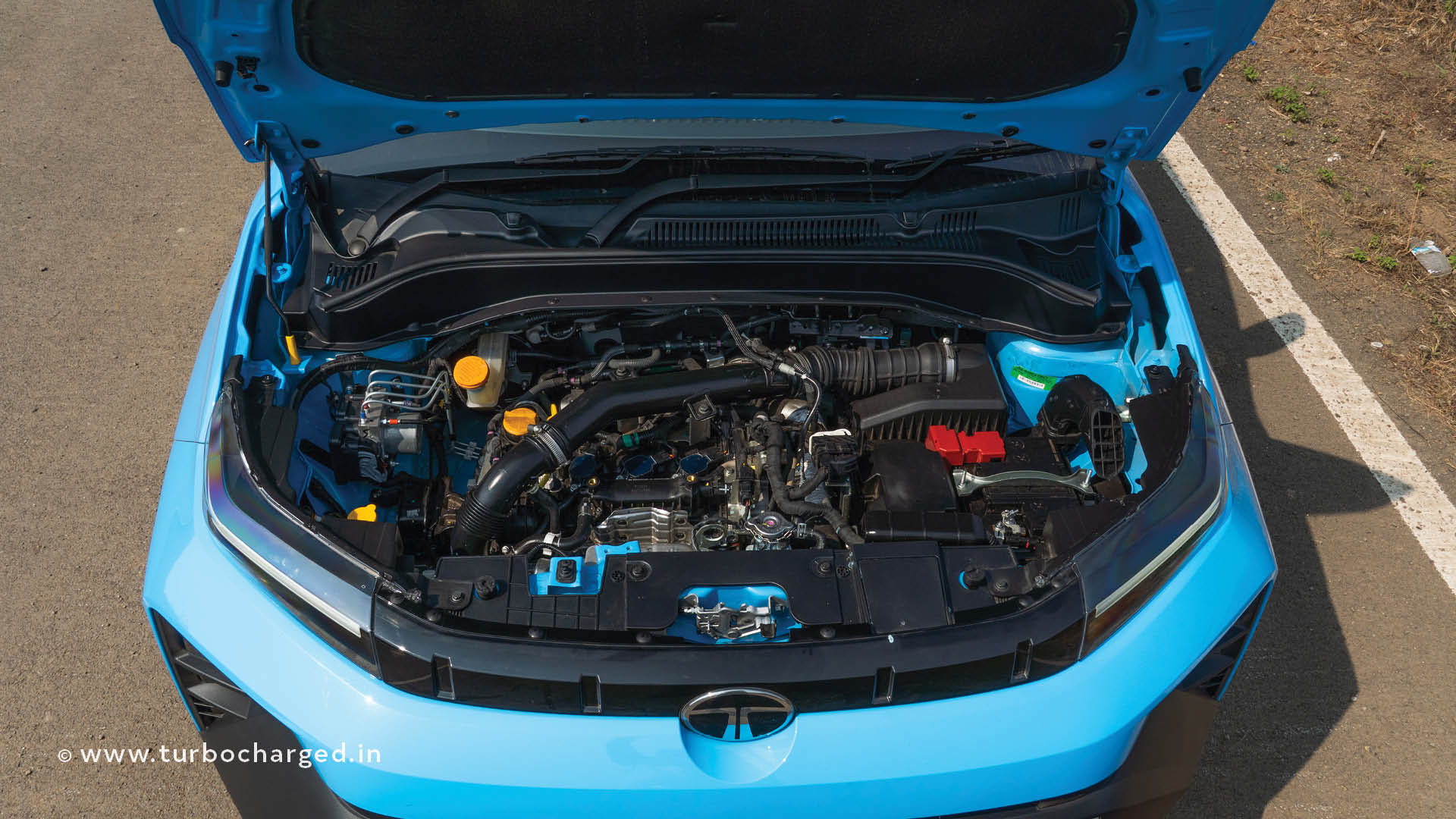
This engine has the same three cylinders and displacement as the Revotron, but adds a turbocharger to the proceedings. That results in an exciting 120PS at 5,500RPM and 170Nm from 1,750 to 4,000RPM. This is a genuinely quick car, with the turbocharger doing great work by the time you get to that 1,800RPM mark. Top gear is geared so tall that you’re humming along at the start of the torque peak at 80kph. There is just one fly in the ointment – while the clutch lever is light enough to be comfortable, the engagement is sudden, which made it quite difficult in traffic. Out on the highway, this will not be a problem. Features here include a manual mode for the AMT gearbox, hill descent control, cruise control, and modes for the engine.
Grown-up Ride And Handling
Although our drive didn’t offer us much highway running (you’ll have to wait for a full review for that), what we did notice is that the Punch is planted at highway speeds. It doesn’t exhibit much body roll in the corners, but where it shines is in the city. The suspension is compliant, grown-up, and tackles speed breakers and potholes with no complaint. The drive also included a specially prepared off-road experience with the Punch, but we did some of that on our own, with great results. The brakes are confidence-inspiring, with good bite and progression. The steering feel has been understandably sacrificed a little to offer ease of use. The Punch is an incredibly capable car at the price.
What Is The Price?
That brings us to the price – it is roughly ₹10,000 more expensive than the outgoing Punch, at ₹5.59 lakh to ₹10.54 lakh, ex-showroom. That gives it a lot more value than the current Punch. Its direct rival is the Hyundai Exter, while the Maruti Suzuki Fronx is also priced within striking distance. This is some tough competition, and we can’t wait to drive the Punch extensively to see where it ends up in the pecking order.