

Photography: Saidatta Naik
It wouldn’t be wrong to say the Maruti Suzuki e VITARA was one of the most anticipated launches of 2025. It was showcased at the Auto Expo at the start of the year, and as Maruti Suzuki’s first ever EV there was a lot of buzz surrounding it. A string of delays meant we had to wait for a long time before we got behind its wheel, and interestingly, our first driving experience was on foreign soil – the United Kingdom to be precise, which is the first of 100 countries to receive the made-in-India e VITARA! The experience gave us a taste of what the electric SUV is like to drive, but nothing like testing a car on home soil, right? So here we are, telling you about what the Maruti Suzuki e VITARA feels like to drive on Indian roads!
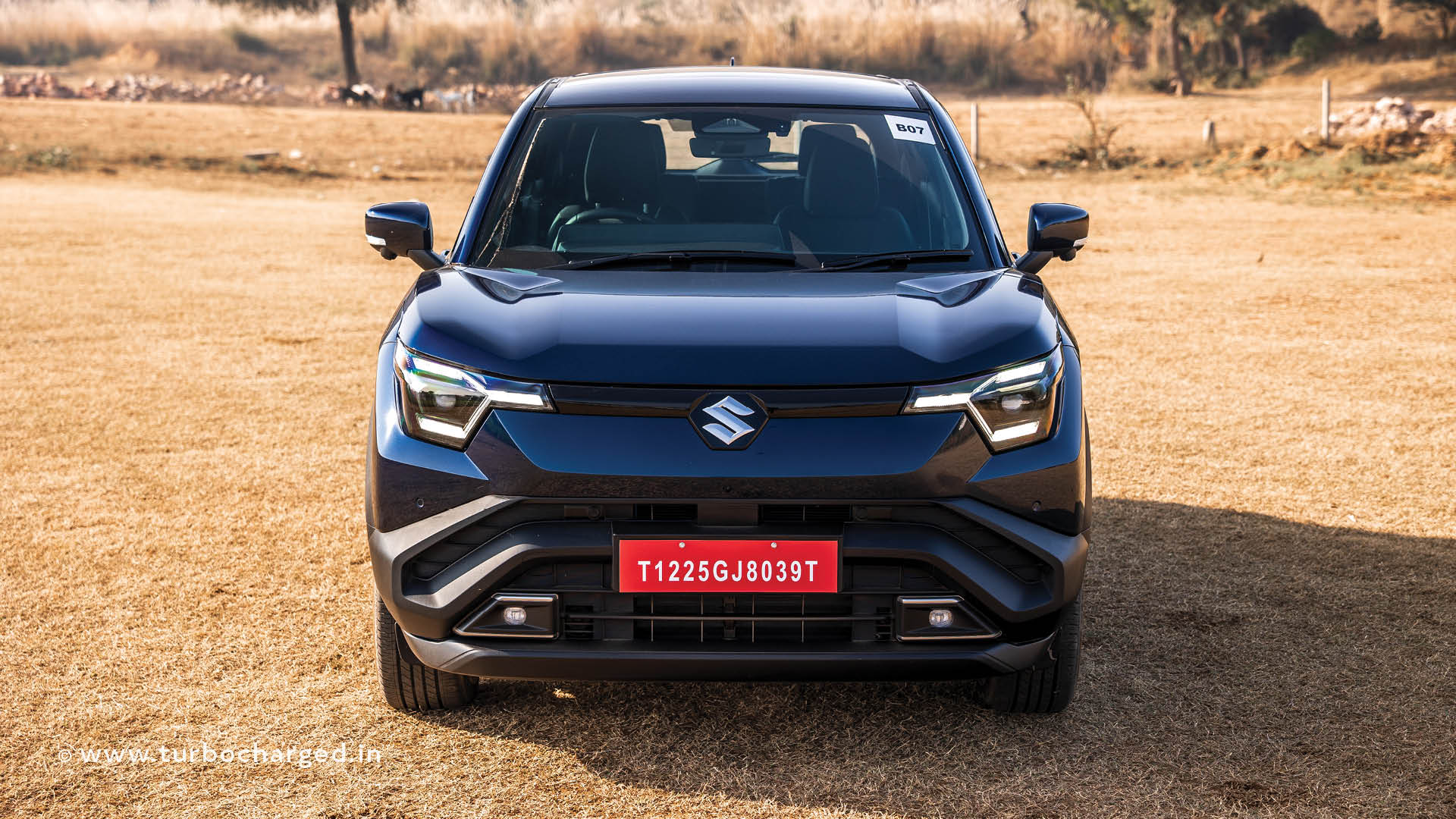
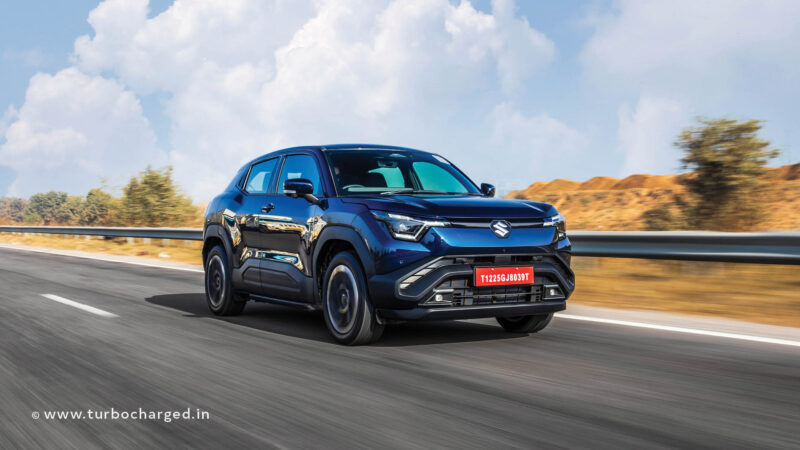
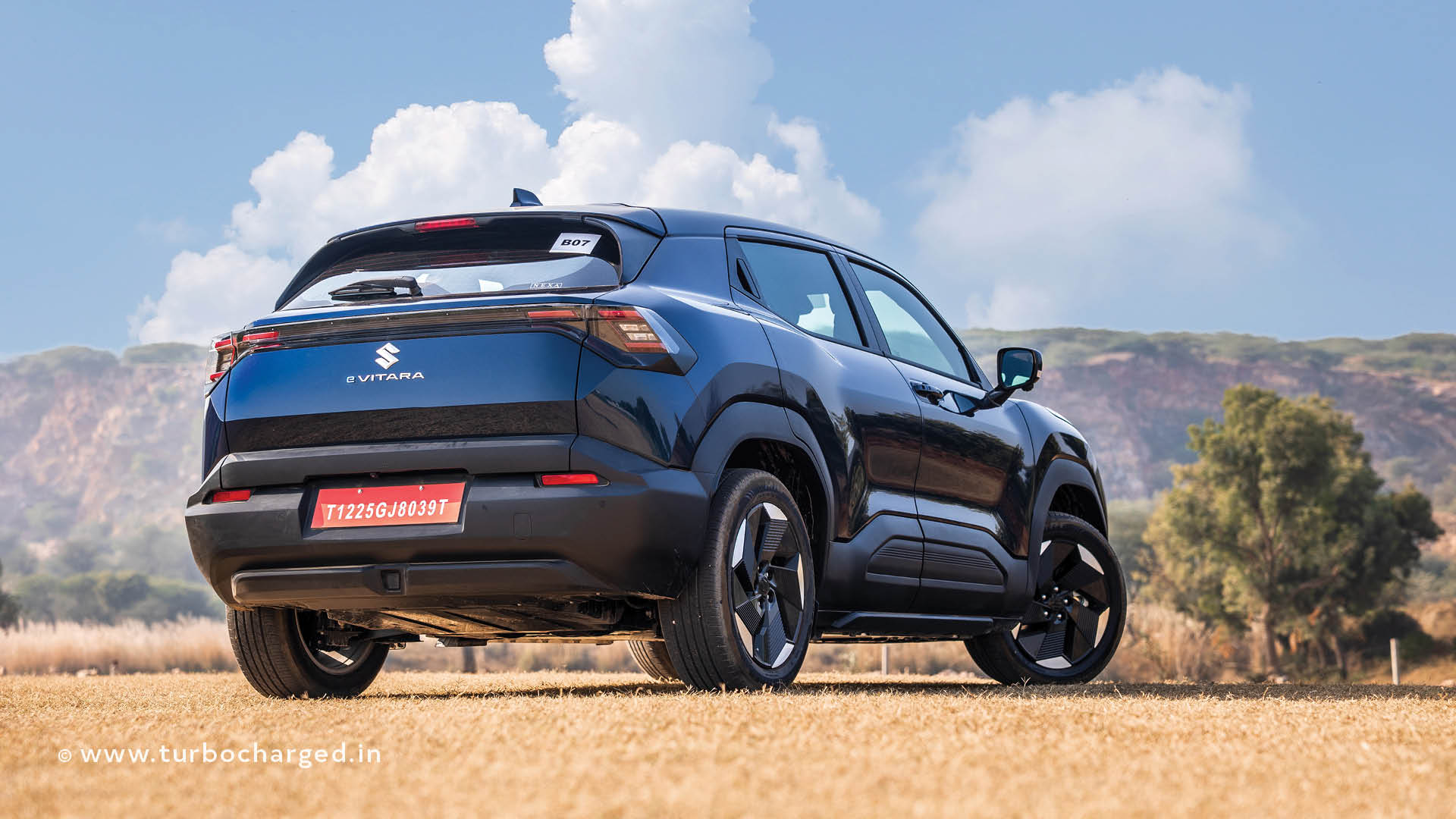
What gets your attention first is the e VITARA’s unconventional design (you certainly cannot miss the way Maruti is spelling the name out too!). The design is also quirky, but in a good way. Its modern design cues lend the e VITARA a very un-Maruti like appearance and also help it look futuristic. Heck, it looks more European with its sharp lines and creases, and also looks very fresh. To put things into perspective, while Mahindra has gone the bold way with the BE 6 and Hyundai a little too conservative with the Creta Electric, Maruti seems to have found an interesting route to take on the design front.
The e VITARA looks muscular from the front thanks to the sharp lines on the hood, while the headlamps are sleek units with Y-shaped DRLs. The grille looks conventional, which is a good thing, while the bumper gets thick plastic cladding. Its 2,700mm wheelbase has the e VITARA look long, and short in height from the sides, but there’s plenty of design cues that help it look more SUV than hatchback, like the black cladding and 18-inch wheels (the UK-spec car had 19-inch wheels). The flared haunches above the rear wheels help in adding muscle too, and (thankfully!) there’s conventional door handles, at least on the front doors, and not ‘flush-fitting aero handles’, while rear door handles are hidden into a rather thick C-pillar.
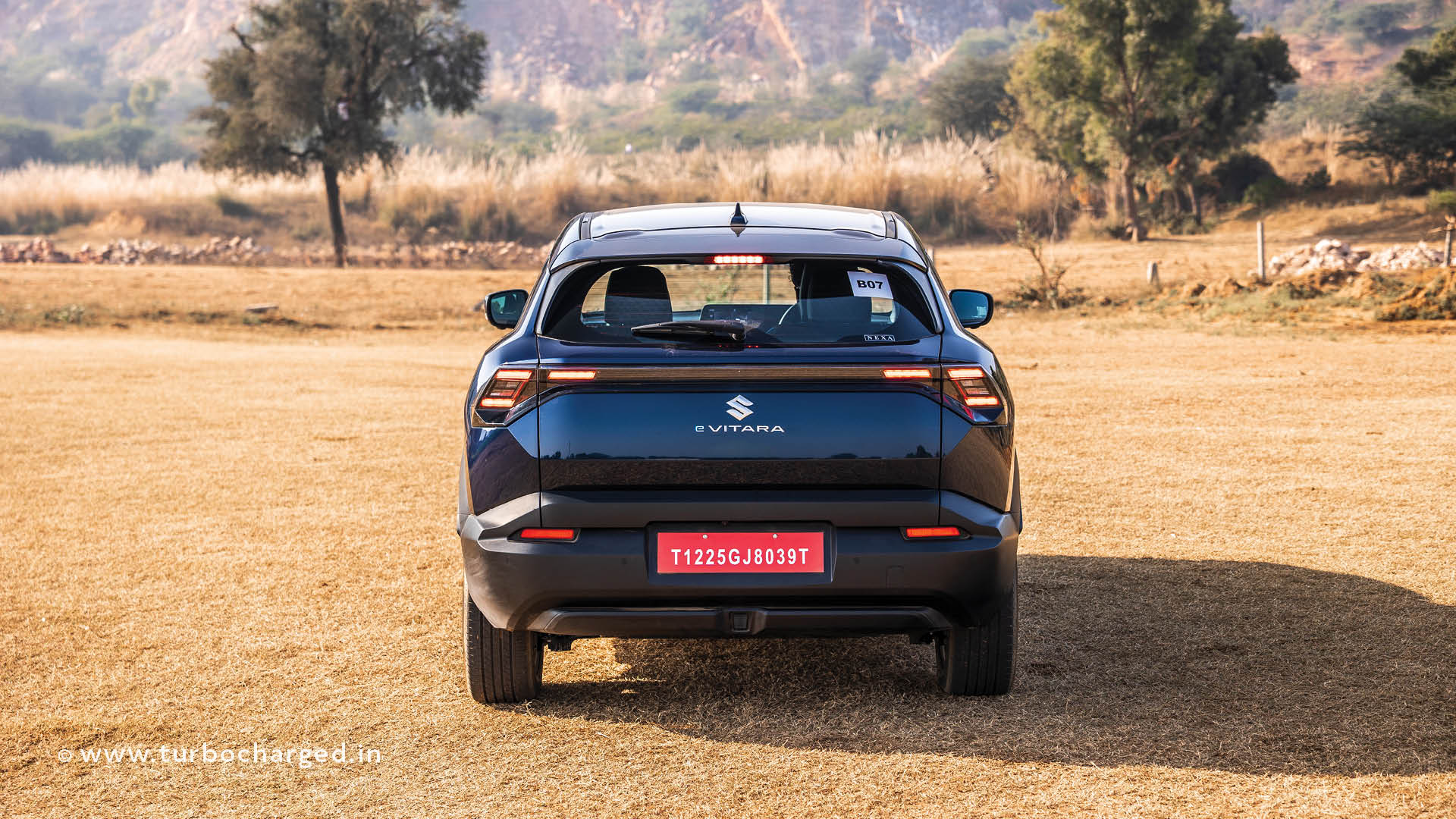
The rear end is simple yet appealing looking. The Suzuki logo and e VITARA badge sit in the centre, right below a bar that connects the tail lamps, but the bar is not lit. Overall, while slightly shorter in height than I would like, the does e VITARA look very appealing. Intriguingly though, unlike other born-electric EVs while it does sit on a dedicated EV platform called Heartect-e, neither does the e VITARA get a frunk, nor does it have its electric motor on the rear axle. Also, while it may look small, the e VITARA is 4,275mm long, 1,800mm wide and 1,640mm tall, meaning it isn’t exactly small in size.
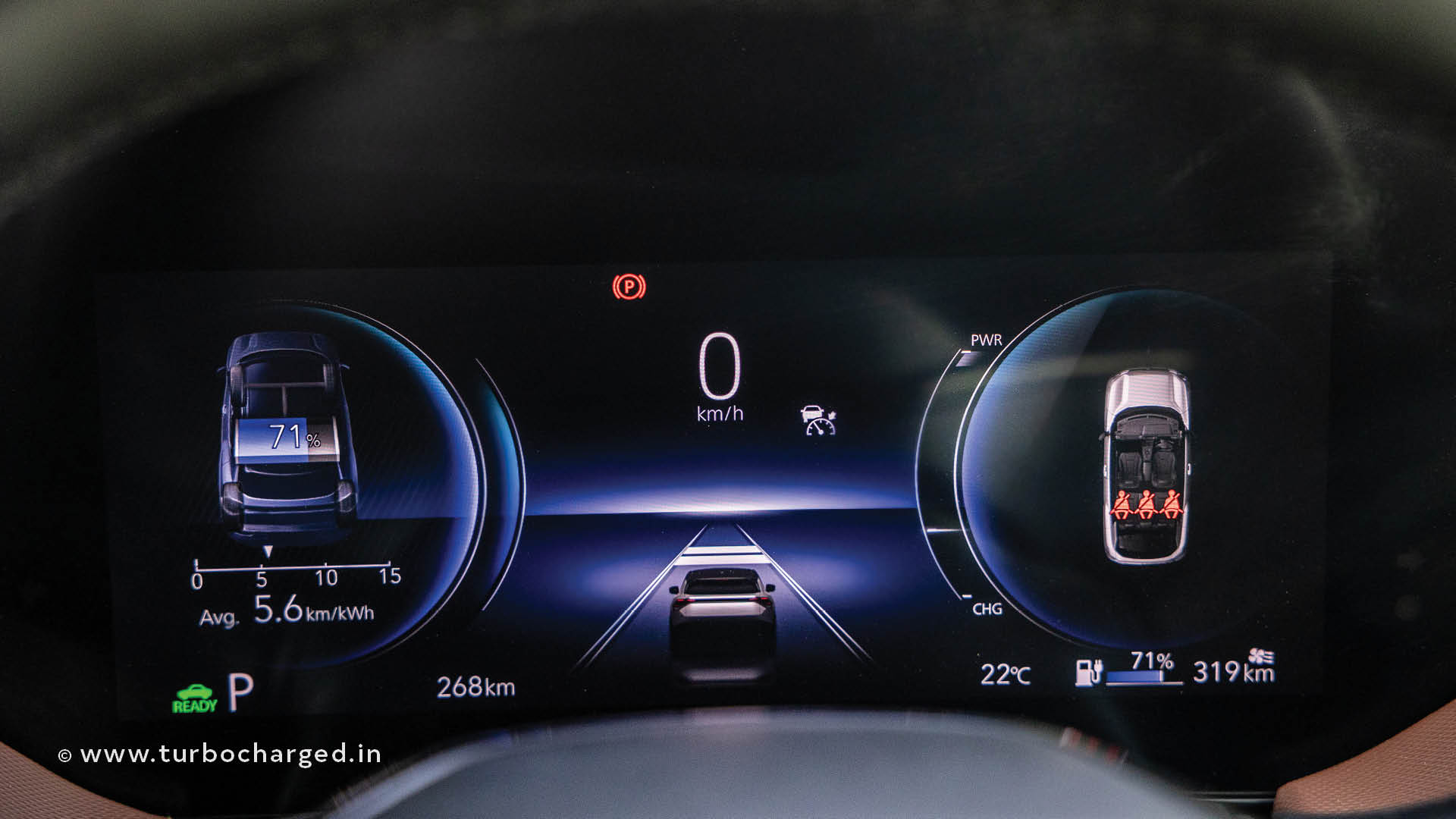
Step inside and you’re welcomed by a cabin that looks refreshingly new, and also very premium. It also feels very premium thanks to the quality of materials. The dashboard design is unconventional but with some very interesting elements. Then there’s the floating centre console which reminds of Volvos and BMWs, and is a first for a Maruti. The soft-touch brown leatherette on the dashboard’s central rib helps in adding to the premium quotient, along with the silver-grey air-conditioning vents. The steering wheel is flat at the top and bottom and is nice to hold, though the driver display looks disproportionate to the infotainment screen. Both screens get a new user interface which is simple and easy to read.
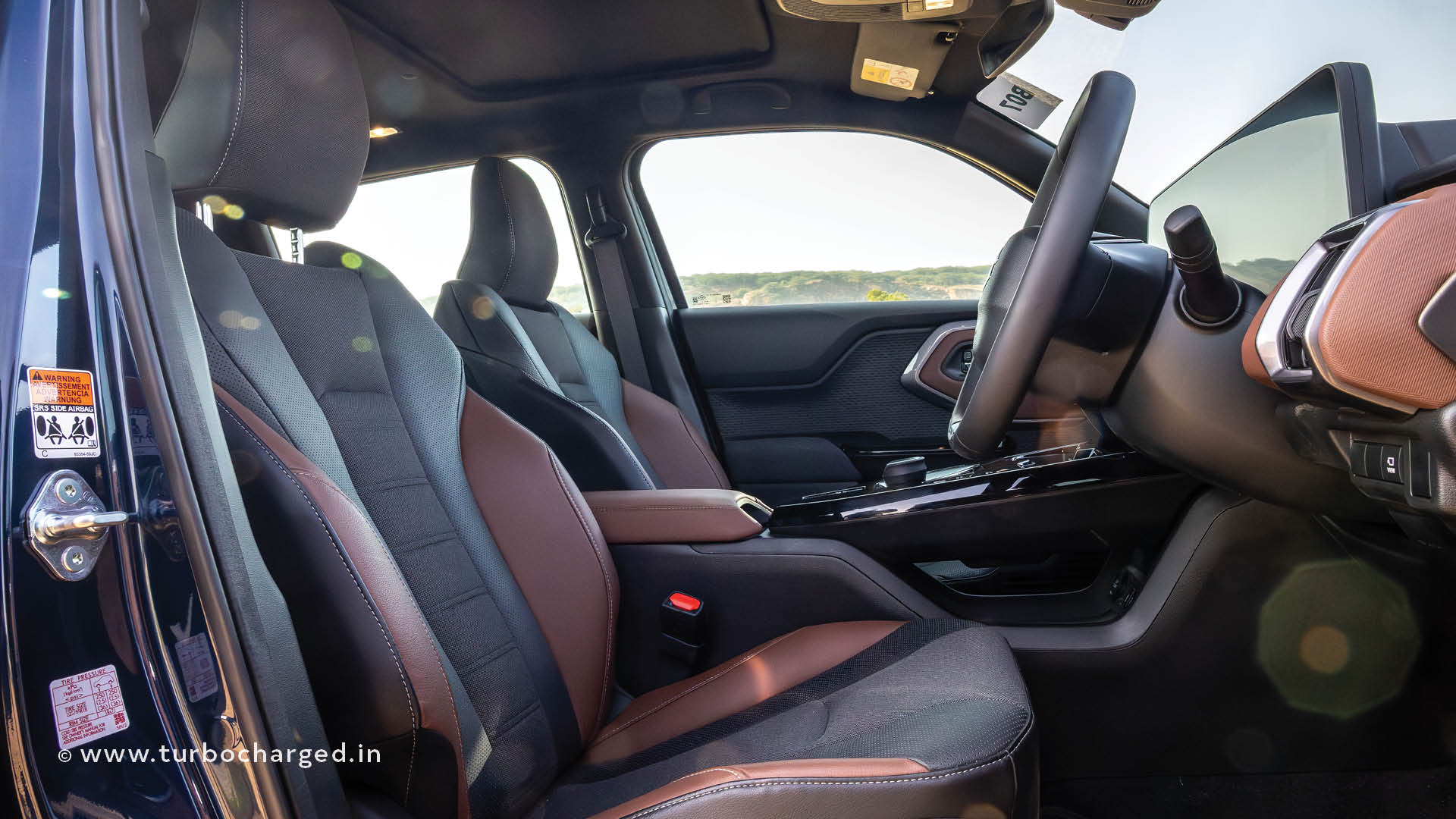
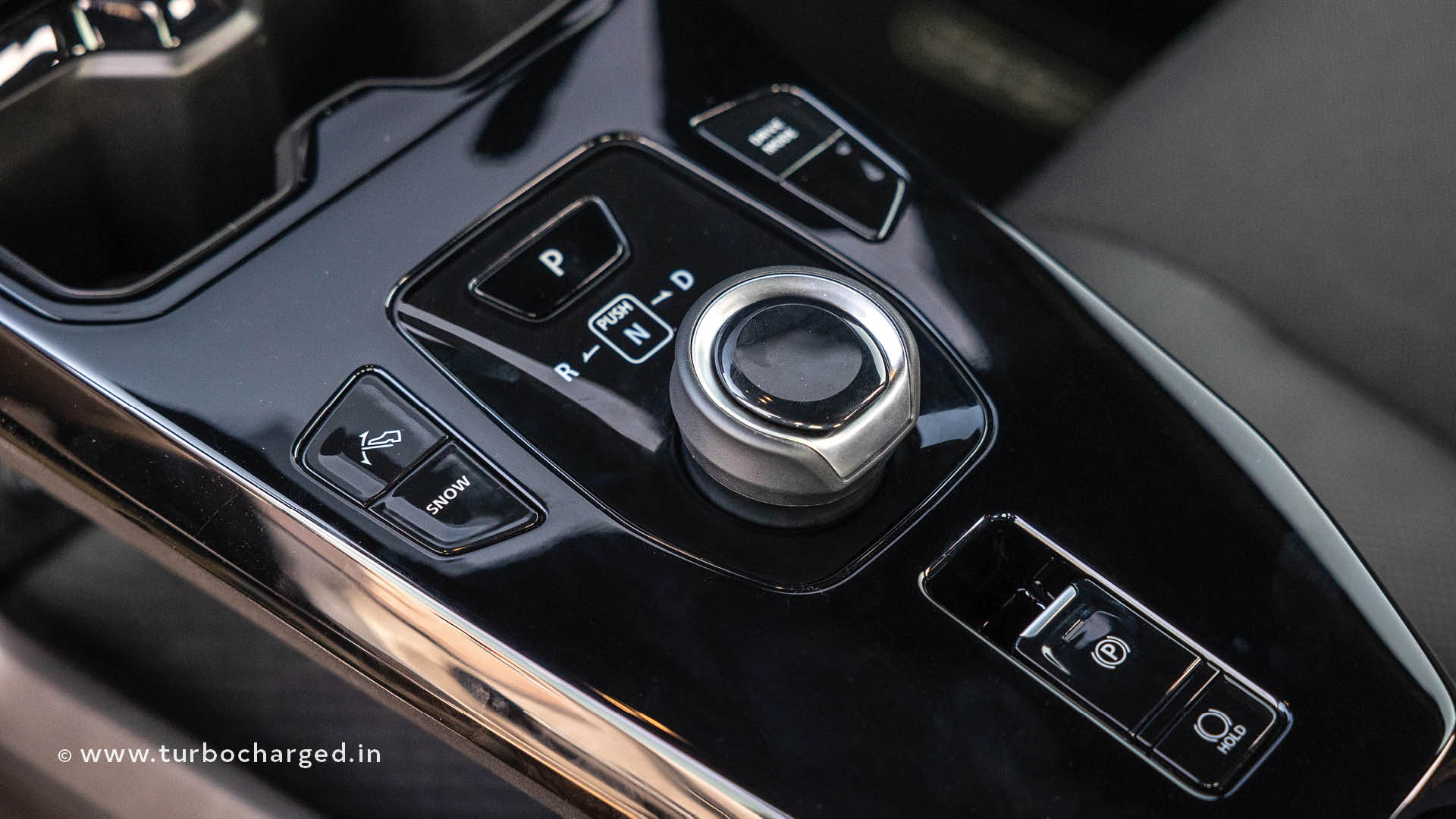
Thankfully, there’s physical controls for air-conditioning and a rotor for adjusting volume. The wireless charger sits well within reach, but USB ports sit under the floating centre console, making them hard to reach. The drive selector rotor is unique in terms of its design and operation, but easy to get used to. Cabin space is impressive too, be it shoulder room at the front, or kneeroom and legroom in the second row. The e VITARA thus has ample space, besides which seats all round are supportive and comfortable. Additionally, the driver seat is powered too. This is easily the best cabin we’ve seen from Maruti Suzuki till date, which speaks volumes about the efforts gone into creating it. Moving on, Maruti has not released the full feature list, but our test car had 360-degree view, a single pane sunroof, an Infinity audio system, six airbags, Level 2 ADAS and more.
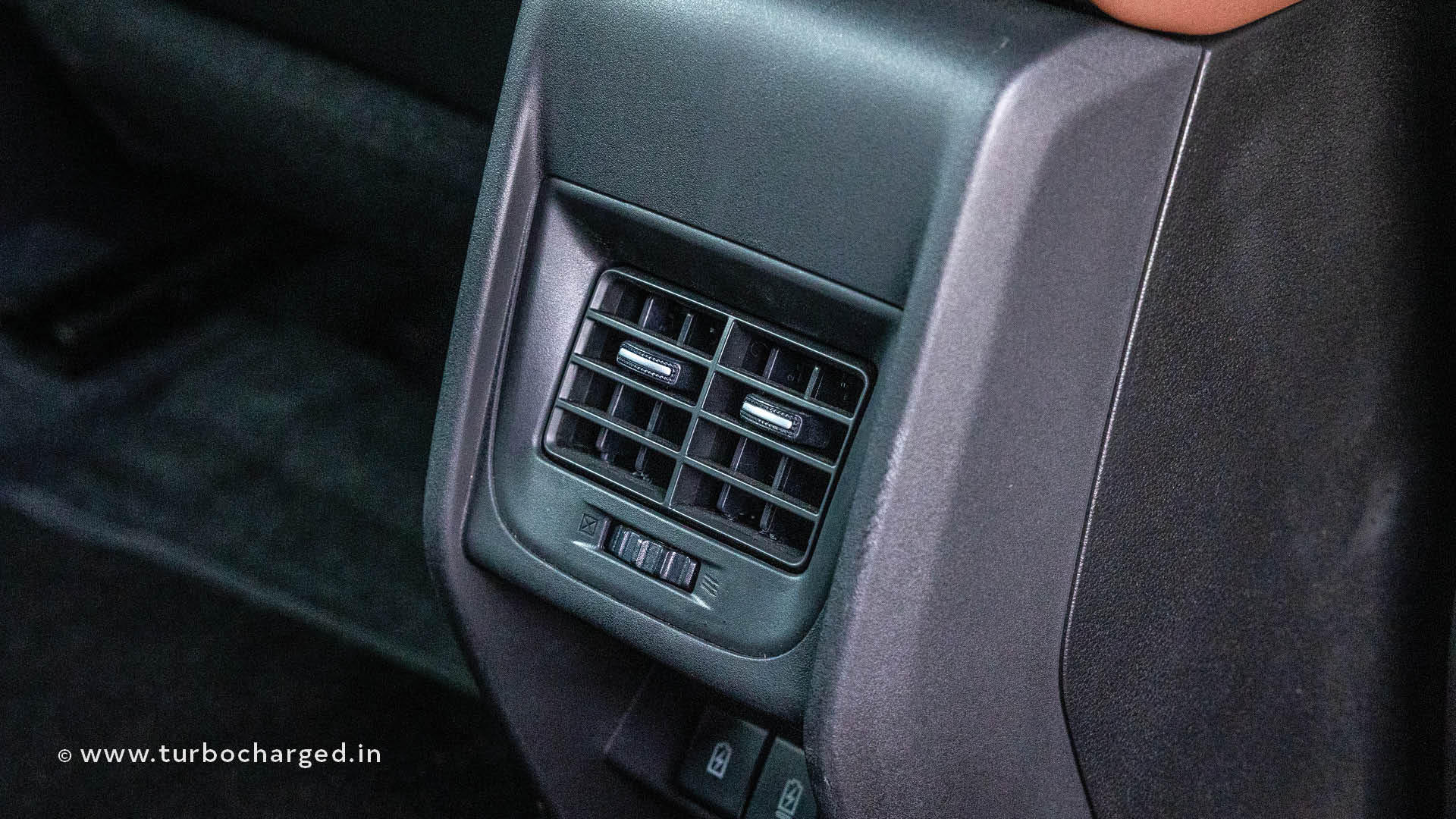
While final specifications are not out yet, the India-spec car should be the same as the one we drove in the UK. And that means we are sure to get the 61kWh battery pack but only with a front wheel drive setup. Maruti is also sure to offer the 49kWh battery in India. The 61kWh battery pack powers a single electric motor that puts out 174PS, and claimed range is 543km per charge, which makes the e VITARA very impressive on paper. That said, I was also impressed by how progressive the power delivery is and how smooth and progressive throttle responses are – there’s no instant shove. Rather, you are eased into the acceleration, but with a sense of urgency which feels good.
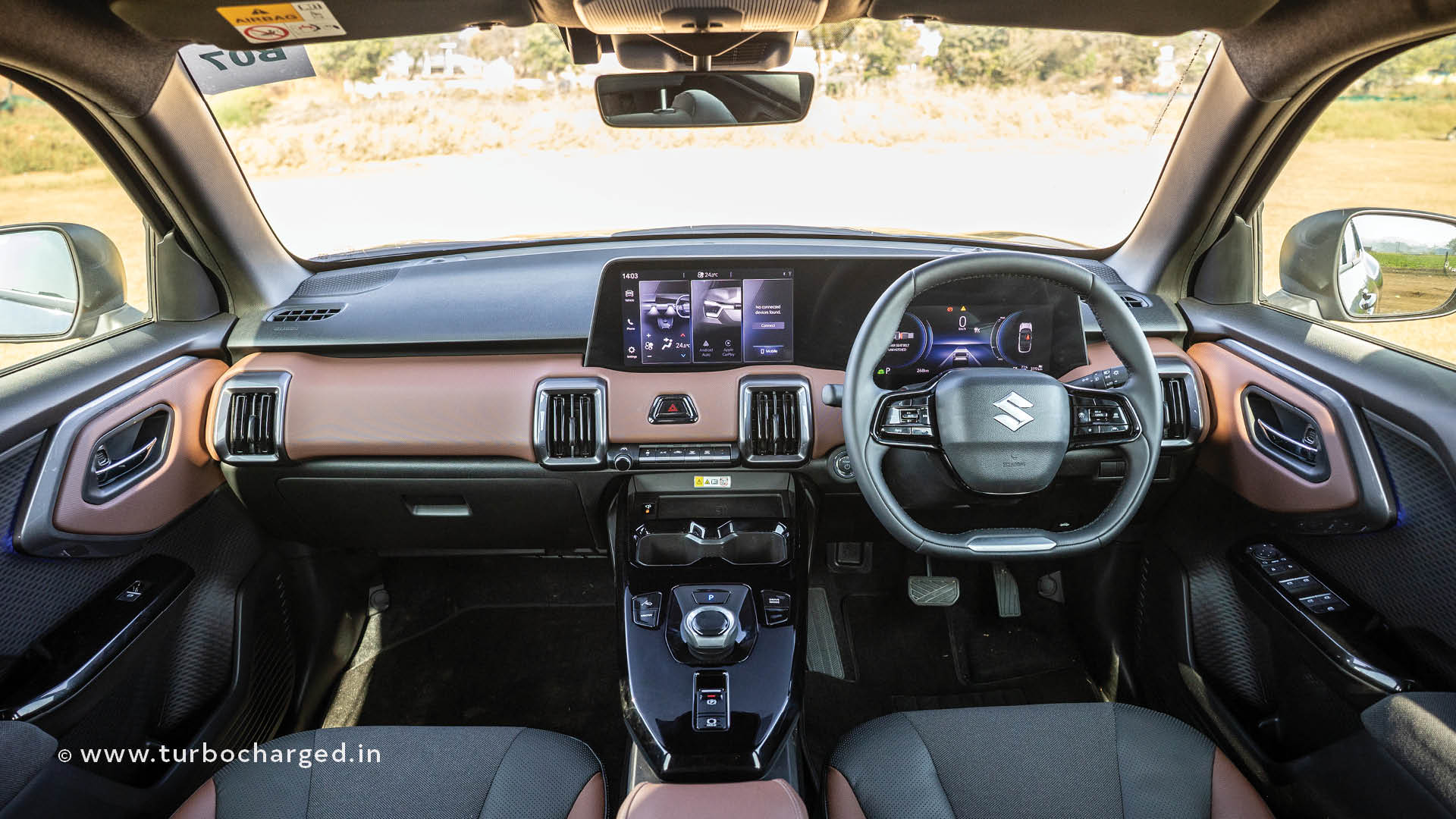
You get three driving modes, Eco, Normal and Sport, and there’s enough distinction between the three. The cabin is also reasonably quiet at normal speeds but tyre noise and wind noise are audible at higher speeds, and cabin insulation could thus be better. You do not get paddle shifters, owing to which toggling through regenerative braking levels is a bit of a chore, as you can only do so through the touchscreen and only when stationary, though the single button the centre console does help. Given the setup and claimed numbers it should be interesting how much the e VITARA can manage on a single charge. More importantly, Maruti is setting up its charging network on a war-footing, and when you have the country’s largest car maker do that, you know that is a big deal.
Overall, the e VITARA has a lot going for it, something I can say with conviction, having driven it in India and the UK. It gets a lot of the basics right, though some might complain about it feeling too plain. Prices are expected to be announced soon and we expect the e VITARA to be priced aggressively to appeal to Maruti’s traditional target customers and newer sets of buyers as well – this is the country’s largest car maker’s first ever EV after all!