


There are only a handful of motorcycles that manage to go down in the annals of history as game-changers, be it for technical reasons or for cultural impact. However, there is a subset of these historic motorcycles which become cult classics for no apparent reason. The fanfare around the Yamaha XSR and its popularity even before the launch should be an indication of how popular it already is, but its popularity isn’t without reason. This review is for those who don’t yet know what the noise is about.
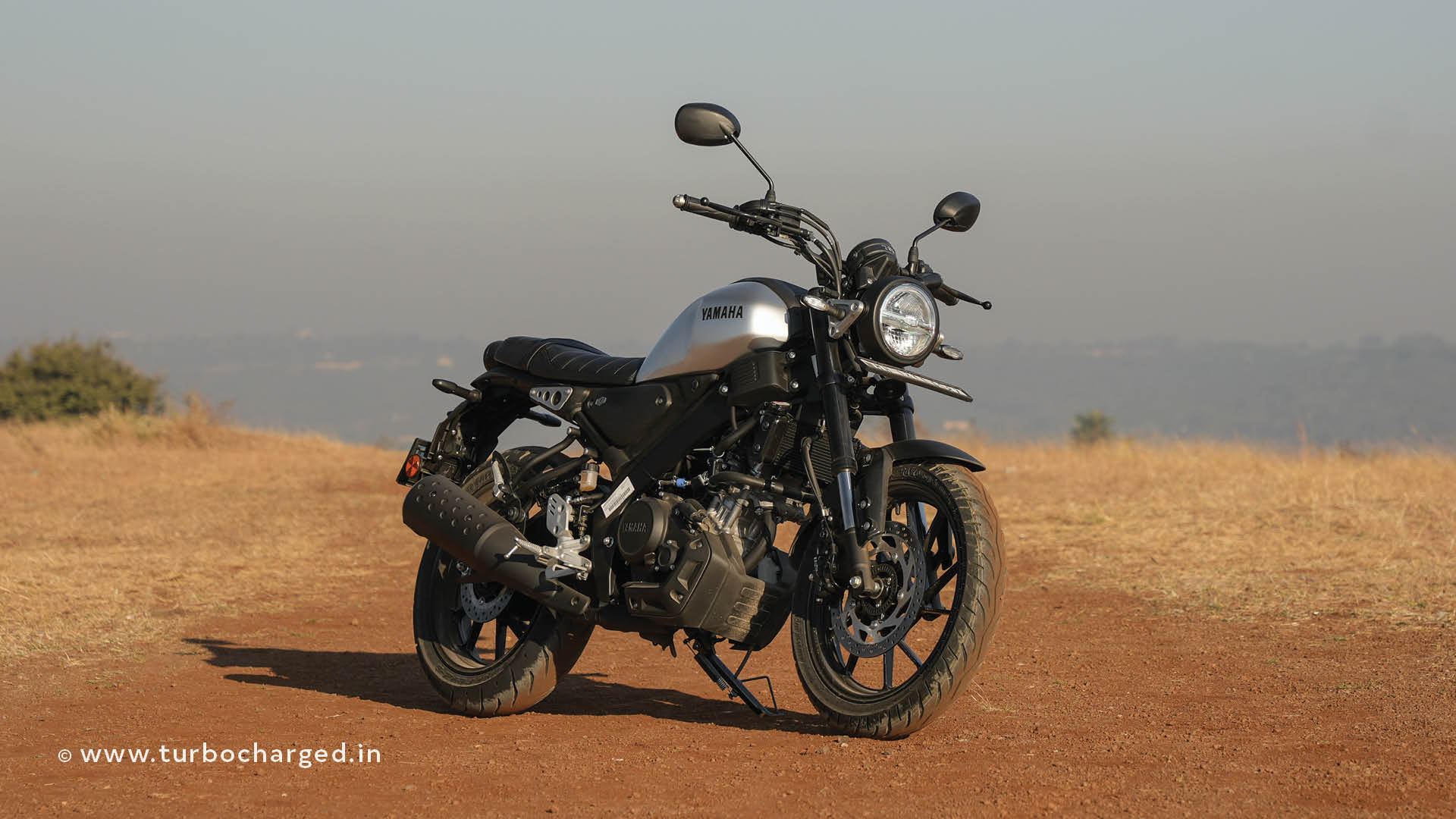
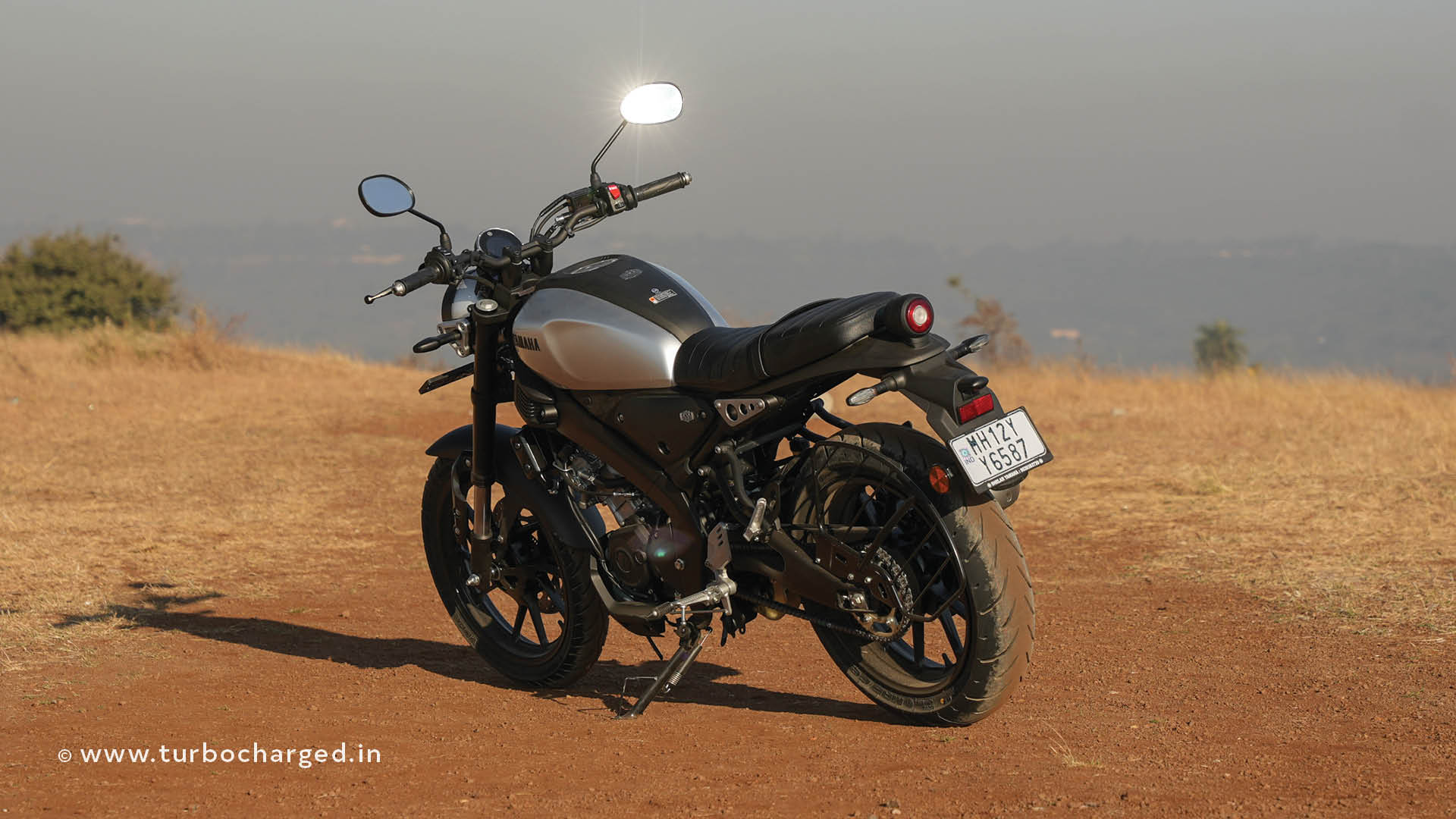
The XSR 155 is essentially an MT-15 that has discarded its loose-fit jeans and acid-wash black hoodie in favour of a pair of corduroy trousers and a tweed jacket with leather elbow patches. Mechanically identical to the MT-15, the XSR is dressed up in the fashion of days gone by. The design of a motorcycle is a deeply subjective thing, so while some people will prefer the sharp, angular lines of the MT-15, others will lean more towards the round aesthetic of the XSR – and that is its point, to widen the appeal of the 155cc Yamaha platform. The round motif is everywhere, including the headlamp, tail lamp, console, reflective side markers, warning lights on the console, and the holes on the subframe side cover. Yamaha could have opted for circular turn indicators and round mirrors to complete the look, but the rest of the design portrays a neatly-integrated machine, with the gaps between various components almost non-existent (this is a testament to the XSR’s build quality and fit and finish).
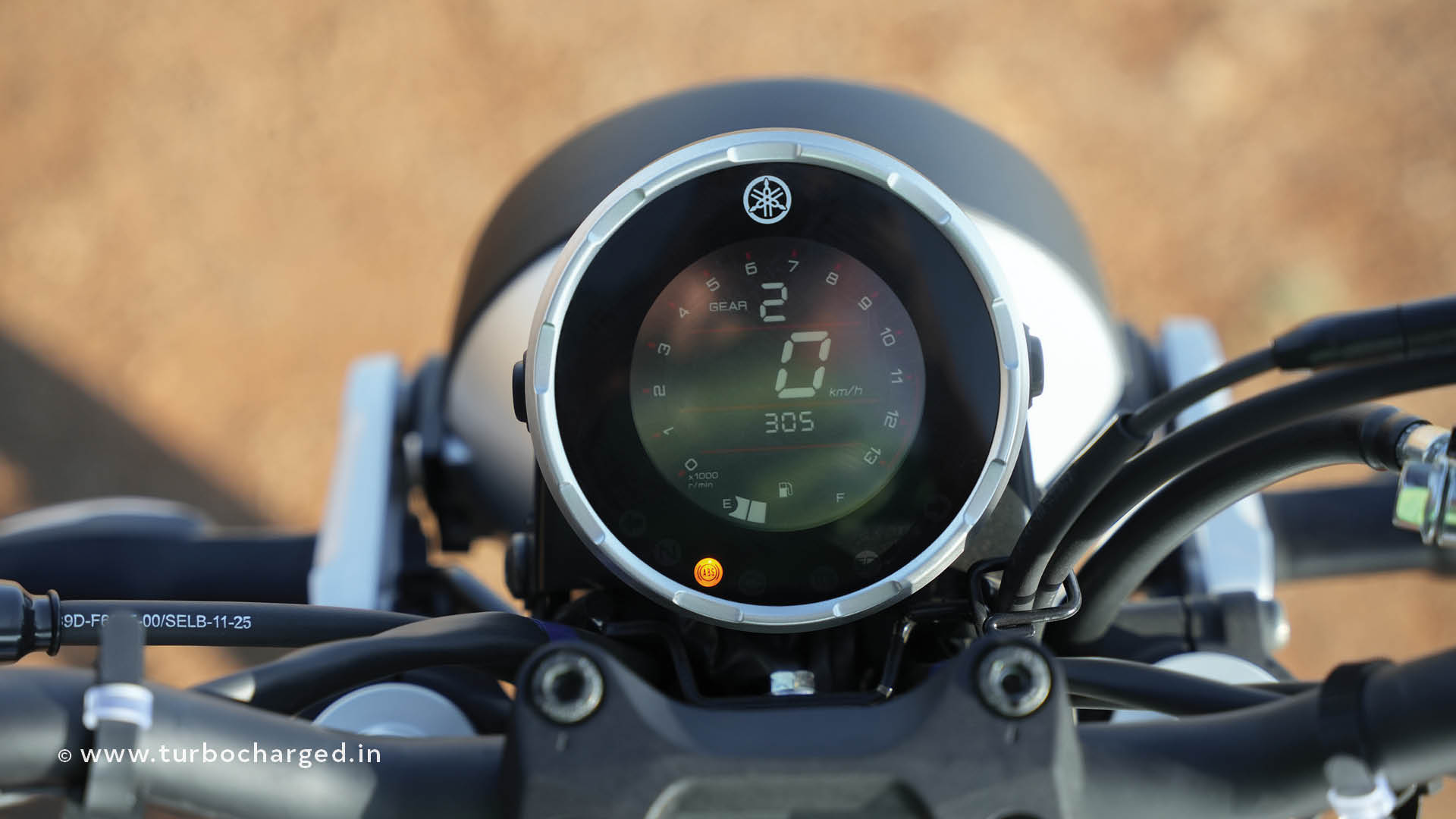
The aforementioned circular console conveys almost all the relevant information and has Bluetooth connectivity. However, the brightness adjustment requires the bike to be turned off and then on while the left button is pressed, which is unnecessarily finicky for such a useful adjustment. That being said, the display is well-designed and highly legible at speeds and even under the midday sun, and the clutter-free, simple LCD makes almost all TFTs feel redundant. The rider triangle is a highlight of the XSR as it has that Yamaha quality where riders of wildly varying vertical persuasions can find a comfortable position.
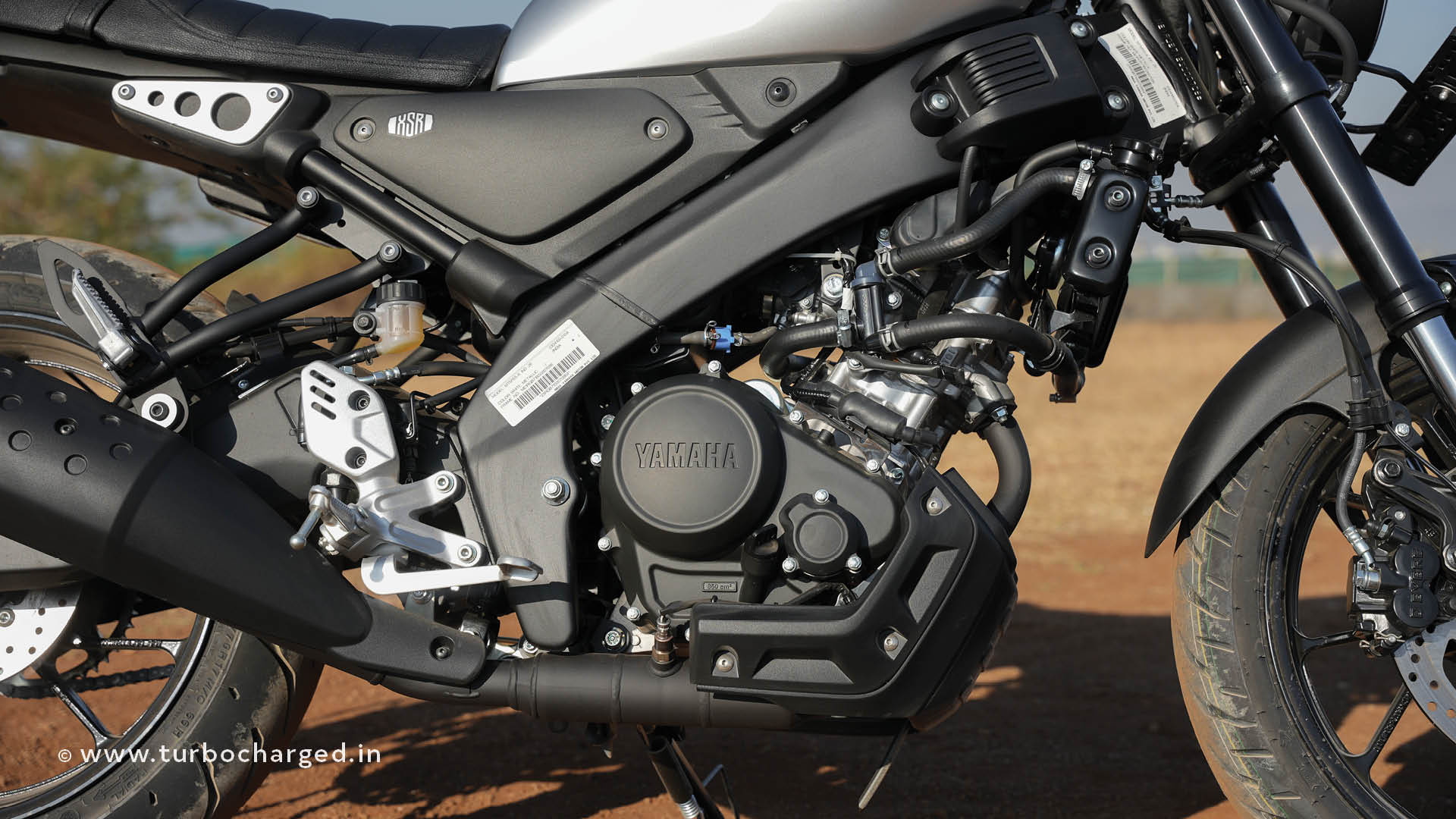
The engine is the familiar 155cc, liquid-cooled single-cylinder with Yamaha’s VVA technology that alters the cam profile at a particular RPM, which results in a mostly linear flow of power and torque throughout the rpm range. That being said, both the exhaust note and the power delivery take on a harder edge once the high-lift cam is activated, a sensation akin to hitting the powerband on an RX135, though a lot less wild. The slip-and-assist clutch takes virtually no effort to operate, and the gears slot in with a satisfying click. Because of the small capacity, revs need to be kept up but there is essentially no vibration thanks to the counter balancer, and revving the little motor to 10,000rpm is sheer joy. The motorcycle itself packs switchable traction control and non-switchable dual-channel ABS.
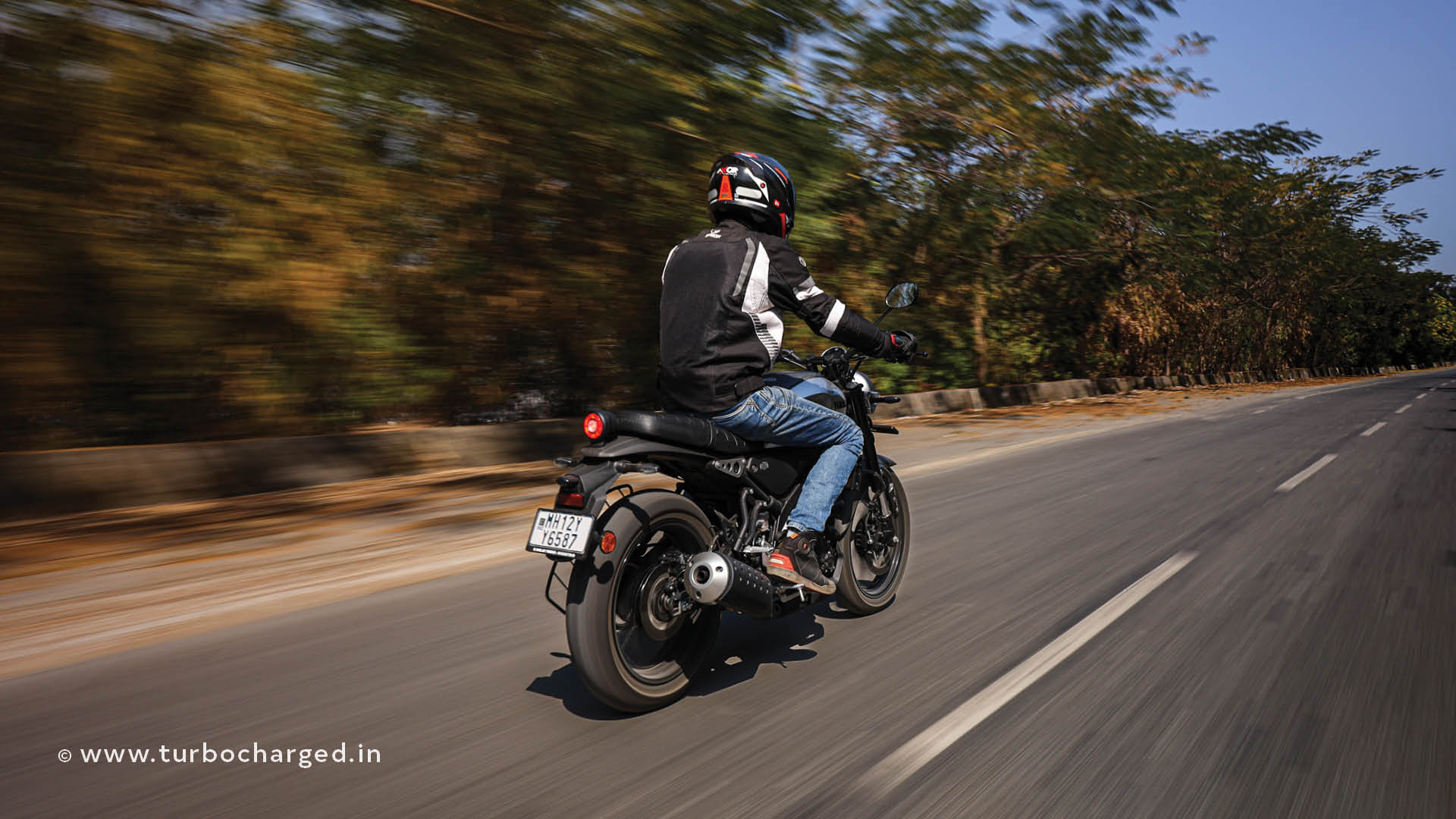
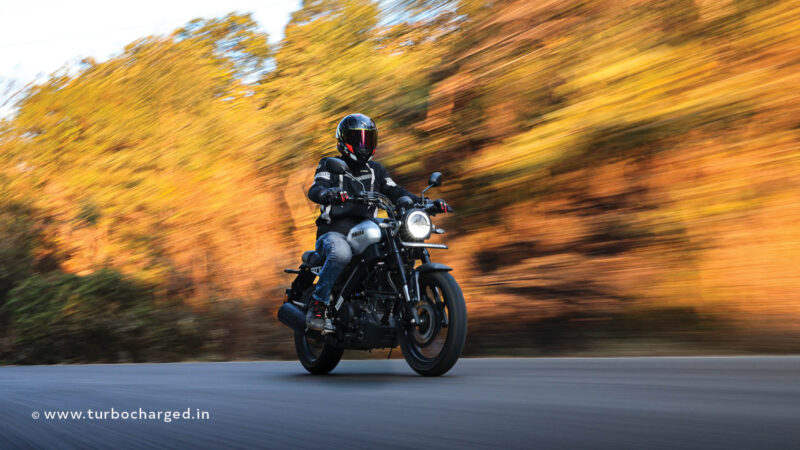
The same story continues with the handling — the XSR possesses the same agility in changing directions as the MT-15 and the R15 (and presumably the Eurofighter Typhoon!) The featherweight 137kg kerb weight, coupled with the proven Deltabox perimeter frame and firm suspension setup, has created a motorcycle that, even when wearing sensible clothes like the XSR and unlike the MT-15 or the R15, still managed to unleash the hooligan in me. I sliced and diced through rush-hour traffic with the same joy one Mr Dexter Morgan, Miami PD, has when he is doing a different kind of slicing and dicing. The XSR was so agile, it even managed to surprise me a few times with the way it dove into turns! The braking could be better, though, as the lever needs a proper tug before the expected amount of retardation kicks in. On a side note, the headlamp’s throw and output are excellent, and the tactility of the switches makes the XSR feel properly premium.
Priced at ₹1.5 lakh ex-showroom, the XSR undercuts its stablemate, the MT-15, to the tune of ₹5,000, which means the buying decision thus comes down to personal preference vis-à-vis the looks. While there are other retro motorcycles in that ₹1.5 lakh price bracket, namely the Royal Enfield Hunter and the TVS Ronin, the XSR is as different from those two motorcycles as possible. While there is some cross-shopping between the MT-15 and Honda Hornet 2.0, the XSR has no real rivals. The only other neo-retro motorcycle with advanced engineering was the Honda CB300R, which is in a totally different price bracket, not to mention discontinued at the moment. Therefore, the XSR currently occupies a class of one, which makes it a truly peerless machine.
Words: Sayantan De
Photography: Saidatta Naik