



Words: Abhay Verma | Photography: Shrenith Bhandary
It wouldn’t be wrong to credit Volvo for helping accelerate things in the entry-luxury EV segment, quite literally, with its 400PS XC40 Recharge. Mercedes-Benz and BMW India were quick to follow suit with the EQA and iX1 respectively, though clearly, Audi India is yet to realise the segment’s potential. Volvo even launched the gorgeous-looking C40 Recharge in the segment, but not content, the Swedish car maker is launching its third compact luxury EV in the form of the EX30. What makes the EX30 interesting is that unlike the XC40 Recharge and C40 Recharge, it has been developed as an EV from the grounds-up.
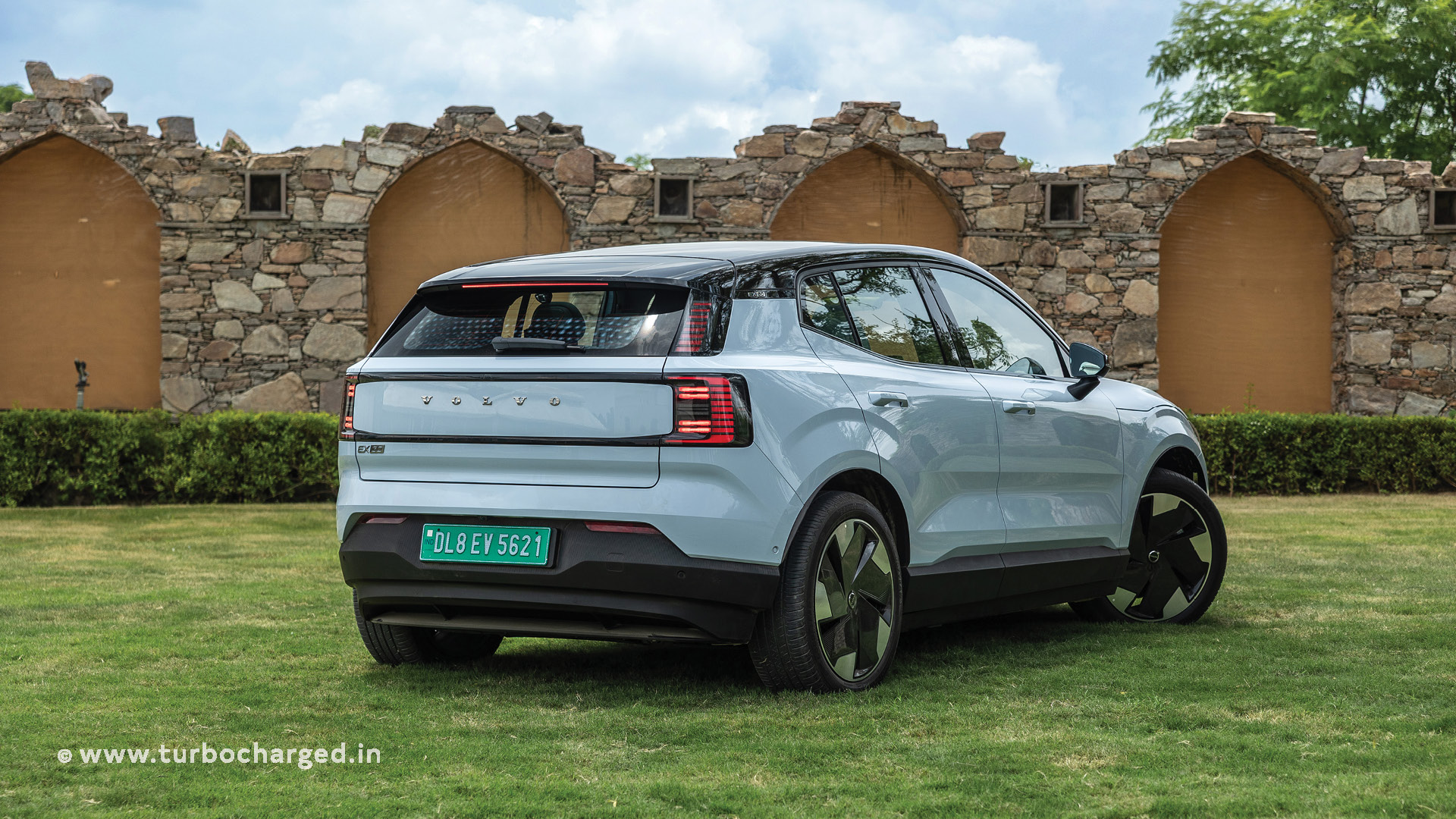
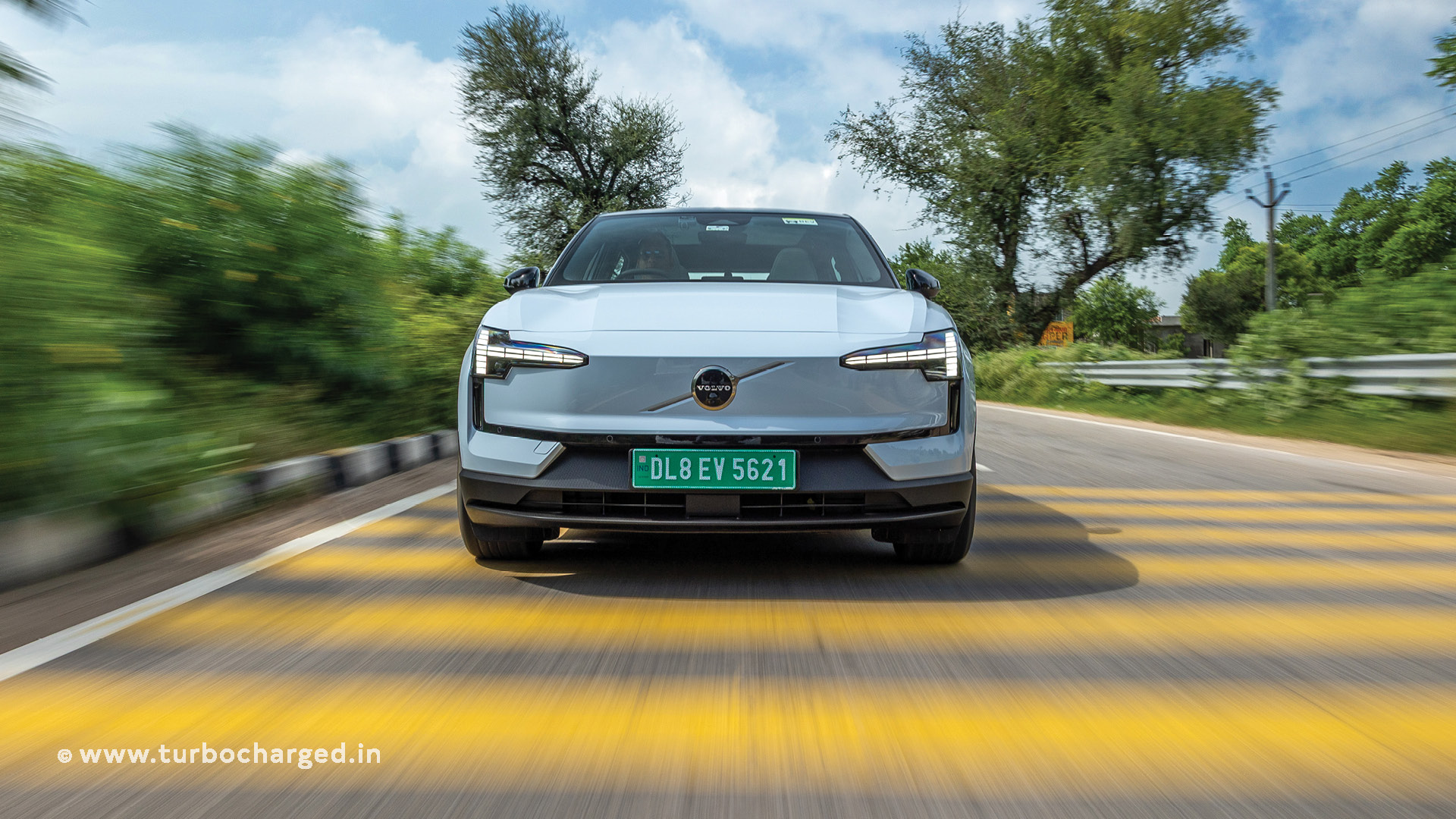
The EX30 is also smaller in size than its aforementioned siblings, and also looks more youthful and athletic. The face retains Volvo’s trademark ‘Thor’s hammer’ DRL design, but in a more futuristic manner here. Further, there isn’t even an inkling of a grille since this isn’t an EV based on an ICE-powered vehicle, and this also means the Volvo logo sits freely in between the headlamps, without any borders or outline. The front bumper features vents to help in channelling airflow, along with an active flap at the bottom. The roofline is a departure from Volvo’s traditional, boxy-silhouette and is curvier, which adds to the EX30’s stance. The rear is boxier in shape though, which along with the connected, C-shaped tail lamps makes for a more hatchback-esque appearance. An interesting detail is that tail lamps extend into the rear windscreen, adding to the EX30’s distinctiveness.
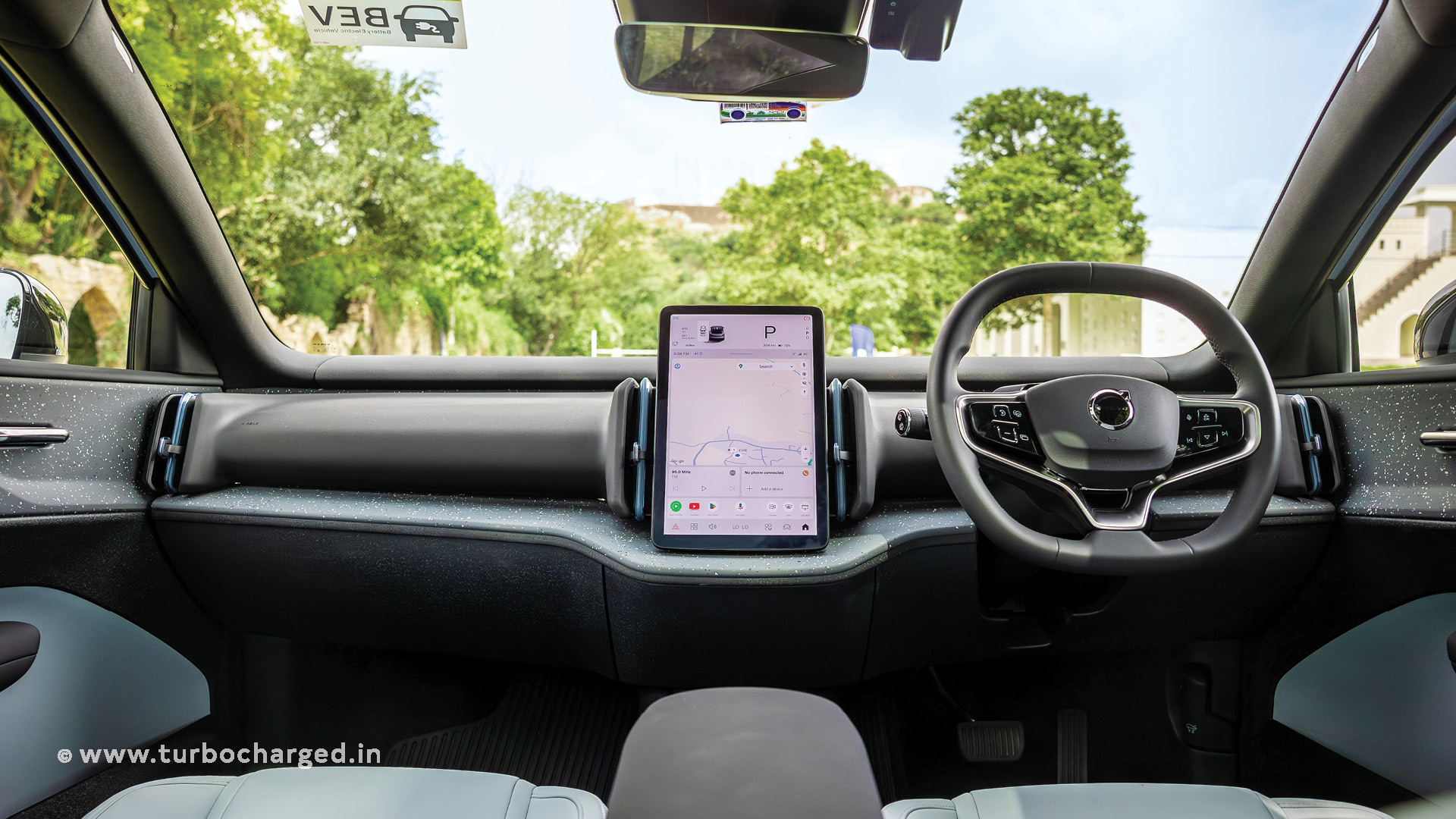
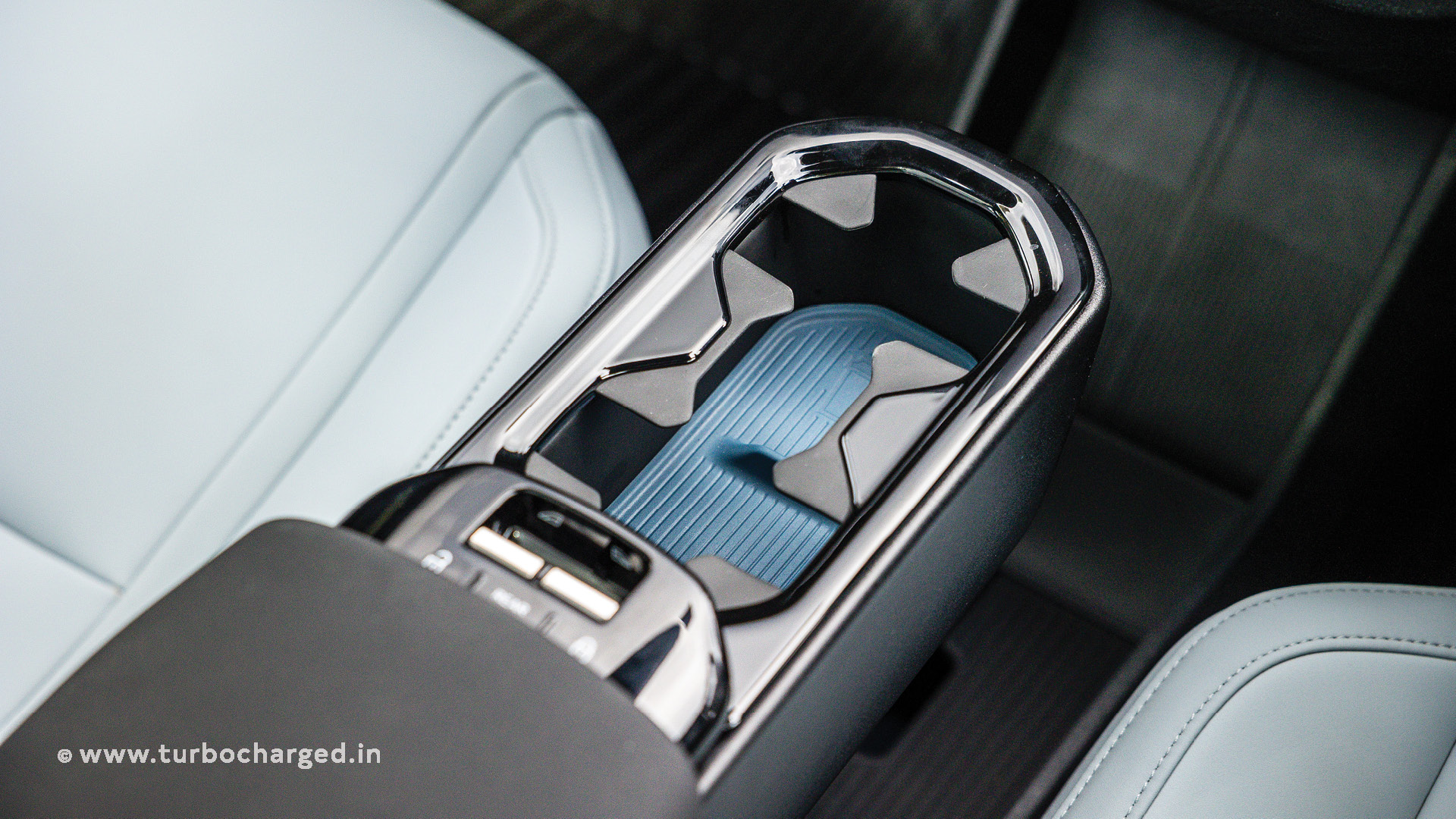
Volvo has also done away with the traditional key fob which means you can only lock/unlock the EX30 with an NFC card or your smartphone, which might take getting used to. The cabin isn’t your average luxury car cabin either, and you won’t find the usual sense of grandeur inside either, as Volvo has used recycled materials extensively, instead of wood and leather. Seats are comfortable all round, but while the driver’s seat does get electric adjust, front seats do not get ventilation, heating or a massage function. Door pockets are huge and take in lots of stuff, as there are no speakers integrated into the doors, but more on that later. But while the cabin is spacious at the front, space at the back is constrained. Legroom and knee room aren’t exactly generous, and headroom will be a challenge for six footers. That said, the seat is comfortable, and offers a sense of plushness too.
The EX30 is high on technology and given that it isn’t based on a traditional, ICE platform, Volvo has attempted a lot of innovations. For a ‘soundbar’ from Harman Kardon that sits on the dashboard and integrates six speakers has replaced the speakers seen in the doors traditionally. This is besides the inclusion of tweeters and a subwoofer as well, to offer the feel of a theatre inside the car. Another ‘innovation’ is the deletion of the traditional instrument cluster/driver display which means you need to refer to the centrally positioned 12.3-inch infotainment screen on the dashboard for basic information like speed, range, charge status and more. In fact, almost all controls are accessed through the screen, as there are no physical buttons on the dashboard.
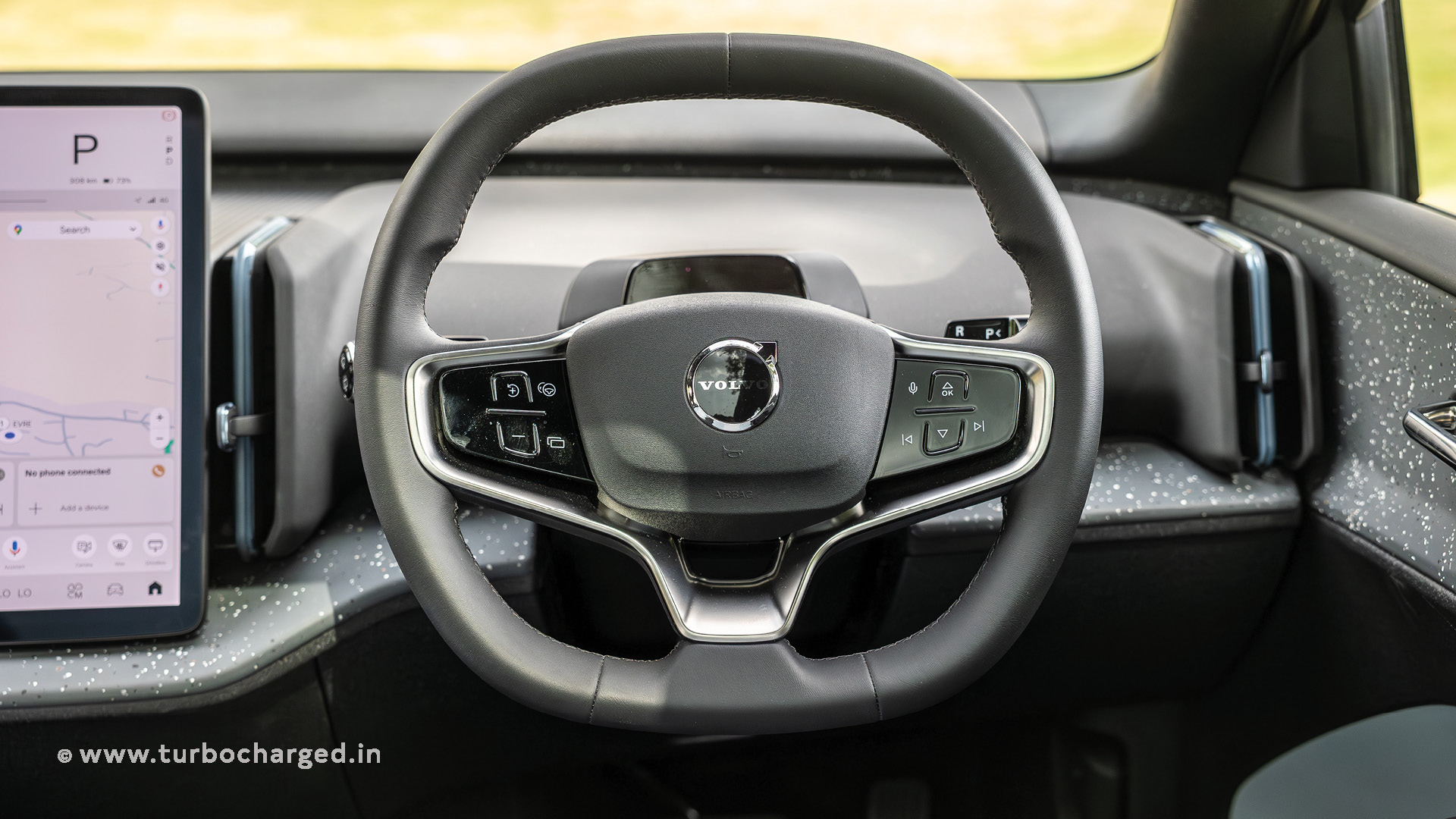
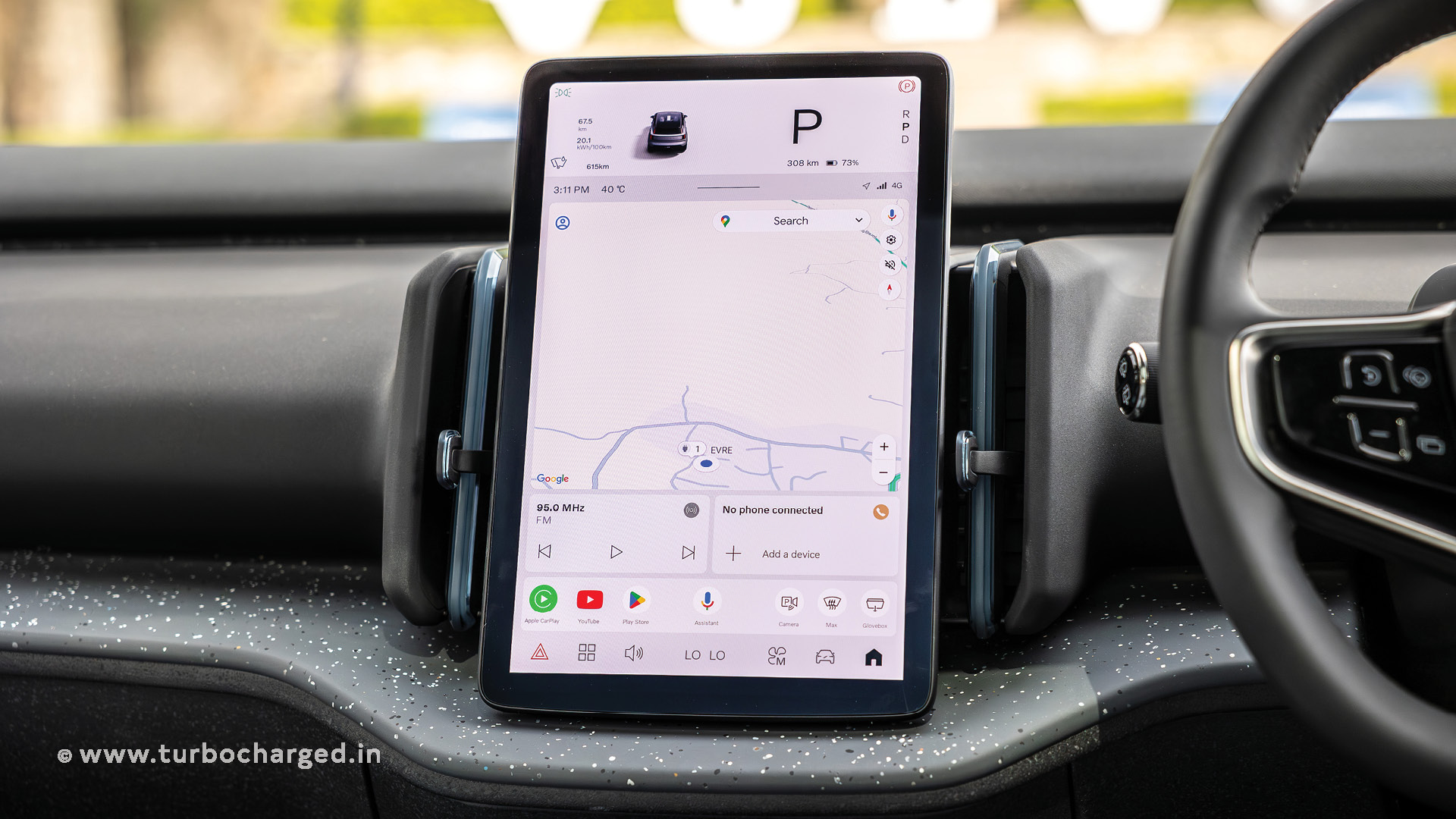
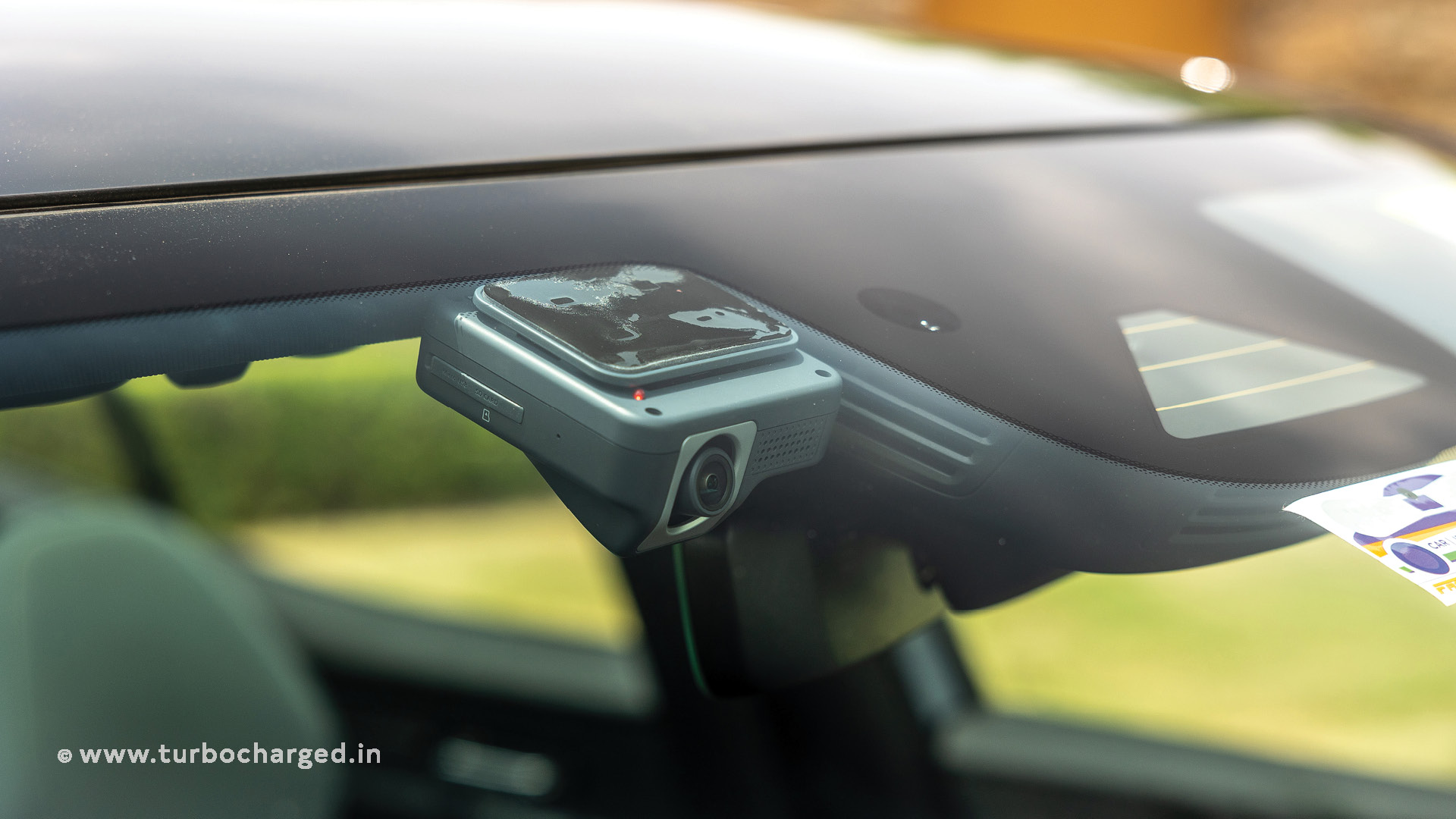
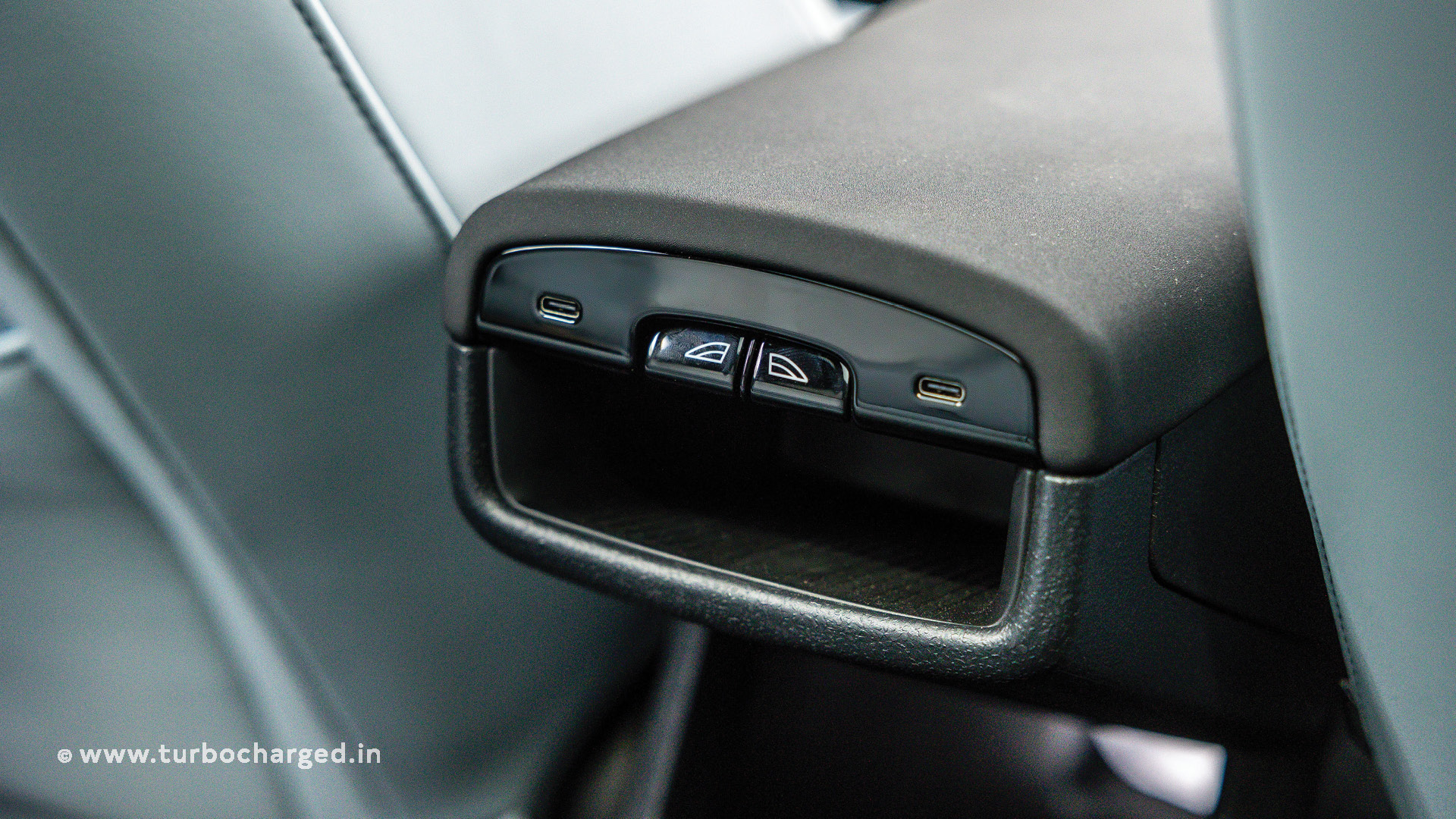
Like most other Volvos the infotainment system uses Google software, along with a Snapdragon chip, and the interface is slick. You also get Google Maps in the system itself, but intriguingly, while Apple CarPlay works wirelessly, Android Auto does not! On the features front you get Level 2 ADAS, drowsiness detection and more too. Also, the power window switches sit on the front armrest, and not the doors. Moreover, there’s only two switches and not four. You thus need to press another switch that says ‘Rear’ and use the same two switches to operate the rear windows. You also get a fixed glass pane for the panoramic sunroof, but there is no sun shade, meaning the cabin will heat up during summers.
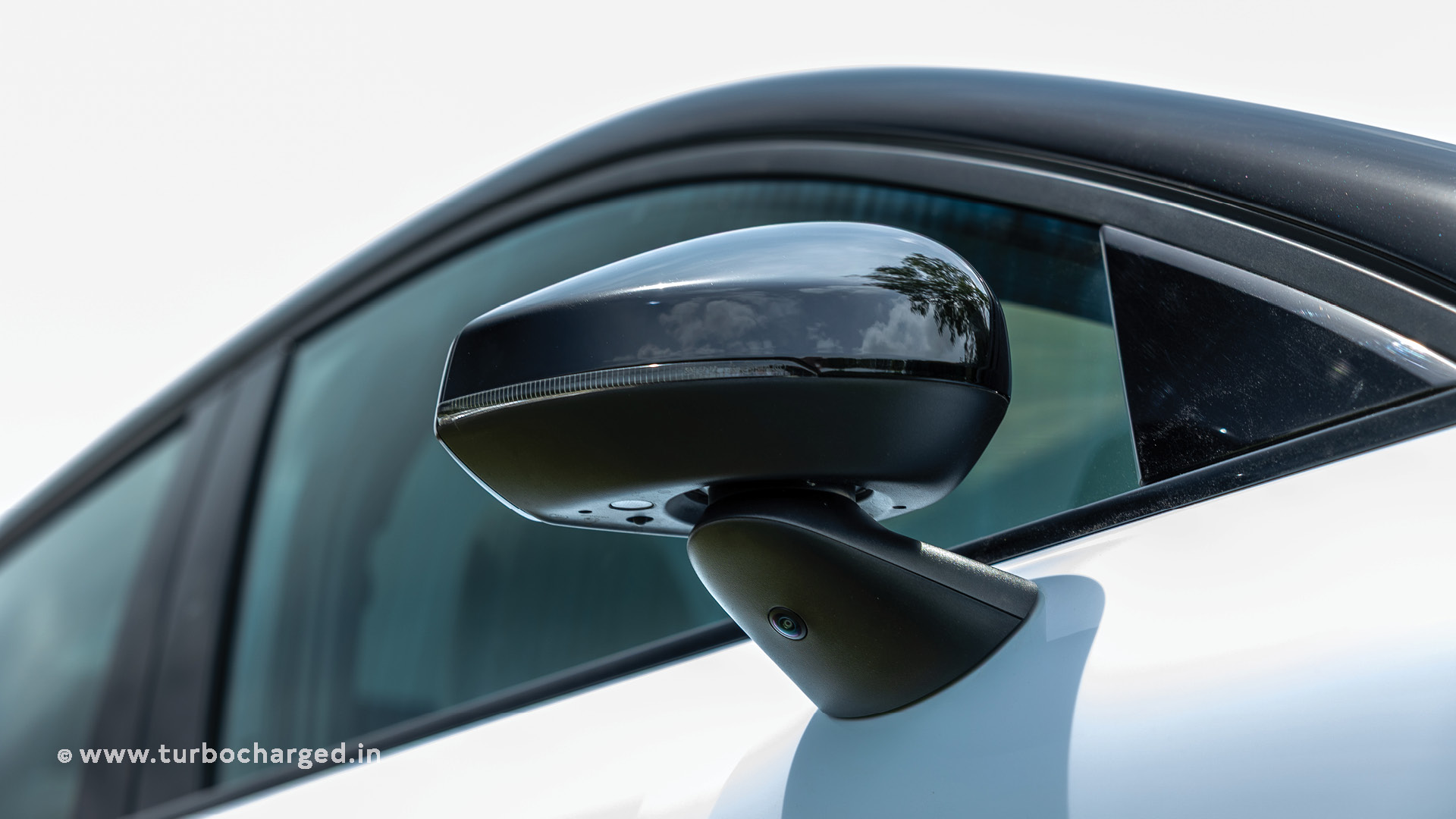
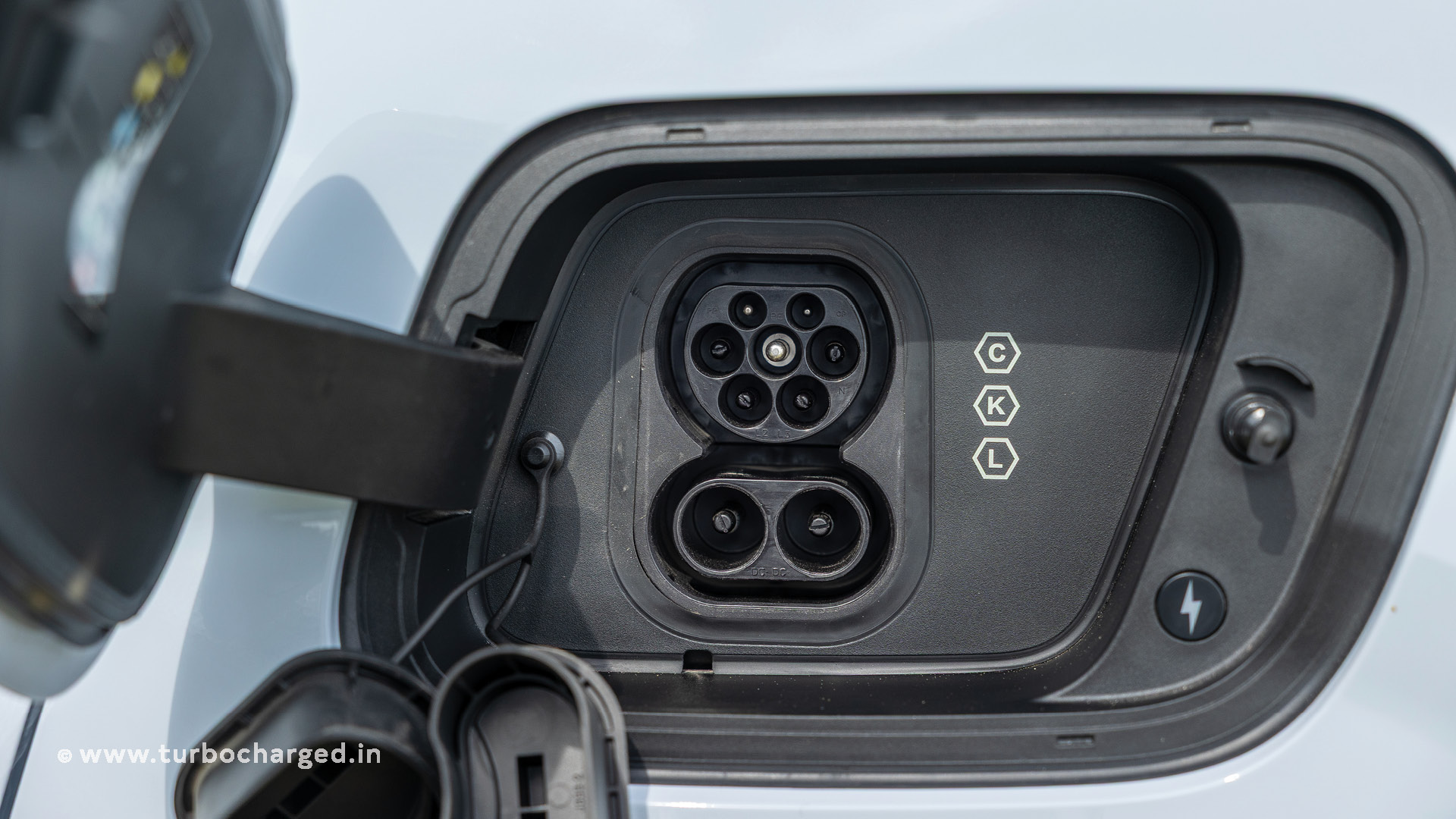
Volvo is only launching the single motor version in India, powered by a 69kW battery pack that uses energy-dense, NMC cells and is liquid-cooled. The motor puts out 272PS and 343Nm, so acceleration is brisk, and claimed 0-100kmph time is just 5.7 seconds. Power delivery is linear and throttle responses are smooth, and almost similar to that of a refined petrol engine. Oddly, there are no driving modes and regeneration levels cannot be changed either, though you do get a single-pedal mode. Claimed range as per the WLTP cycle is 480km, so one can expect around 400km in the real world. And given its 400V architecture, the EX30 will allow charging at up to 150kW; meaning you could charge the battery fully in just 25 minutes. Ride quality is firm, as you would expect of a European luxury car and an EV at that, but the bigger highlight is the EX30’s sporty handling, without sacrificing comfort. Fast corners are handled beautifully, and you also get soft, medium and firm modes to choose from for the steering.
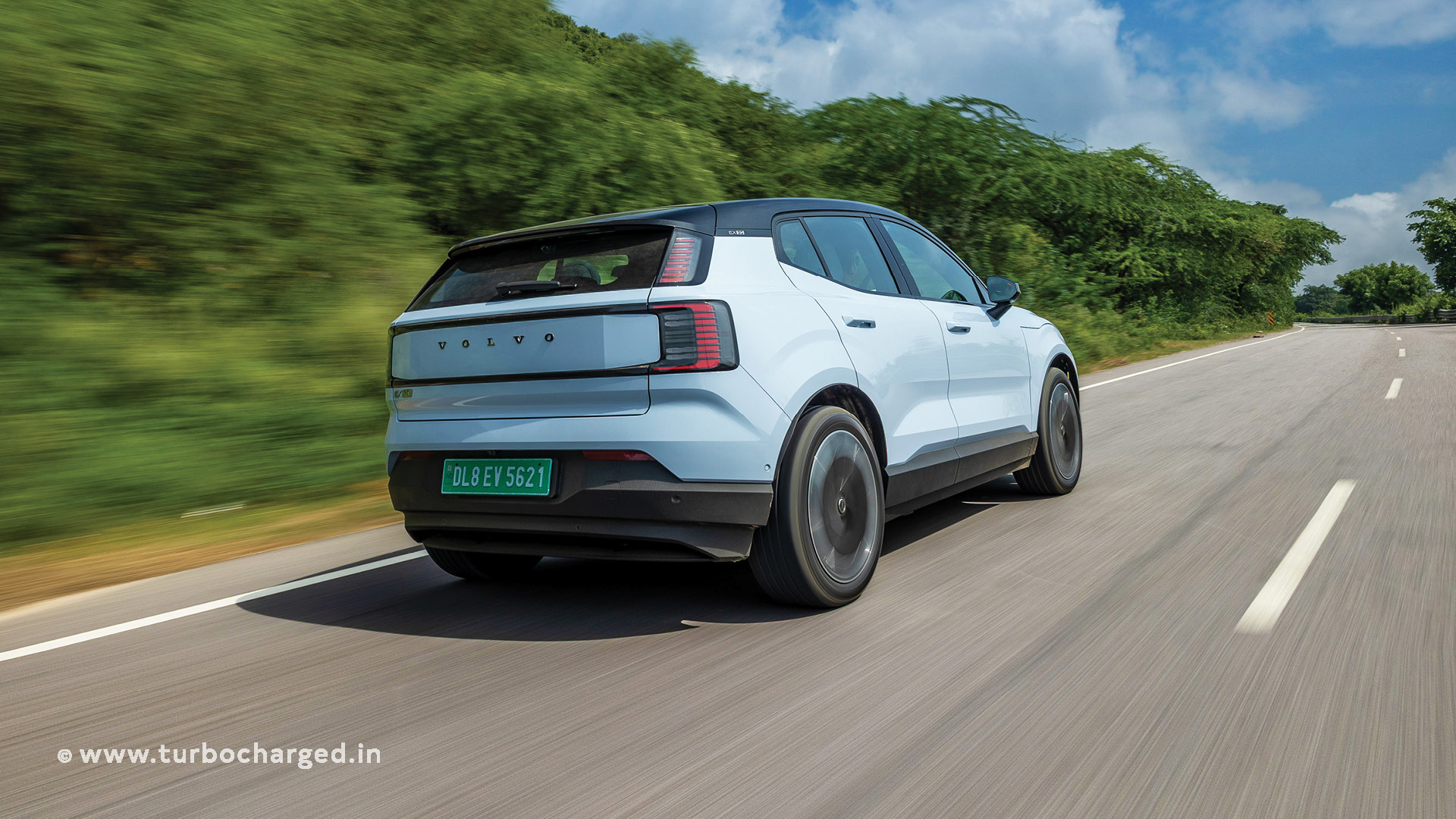
To sum it up, the Volvo EX30 is an interesting addition to the entry-luxury EV space. Its focus on technology and younger buyers is impressive, though some buyers might just find its quirky controls slightly irritating. We expect it to be priced below the XC40 Recharge and C40 Recharge both, around ₹ 45 lakh ex-showroom, which should make it enticing, especially against the likes of its German rivals, and also EVs like the Hyundai IONIQ5, Kia EV6 and BYD Seal.