


The Toyota Land Cruiser needs no introduction, as it is one of the longest-running names in the world that has always been in production. The latest flagship Land Cruiser, the 300 series, makes some big changes, though. Has it lost its identity, or does it still tick all the right boxes to breeze through the proverbial warzone in silent luxury? We find out on the streets of Pune!
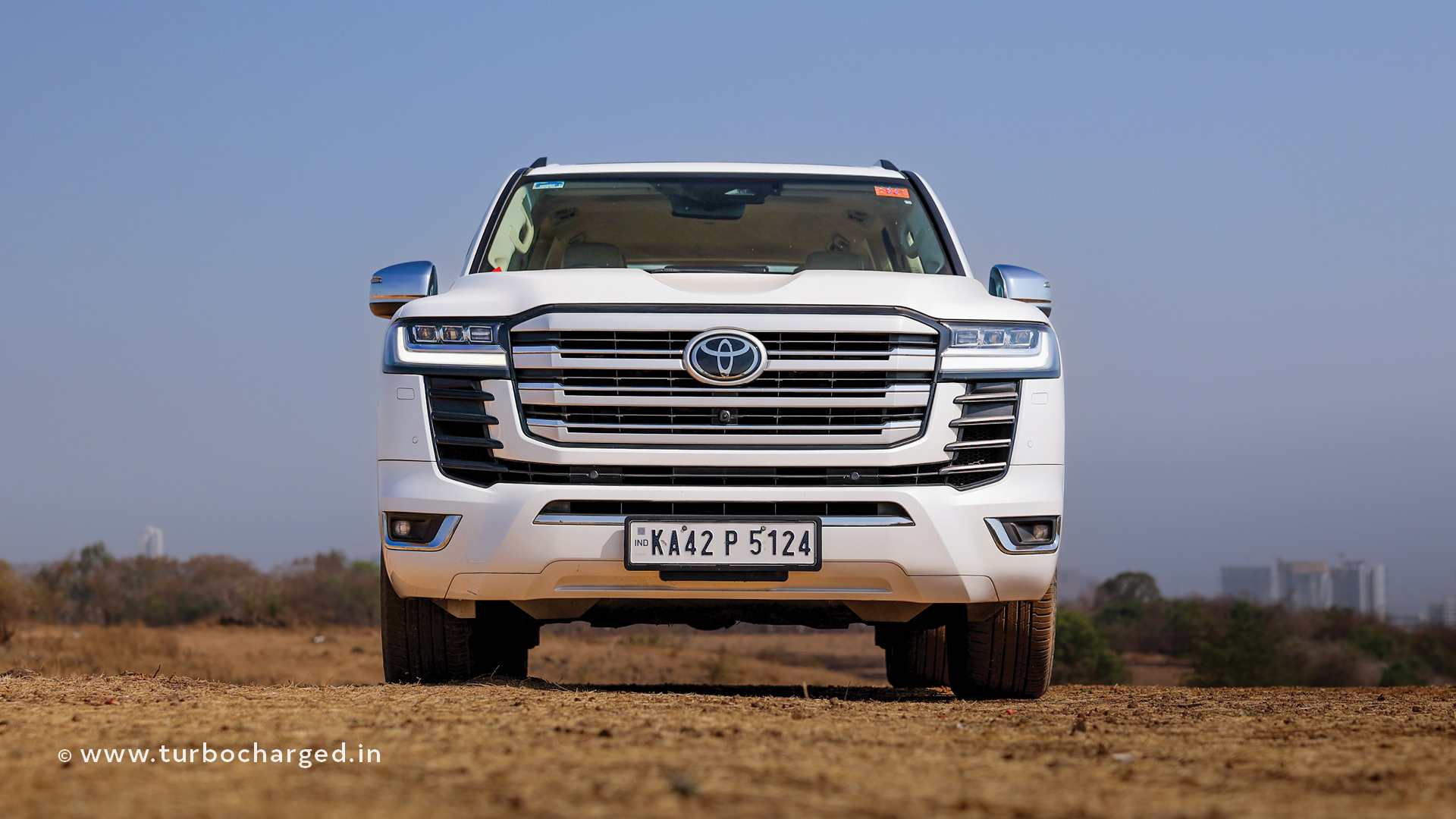
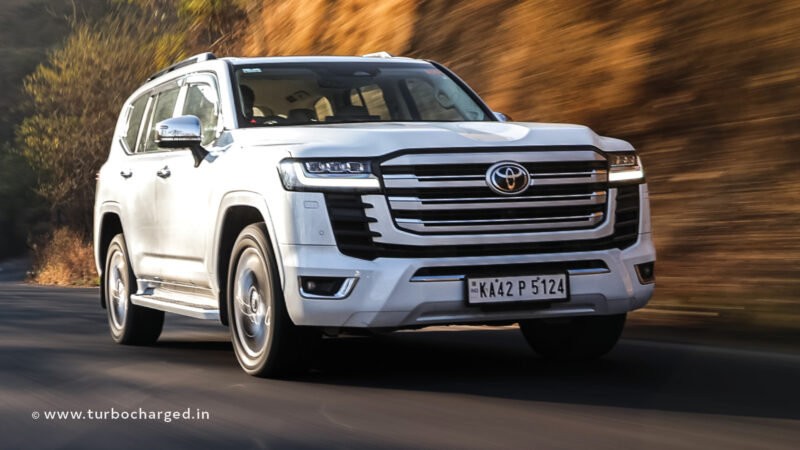
The Land Cruiser has always differentiated itself by having horizontal grille design elements, ever since the FJ40, all the way to the LC200. The LC300 interprets this in an even bolder way, with four enormous horizontal chrome slats on the grille, though this is for the ZX trim — the GR Sport trim gets a single slat and a black mesh grille. Another thing to note is the height of the bonnet, which sits at a height of roughly two-thirds of the entire vertical dimension of the LC.
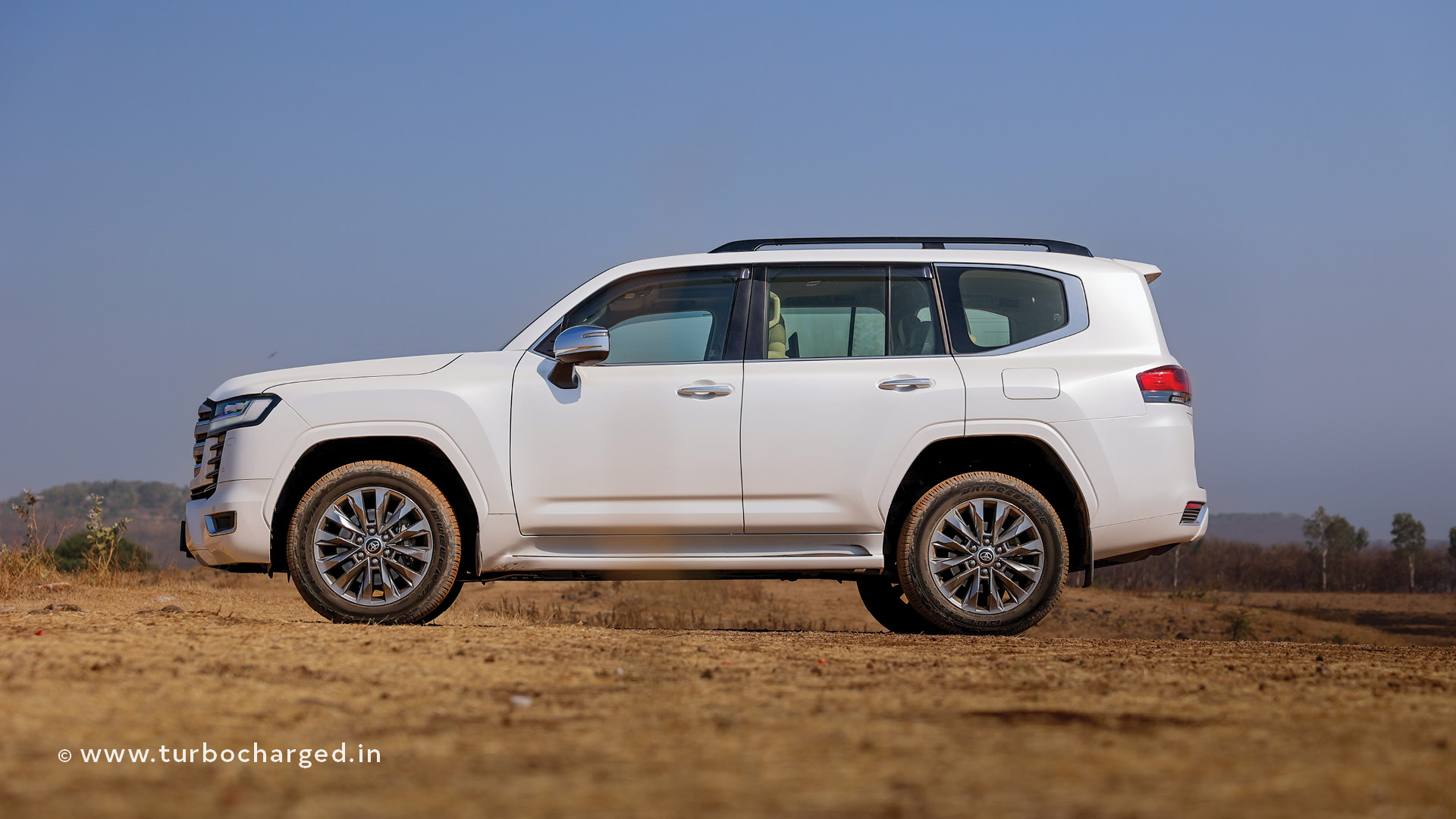
Somewhat disappointing then is the fact that the rest of the design borders on uninspiring, as there is little to no immediate difference between the 300 and the 200, apart from the angle of the inside edge of the tail lamps being reversed. From the side, there is a noticeable kink after the C-Pillar, which is absent on the 200 series. Toyota knows that too much of an avant-garde styling would scare away the traditional customers of the full-size Land Cruiser, so while the grille is imposing, the rest of the car plays it relatively safe. This philosophy is reflected elsewhere, too – the total number of colours on offer is 2 – black and white. Also, no asymmetric diamond cut wheels here, traditional symmetric design finished in a subtle graphite gray marks the dividing line between those who follow the trends and those who are timeless.
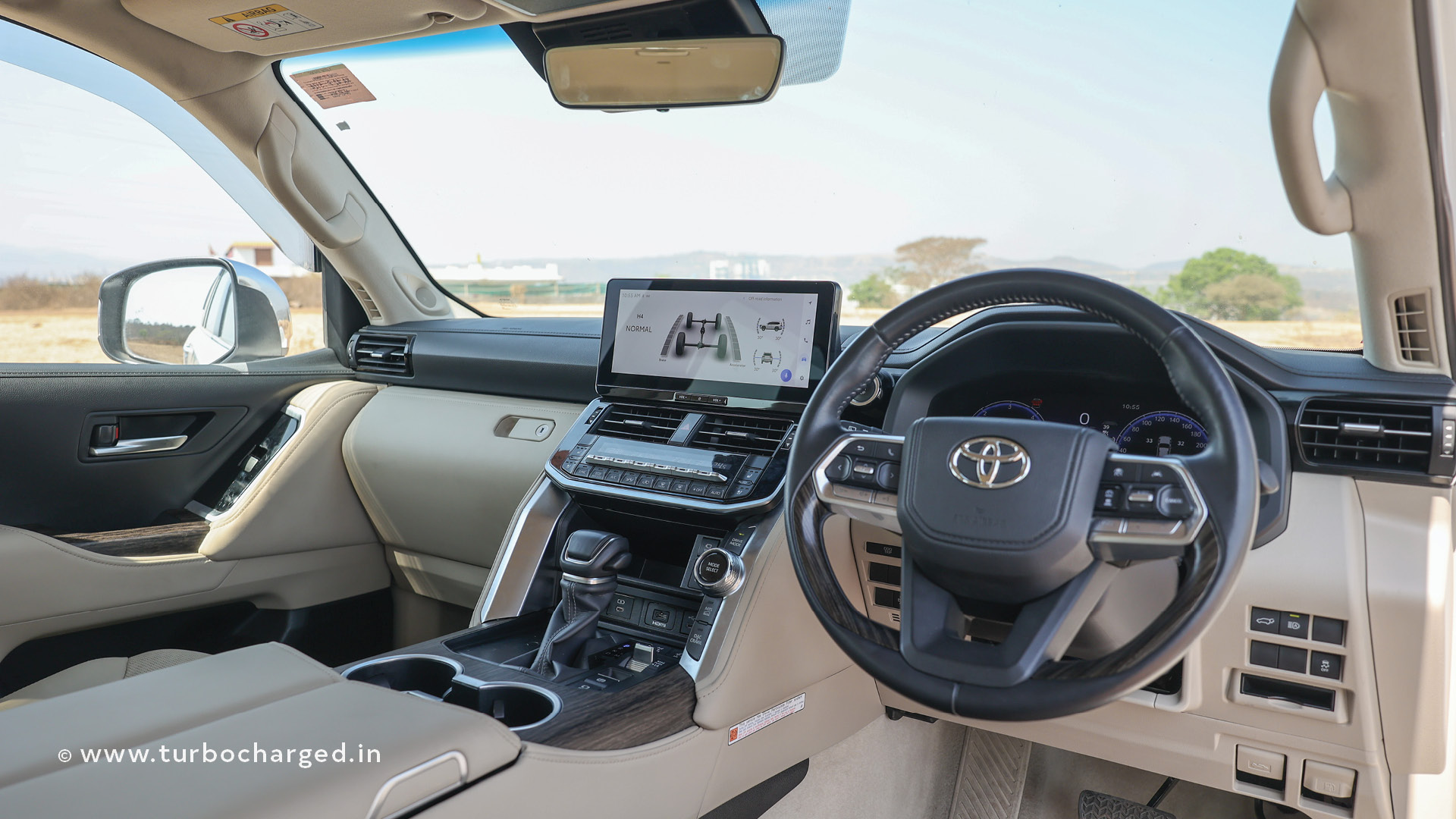
The interior does show some march of progress, though, as the lovely analogue dials of the 200 have been replaced with a digital driver’s display, but hold your horses, as it depicts the speed and the rpm using the same font and overall style as the 200 series. Honestly, it is one of the most legible driver’s displays I have seen in recent times. Even when the driving mode is changed, the display doesn’t undergo radical transformations that have become the norm; instead, the background colour changes subtly. Also, unlike many vehicles, the lane departure warning doesn’t require holding the button down for an eternity, or promising your newborn to the dark gods. A single tap is all it takes to silence it — what a revolutionary concept!
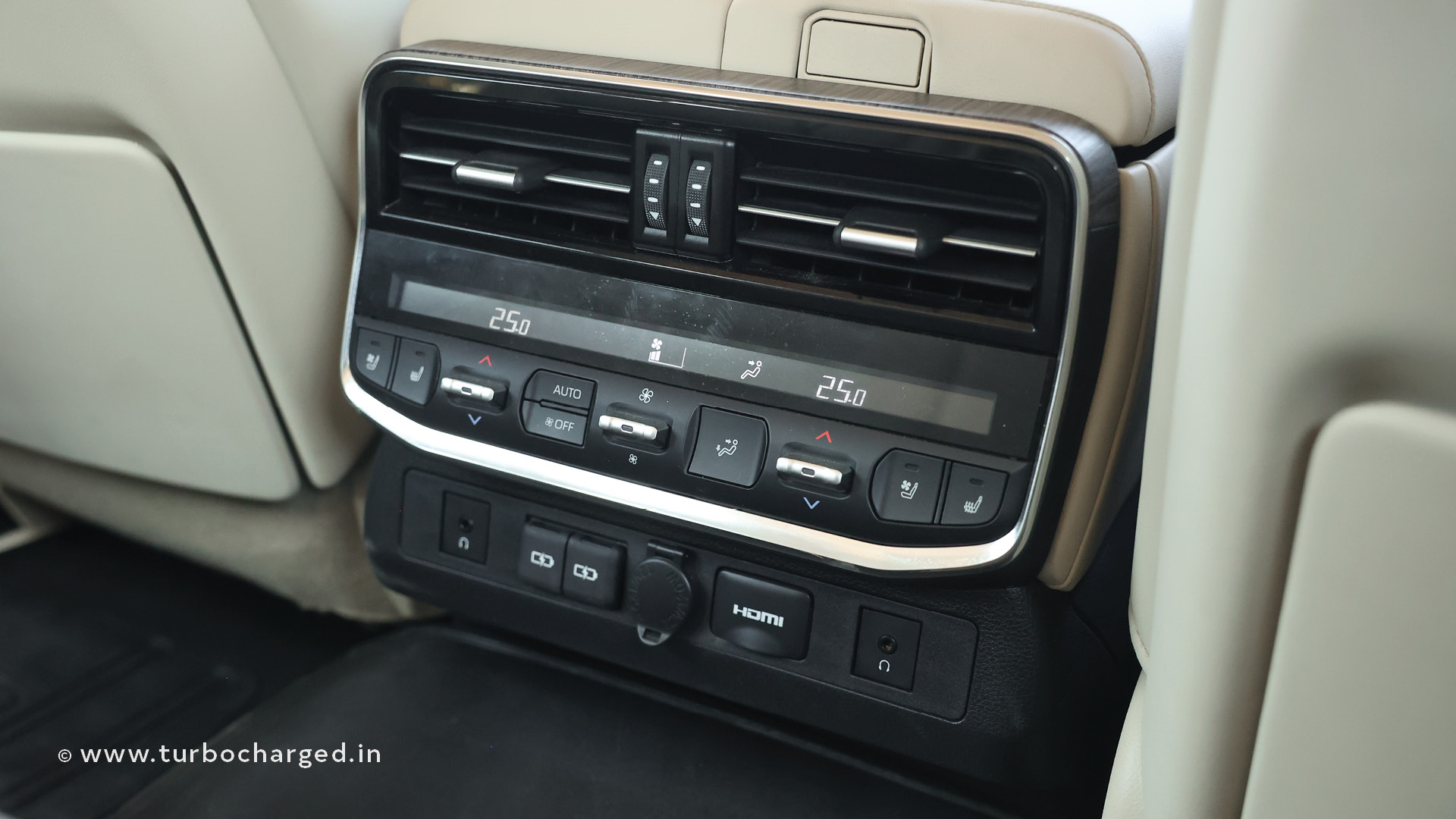
Speaking of revolutionary concepts, the entirety of the extremely complicated and advanced 4-zone climate control system can be operated only by the buttons on the dashboard. Furthermore, there’s a simple flap covering the phone connection and charging ports if those are not being used — simple yet effective. The infotainment has proper GPS navigation, as the Land Cruiser often treads where there is no cellular signal. That same mindset is why Toyota has blessed it with an 80-litre fuel tank. Of note are the seats as thrones of higher comforts can seldom be found in, particularly an ultra-soft initial cushion which is then supported by firmer foam underneath it. Of course, the front seats are heated and ventilated, as the Land Cruiser’s natural habitat extends from Siberia to the Sahara and every terrain imaginable in between.
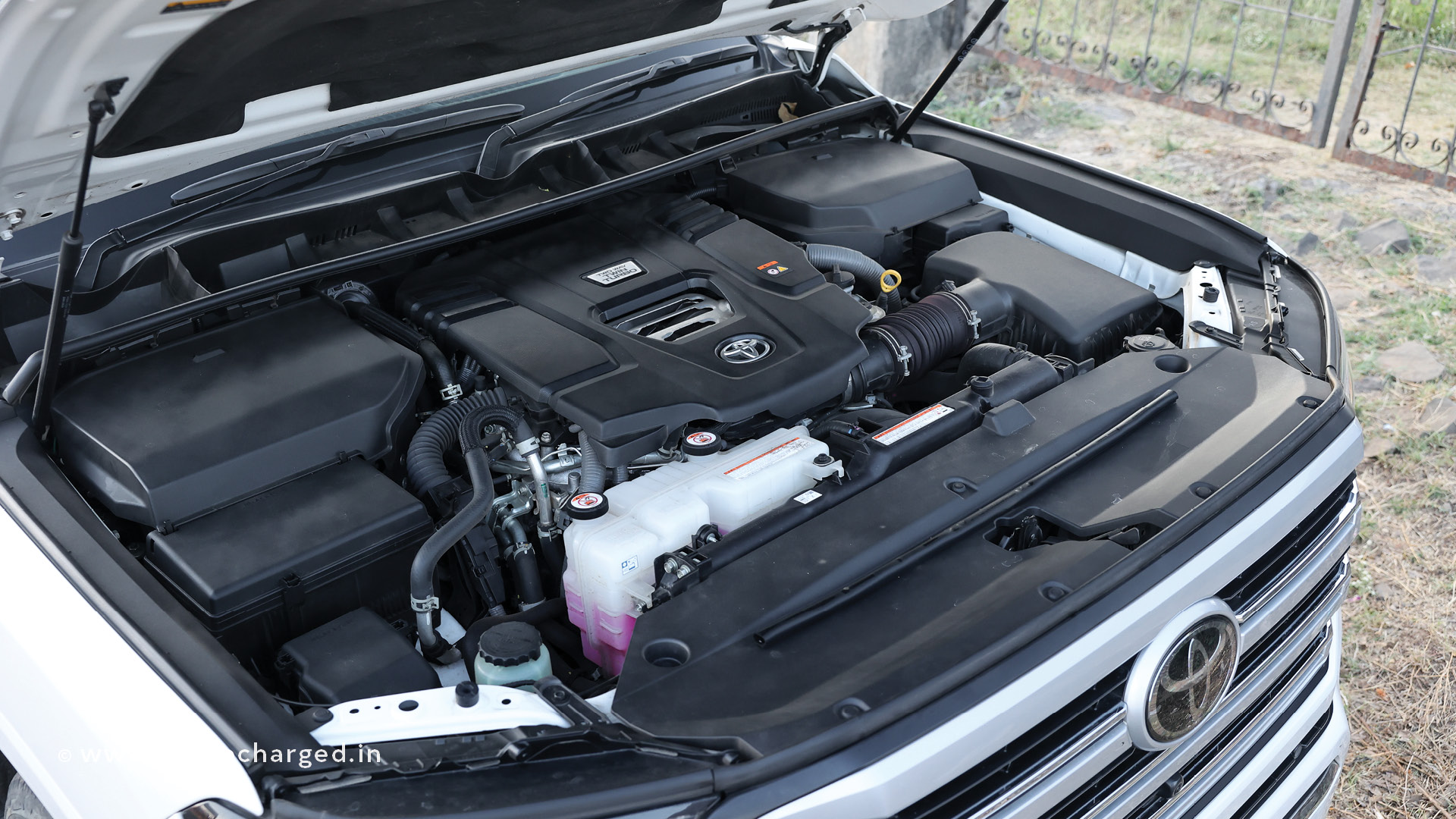
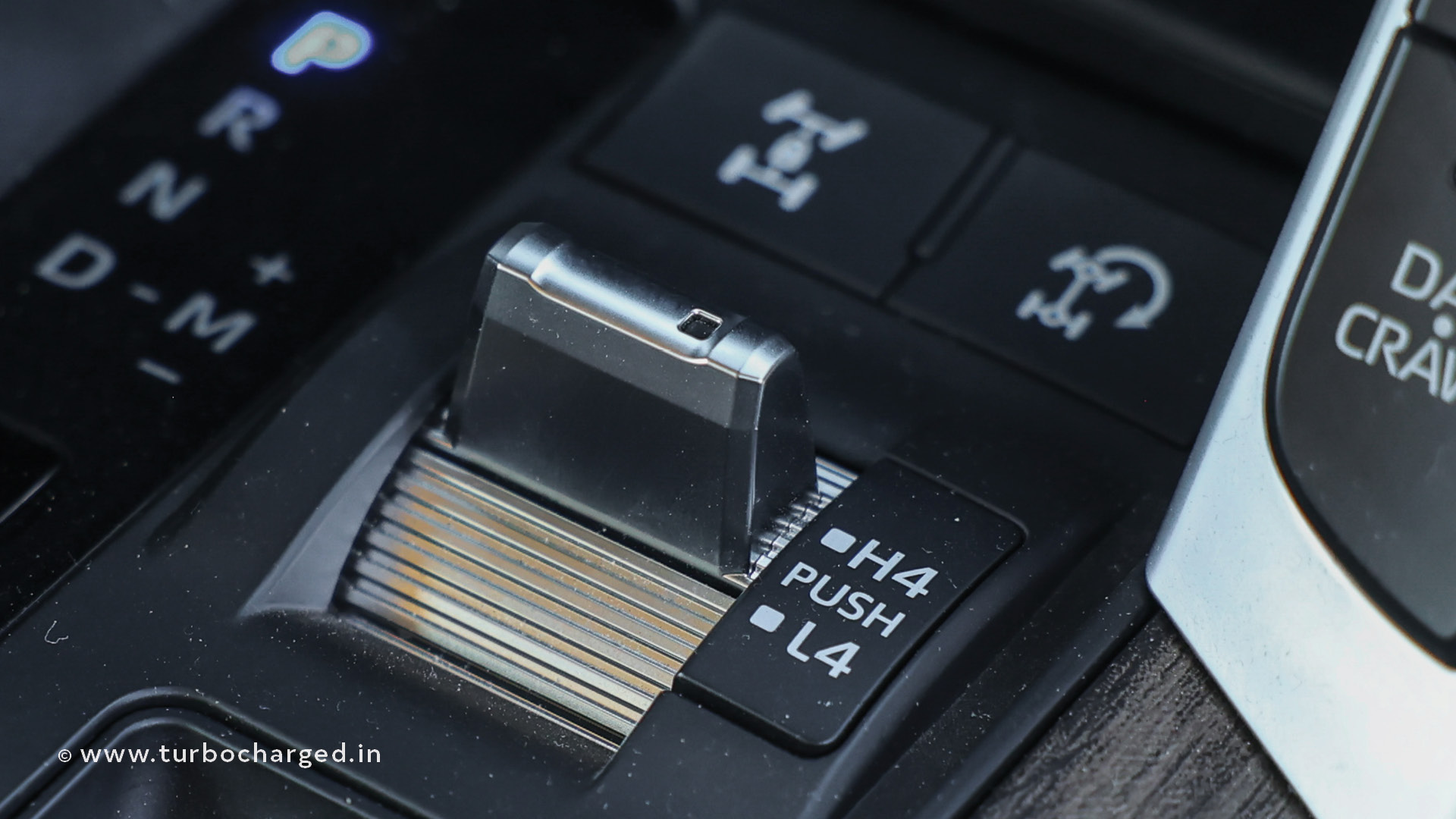
The engine is all-new, called the F33A-FTV; it is the first time Toyota has ever produced a diesel engine with a V6 configuration. The engine doesn’t sound as refined from the outside as it feels behind the wheel, but I was happy to hear some proper diesel clatter after ages, and the sound made me a bit nostalgic! It’s a gutsy motor, with 700Nm on tap, sent to all four wheels via a 10-speed automatic transmission. Yes, like a proper Land Cruiser, the 300 series comes with full-time 4WD, where a low-range transfer case is combined with a centre differential, which is lockable in the LC300. That’s serious hardware, which suits it just fine, as it is a serious car.
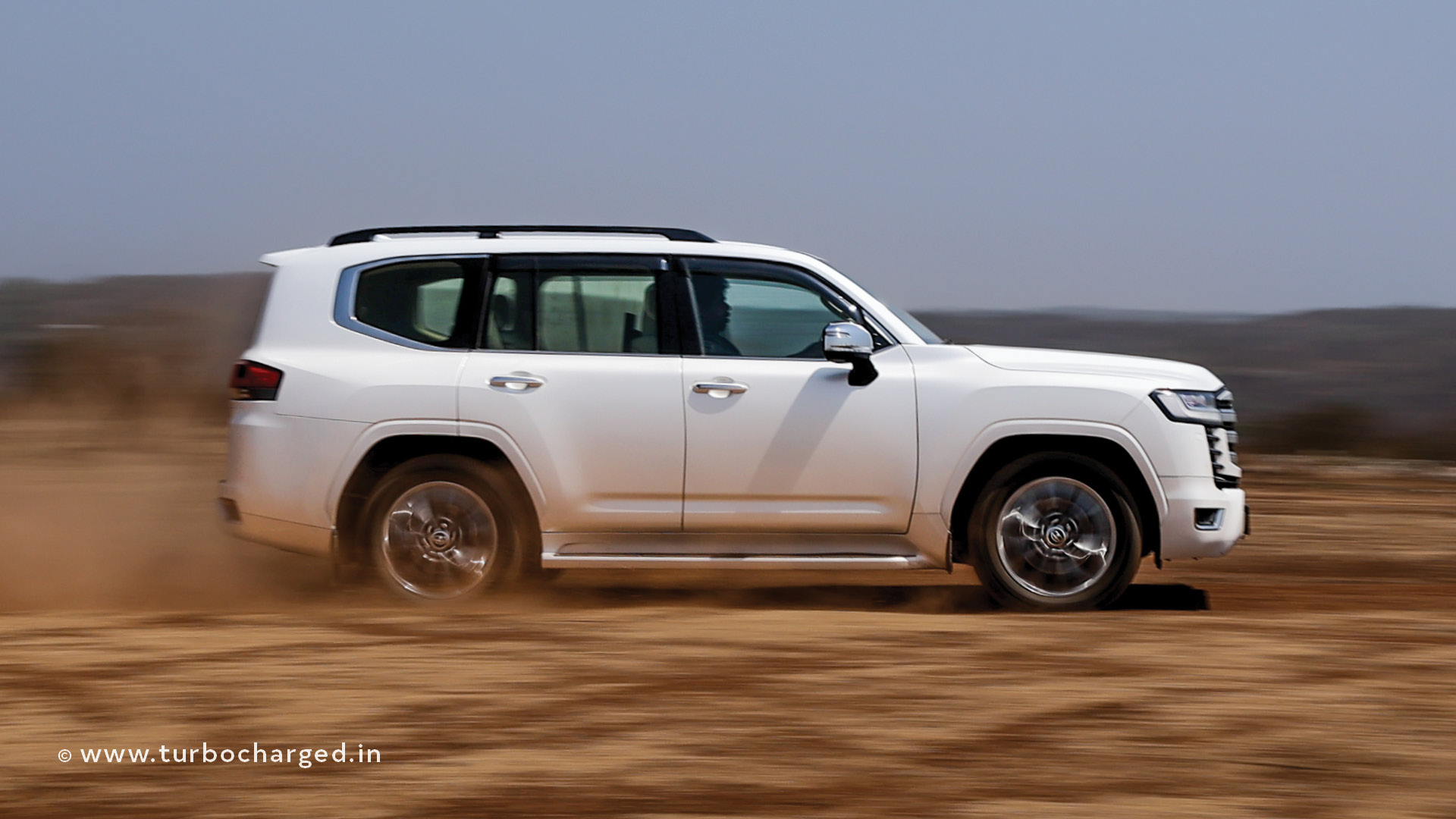
The 0-100kmph time of 8 seconds feels scarcely believable when one’s standing next to it, thanks to the sheer size, but despite a kerb weight of over 2.5 tonnes, the Land Cruiser gets up to speed effortlessly. Braking is a bit of an issue, though, as when decelerating from higher speeds, there are instances where the wheels occasionally lock up a bit, and not just off-road. The steering system is rack and pinion, not recirculating ball, which has been the case since the 100 series came out. Yet, it requires absolutely no effort to turn the massive 265/55R20 tyres. Toyota offers a full-size spare wheel, which shows up on the TPMS screen too!
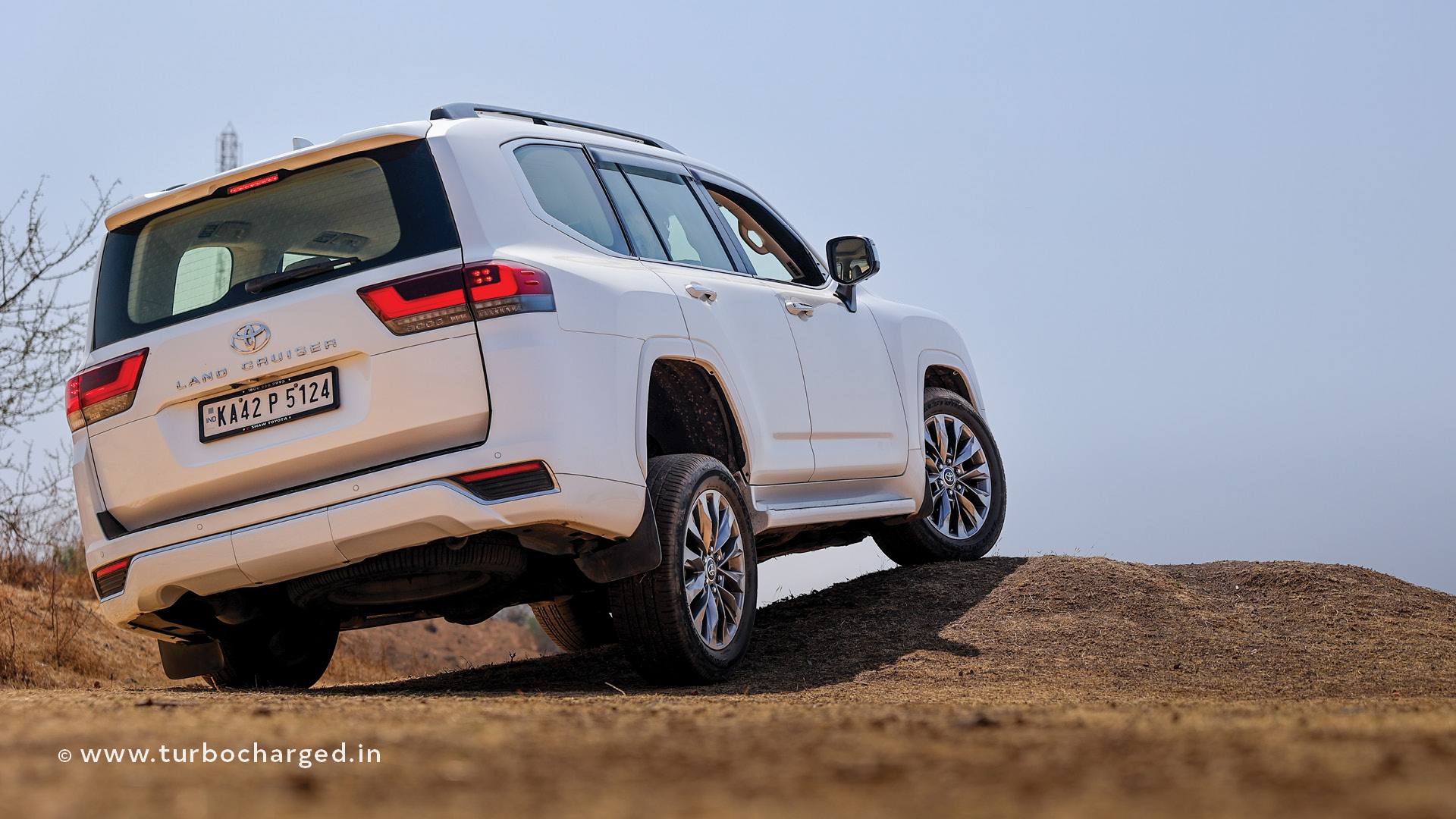
The independent front suspension does not impede in any noticeable way for minor off-roading, but the live-axle at the rear provides epic articulation. The suspension was so comfortable, though, that it felt like an air suspension, but no such frivolity here — it is made of cold steel only, something that can be depended on when one’s out there, on the no-man’s lands of our planet. The heavily-assisted steering filters out most of the road, but is communicative enough to hustle this giant with supreme confidence. I even managed to elicit a chirp from the tyres during some spirited cornering through canyon roads. There’s body roll, obviously, but once the Land Cruiser exhausts the lean angle available on its suspension, it settles into the groove and simply powers out of the other side. The ride comfort becomes exemplary off the road, though, as obstacles that would have been felt simply disappear underneath the LC’s wheels.
It takes some doing to call a car with a ₹2.16 crore price tag (ex-showroom) good value-for-money, but that’s exactly what it is. It is far more mechanically and electronically simple than the Mercedes-Benz G500 D, and far more robustly made than the Land Rover Range Rover. While there are other SUVs out there, everyone, even its contemporaries in terms of legacy, must take a bow in terms of value-for-money to the king of the SUVs, which is the tagline Toyota uses on its brochure as well!
Words Sayantan De
Photography Saidatta Naik